
The Search for Alien Weather
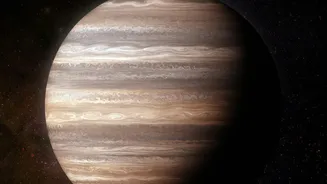
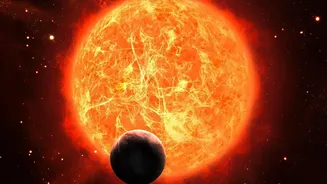
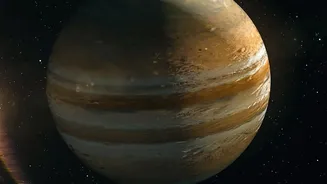
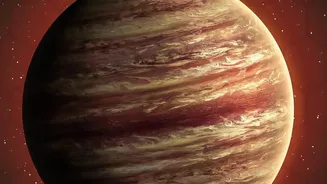
The universe is filled with an incredible diversity of planets orbiting other stars, known as exoplanets. Some are rocky like Earth, while others are massive gas giants. Among the most extreme are the 'hot Jupiters,' enormous planets that orbit incredibly
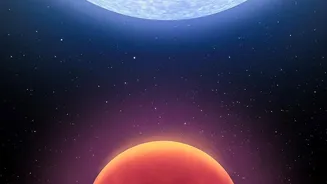
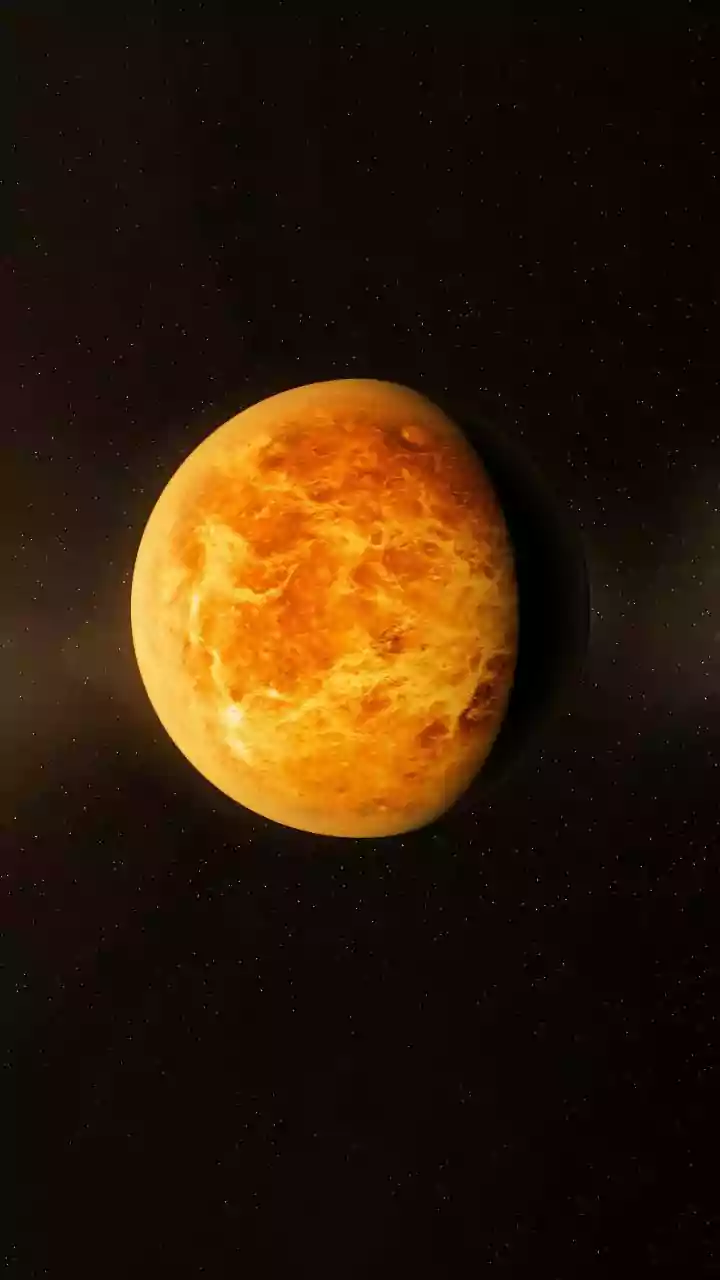
close to their parent stars. One such world, named WASP-76b, located about 640 light-years away, has become a fascinating laboratory for studying alien weather. It's tidally locked, meaning one side perpetually faces its star, creating a scorching 'dayside' with temperatures soaring above 2,400 degrees Celsius—hot enough to vaporise metals like iron. The other side, the 'nightside,' is in constant darkness and significantly cooler. This extreme temperature difference is the engine for some of the most violent weather imaginable.
Reading the Secrets of Starlight
Astronomers can’t see this weather directly. Instead, they act as cosmic detectives, analysing clues hidden in starlight. The primary technique is called transit spectroscopy. It works when a planet passes, or 'transits,' in front of its star from our point of view. As the starlight filters through the planet's atmosphere, different chemical elements and molecules absorb specific wavelengths, or colours, of that light. This leaves a unique chemical 'fingerprint' in the light that reaches our telescopes. By splitting the starlight into a spectrum, much like a prism creates a rainbow, scientists can read these fingerprints and determine what the atmosphere is made of.
From Vapour to Fiery Raindrops
On WASP-76b, astronomers used this method to detect a strong signature of iron vapour, but only on its scorching dayside. At the 'evening' boundary, where the planet rotates from day to night, the iron signature was still strong. However, at the 'morning' boundary, where the night side turns back toward the star, the iron vapour was mysteriously absent. This led to a stunning conclusion: the vaporised iron is being carried by powerful winds, moving at thousands of kilometres per hour, from the hot dayside to the cooler nightside. There, the temperature drops enough for the iron to condense into liquid droplets, falling as a form of molten rain.
Mapping Weather with Phase Curves
To track these atmospheric changes across the entire planet, not just at the edges during a transit, astronomers use another powerful tool: phase curves. Much like we see the phases of our Moon, astronomers can measure the tiny changes in the combined brightness of the star and planet system as the exoplanet orbits. The system appears brightest when the planet’s fully illuminated dayside is facing us and dimmer when its dark nightside is visible. By carefully measuring how the brightness and its infrared (heat) signature change throughout the planet's orbit, scientists can create a rough map of its temperature and cloud patterns, revealing how heat is distributed from the dayside to the nightside and confirming the presence of phenomena like strong winds.
The Power of New Eyes
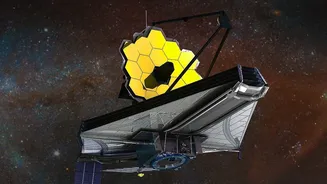
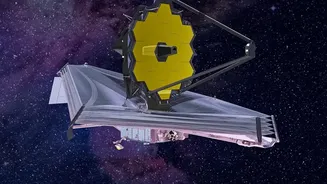
These incredible discoveries are made possible by increasingly powerful telescopes. Instruments on the ground like the Very Large Telescope (VLT) in Chile made the initial groundbreaking observations of iron rain. In space, the Hubble Space Telescope has long been a workhorse for studying exoplanet atmospheres. More recently, the James Webb Space Telescope (JWST) has revolutionised the field. Operating in the infrared spectrum, JWST is exceptionally sensitive to the molecular signatures in planetary atmospheres, allowing for far more detailed analysis of their chemistry and weather than ever before. It can provide a full menu of a planet's atmospheric ingredients, from water vapour to signs of active chemistry, pushing our understanding of these distant worlds into a new era.