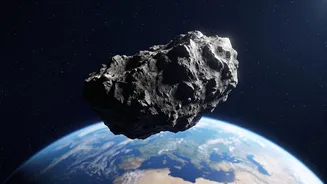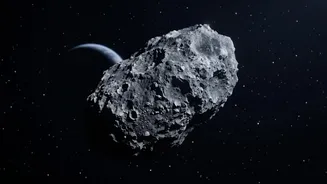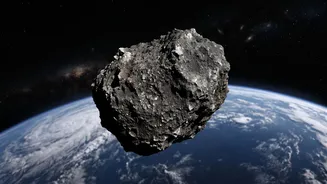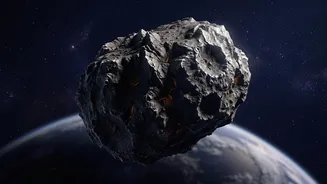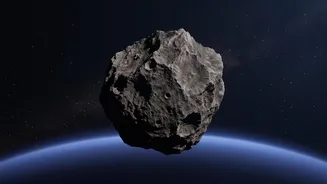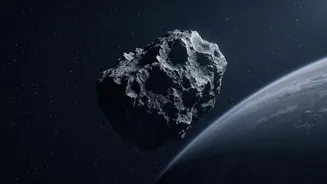






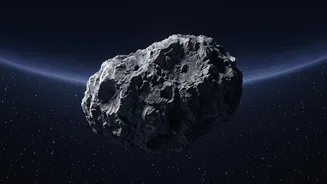
It's smaller than a city bus, spins faster than a kitchen blender, and is tumbling through space not too far from Earth. Near-Earth Object 1998 KY26 is a cosmic curiosity, and new research is giving us our best look yet at this tiny world.
Meet the Speedy Asteroid
First discovered
in 1998, 1998 KY26 is a fascinating specimen in the cosmic zoo. Recent observations have dramatically revised our understanding of it. Scientists now believe it is only about 11 meters (36 feet) in diameter, significantly smaller than the previous estimate of 30 meters. What truly sets it apart is its astonishing rotation. It completes a full spin in just over 5.3 minutes, making it one of the fastest-rotating objects known in our solar system. This rapid spin has major implications for its structure. An object spinning this quickly would fly apart if it were just a loose pile of gravel. This suggests it must have some internal strength holding it together, a property known as cohesion. Understanding this cohesion is critical for both science and planetary defense.
Seeing with Heat
The headline-making new research involves sophisticated thermal modelling. But what does that mean? In simple terms, scientists create computer models to simulate how an object absorbs heat from the Sun and radiates it back into space. By comparing these models to actual observations, they can deduce properties of the asteroid's surface and interior that are impossible to see directly with a telescope. The latest study from aerospace engineers at the Georgia Institute of Technology focused on a specific puzzle: a strange, tiny acceleration in the asteroid's orbit that can't be explained by gravity alone. One theory was that 1998 KY26 could be a 'dark comet', venting gases from hidden ice, which would act like a tiny thruster. The new thermal model tested this idea by calculating temperatures across and inside the asteroid.
Too Hot for Hidden Ice?
The results of the thermal modelling cast doubt on the 'dark comet' theory. For water ice to survive for long periods, it needs to stay extremely cold, below about -128 degrees Celsius. The models created by the researchers showed that even the coldest parts of 1998 KY26 are likely much warmer than that, averaging around -61 degrees Celsius. At these temperatures, any significant amount of buried ice would sublimate—turn directly into gas—and escape in just a couple of thousand years. While this doesn't completely rule out the presence of some ice, it makes it a less likely explanation for the asteroid's unusual movement. This leaves scientists to explore other possibilities, such as the gentle but persistent push from solar radiation.
A Future Destination
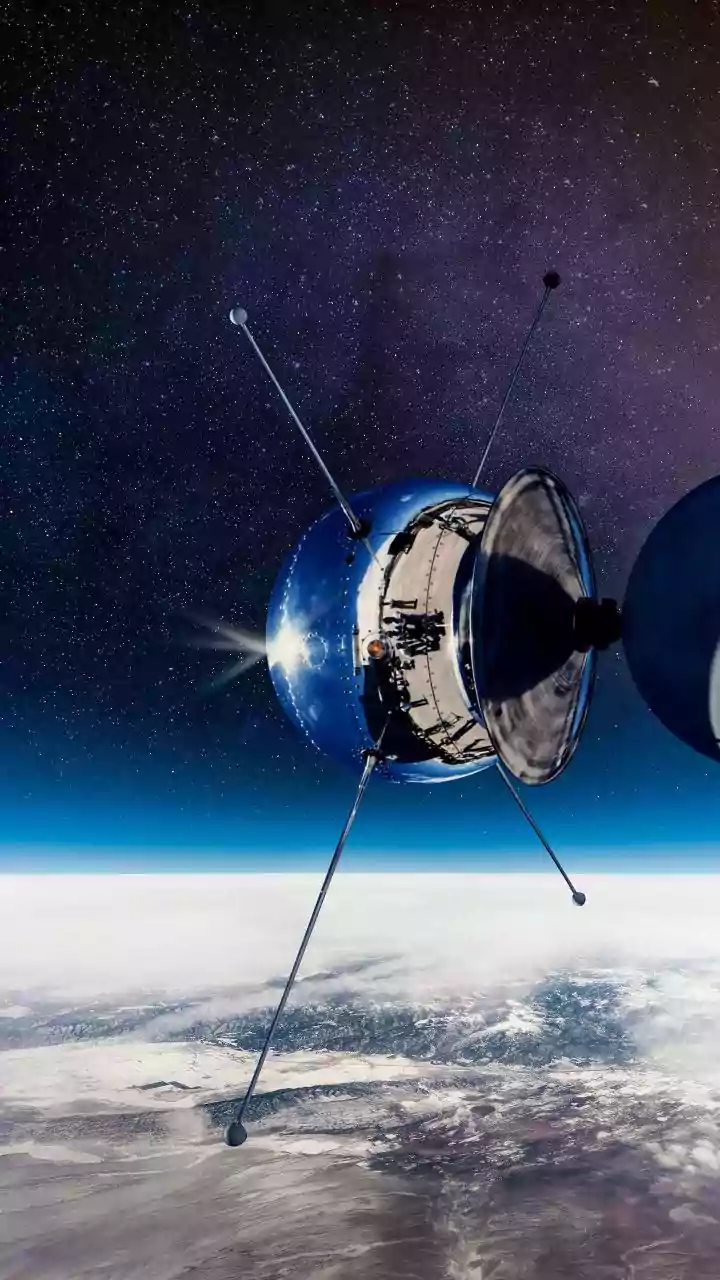
This detailed study isn't just an academic exercise. 1998 KY26 is the final destination for the extended mission of Japan's Hayabusa2 spacecraft. After successfully returning samples from the larger asteroid Ryugu, the probe is now on a long journey to rendezvous with this tiny, fast-spinning world in July 2031. This will be the first time a spacecraft has visited a decameter-scale asteroid. The new data on its size, spin, and thermal properties are invaluable for mission planners. Knowing the asteroid is smaller and spinning faster than previously thought presents new challenges for the Hayabusa2 team as they plan how to approach and potentially even touch down on its surface.
Why We Study Small Rocks in Space
Studying near-Earth objects like 1998 KY26 is a crucial part of planetary defense. While this particular asteroid poses no threat to Earth, tens of thousands of similar objects cross our planet's orbit. Understanding their composition is key to developing effective mitigation strategies. For instance, trying to deflect a solid rock is very different from trying to push a loose 'rubble pile' asteroid, which might simply absorb the impact or break apart. By studying these objects up close and with detailed models, we gather the knowledge needed to protect our planet should a truly hazardous asteroid ever be found on a collision course with Earth.