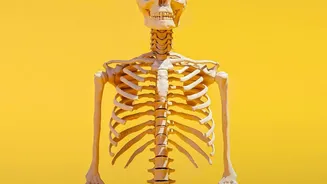







The Foundation: Calcium's Essential Role
Calcium is the primary mineral that gives our bones their strength and structure; in fact, 99% of the body's calcium is stored in the skeleton. Throughout our lives, our bones are in a constant state of renewal, breaking down old tissue and building new.
This process requires a steady supply of calcium. If our dietary intake is insufficient, the body compensates by drawing calcium from our bones, which can weaken them over time. This is particularly important as we get older, because our body's ability to absorb and retain calcium can decrease. However, simply consuming more calcium isn't a complete solution. For this mineral to do its job effectively, it needs help.
The Gatekeeper: Vitamin D3's Role in Absorption
Think of Vitamin D3 as the gatekeeper for calcium. Its primary function is to help our intestines absorb calcium from the food we eat. Without enough vitamin D3, our bodies might only absorb a small fraction of the calcium we consume, no matter how much we ingest. As we age, our skin becomes less efficient at producing vitamin D3 from sunlight, and we may spend less time outdoors, which can lead to lower levels. So, Vitamin D3 unlocks the door, allowing calcium to enter the bloodstream. But once it's in circulation, where does it go? That's where the next player comes in.
The Traffic Controller: Vitamin K2's Crucial Direction
Vitamin K2 acts as the body's traffic controller for calcium. Its job is to direct the calcium that Vitamin D3 helped absorb into the right places—our bones and teeth—and keep it out of the wrong places, like our arteries and soft tissues. It does this by activating two critical proteins. The first, called osteocalcin, works to bind calcium into the bone matrix, effectively locking it into our skeleton where it's needed for strength and density. The second protein, Matrix Gla Protein (MGP), helps prevent calcium from accumulating in the walls of our blood vessels. This dual action is what makes K2 so vital for both skeletal and cardiovascular health.
The Symphony of Synergy in an Aging Body
When calcium, D3, and K2 work together, they create a perfect symphony for bone health. D3 ensures calcium gets into the body, and K2 ensures it gets to the bones. This synergy is especially critical for safeguarding aging skeleton systems. As bone loss accelerates with age, particularly for post-menopausal women, maintaining this nutrient balance becomes paramount. Taking calcium and vitamin D3 without adequate K2 can create a potential problem: increased calcium in the bloodstream without a director to tell it where to go. This 'unguided' calcium may not be effectively incorporated into bone and could potentially be deposited in arteries, leading to stiffening. Therefore, the complete trio is necessary for a safe and effective approach to bone support.
A Holistic Approach to Bone Nutrition
Ensuring you have enough of these nutrients involves a balanced diet. Calcium is found in dairy products, leafy greens, and fortified foods. Vitamin D3 is primarily synthesized from sun exposure, but can also be found in fatty fish like salmon and egg yolks. Vitamin K2 is less common in the modern diet but is present in fermented foods like natto (a Japanese soybean dish), as well as certain hard cheeses, and grass-fed animal products like butter and egg yolks. Given the challenges in getting enough of these nutrients from diet and lifestyle alone, especially as we age, a coordinated nutritional strategy becomes essential for long-term skeletal resilience.