
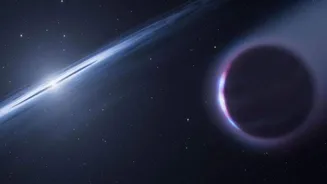
A Star's Violent End, A Planet's New Beginning
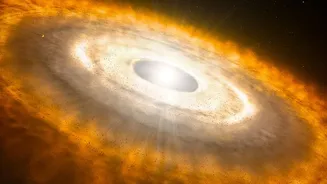
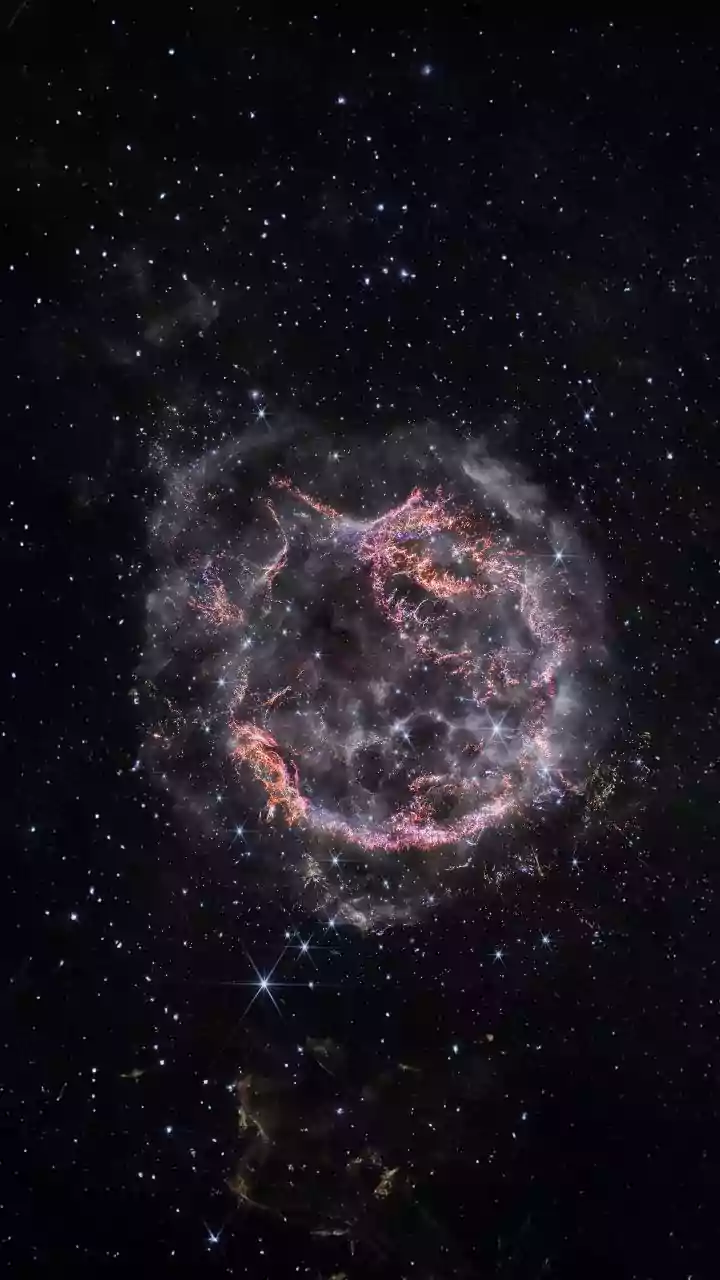
Most planets, like Earth, are 'first-generation' worlds. They form from the disc of gas and dust left over from a star’s birth. For billions of years, they orbit this star. But when a star like our Sun runs out of fuel, it swells into a massive red giant,
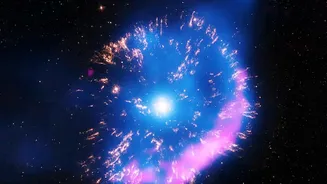
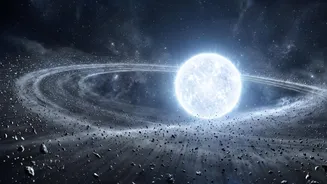
engulfing and destroying its inner planets. What’s left behind is a tiny, incredibly dense core called a white dwarf. For a long time, this was thought to be the final, quiet chapter. But a recent discovery challenges this idea, suggesting that planetary systems can get a second act. Astronomers now believe that the material a star sheds during its death can collect into a new disc, providing the raw ingredients for a fresh round of planet formation.
The Clue Hidden in Old Data
The key evidence comes from a white dwarf named HS 0209+0832, located about 270 light-years away. While reviewing archival data from the Hubble Space Telescope taken back in 1999, astronomers from the University of Warwick made a breakthrough. The data showed the white dwarf’s atmosphere was polluted with unusual elements. While finding materials from shattered asteroids is common, this star's chemical fingerprint was unique. Specifically, it contained surprisingly high levels of an element called niobium, at concentrations over 1,000 times that found in our Sun. This was the smoking gun they were looking for.
Niobium: A Chemical Fingerprint of Rebirth
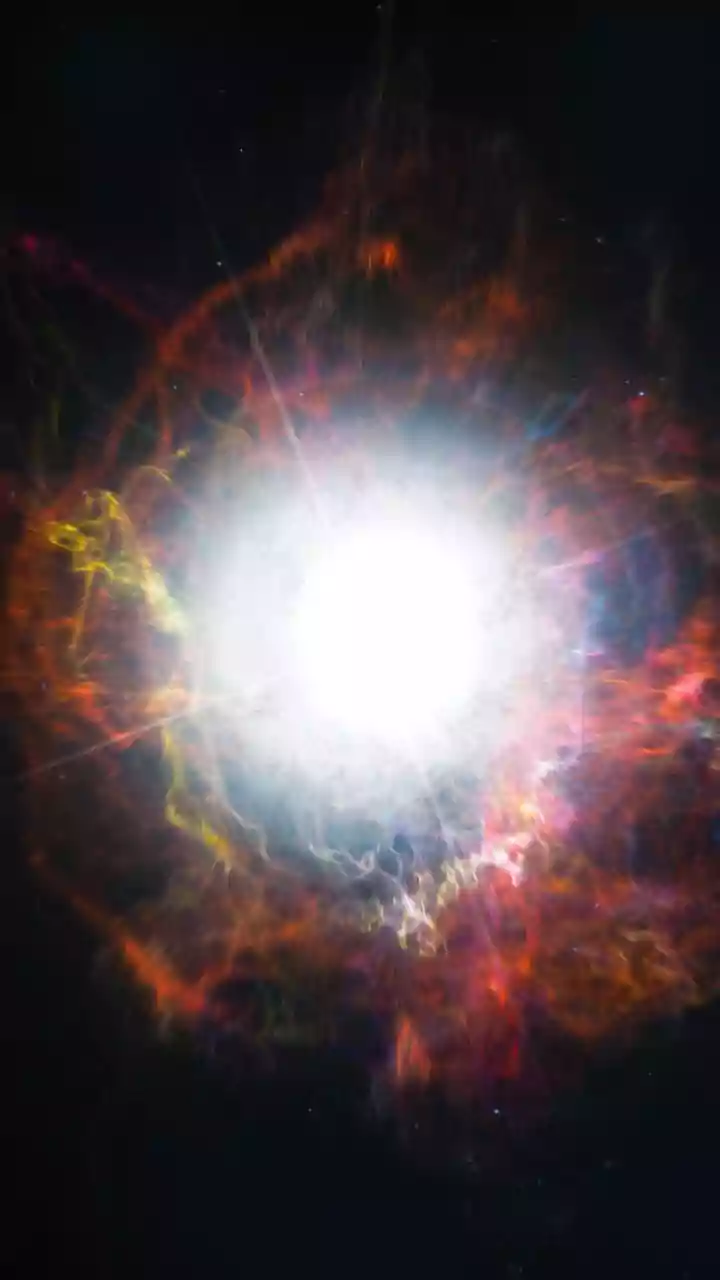
Niobium is a special element. Unlike lighter elements forged in a star's core during its normal life, heavy elements like niobium are created only during the violent, final stages of a star’s evolution, in a process that involves capturing neutrons. Finding it in such high abundance on the surface of the white dwarf strongly suggests it didn’t come from a pre-existing, first-generation planet. Instead, the most compelling explanation is that the white dwarf is currently 'feeding' on a newly formed planet that condensed from the star’s own ashes. This planet, born from the material ejected by the dying star, would naturally be rich in these unique heavy elements.
Meet the 'Phoenix' Planet Candidate
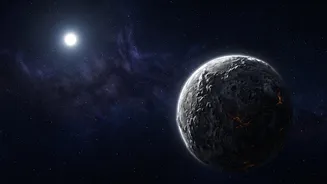
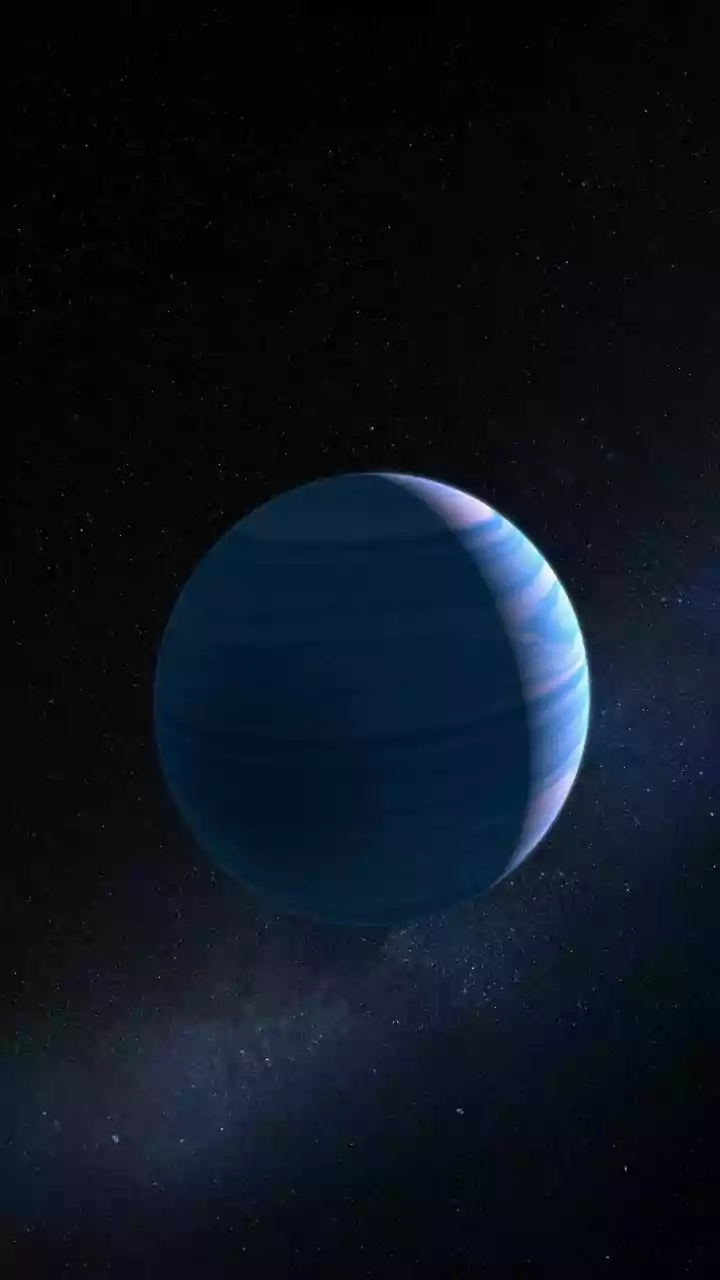
Though not yet directly seen, astronomers have pieced together a profile of this potential second-generation world. Data suggests it is likely a gas giant, similar in size to Jupiter, orbiting the white dwarf at an incredibly close distance, completing a full orbit in just over four days. Because the white dwarf is still young and intensely hot, it is blasting the planet with radiation, causing its atmosphere to evaporate. This process may create a comet-like tail of material that flows from the planet and falls onto the star, which is how elements like niobium become detectable in the first place. For now, it remains a planet candidate, but future observations with telescopes like the James Webb Space Telescope could provide confirmation.
A New Chapter in the Search for Worlds
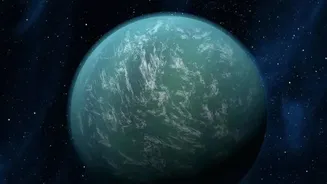
This discovery, if confirmed, would be the first time a second-generation planet has been found around a white dwarf, the most common type of stellar remnant. It fundamentally changes our understanding of planetary evolution. It implies that the death of a star is not just an epilogue but can be the start of a whole new story with new characters. This raises fascinating possibilities. Billions of years from now, when our own Sun becomes a white dwarf, the remnants of our solar system could potentially gather to form new planets. The find opens up a new frontier, suggesting that even the graveyards of stars might be cradles for new worlds, some of which could, over millions of years, eventually settle into a stable, and perhaps even habitable, existence.