





The Challenge of Lunar Logistics
For humanity to become a multi-planetary species, starting with a sustainable base on the Moon, we can't afford to pack everything we need. Every kilogram of supplies launched from Earth is incredibly expensive. Oxygen is one of the heaviest and most
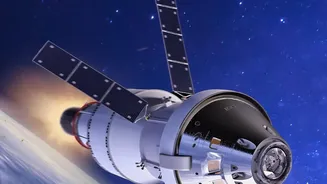
critical resources, essential not only for breathing but also as a key component of rocket propellant. The logistics of continuously shipping tanks of oxygen 384,400 kilometres through space is a primary obstacle to the long-term settlement goals of programs like Artemis. To make a lunar outpost viable, astronauts need a local, reliable source of essential resources, a concept known as in-situ resource utilization, or ISRU. It's the ultimate form of sustainable living, applied to the final frontier.
A Hidden Oxygen Reservoir
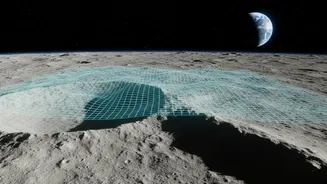
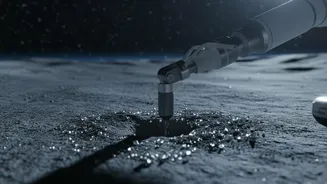
While the Moon has no breathable atmosphere, its surface is surprisingly rich in oxygen. The fine, grey powder covering the Moon, known as regolith, is composed of about 45% oxygen by weight. This oxygen isn't free-floating gas; it is chemically bonded with elements like silicon, aluminum, iron, and magnesium to form metal oxides—the very stuff of rocks. In essence, the lunar surface is a vast, untapped reservoir of the element most crucial for life and space travel. Estimates suggest that the top few meters of regolith hold enough oxygen to sustain thousands of people for centuries. The challenge lies not in finding the oxygen, but in breaking those strong chemical bonds to release it.
Unlocking Oxygen with High-Tech Heat
NASA is pioneering a method to bake oxygen out of the moon dust. The leading technology is called carbothermal reduction, a process being refined by the Carbothermal Reduction Demonstration (CaRD) project. In simple terms, the process involves heating the lunar regolith to extremely high temperatures—up to 1,650°C—inside a specialized reactor. Recent tests, which successfully used a solar concentrator to provide this heat, prove the concept can work using only sunlight and local materials. When heated, the oxides in the regolith react, releasing carbon monoxide. This gas can then be easily converted to separate out the breathable diatomic oxygen (O2). This process essentially uses the sun's energy to turn lunar soil into a life-sustaining resource.
More Than Just Air to Breathe
The oxygen extracted from regolith serves a dual purpose that is critical for "fueling" a lunar base. The first, and most obvious, is for life support—providing breathable air for astronauts inside their habitats and suits. Humans need about 800 grams of oxygen per day to survive. The second, and arguably more impactful use, is for creating rocket propellant. Liquid oxygen is the primary oxidizer used in most rocket engines, making up the vast majority of propellant's mass. Producing it on the Moon would mean that spacecraft taking off from the lunar surface—for return trips to Earth or missions deeper into the solar system, like Mars—could be refueled locally. This dramatically reduces the mass that needs to be launched from Earth, making future exploration far more economical and feasible.
A Foundation for the Artemis Program
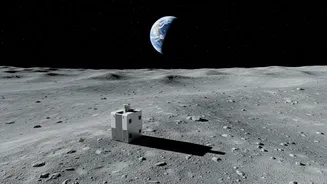
This ability to generate oxygen on-site is not a distant sci-fi dream; it is a core component of NASA’s Artemis program, which aims to establish a sustained human presence on the Moon. Projects like CaRD, developed in partnership with companies like Sierra Space, are creating flight-like prototypes that could be tested on the lunar surface. These robotic missions will validate the technology using actual moon dust under lunar conditions. By proving that we can reliably produce our own air and fuel, NASA and its partners will lay the literal groundwork for the first permanent off-world settlement. The metallic elements left over from the extraction process could even become a useful byproduct, potentially used for construction and manufacturing on the lunar surface. This closes the loop on a truly sustainable and self-sufficient lunar economy.