

More Than Meets the Eye
Think of light as a broad spectrum of energy, much of which is invisible to us. This is the electromagnetic spectrum, and it ranges from long, low-energy radio waves to short, high-energy gamma rays. In between, we find microwaves, infrared, visible light,
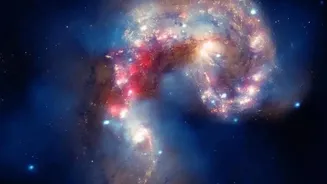
ultraviolet, and X-rays. Astronomers have built specialized telescopes to detect each of these 'colors' of light. Just as a doctor uses X-rays to see bones that are hidden beneath skin, astronomers use different parts of the spectrum to see different cosmic components and processes. By looking at a galaxy in multiple wavelengths, they can piece together a complete story of its life, from calm nurseries of newborn stars to the violent maelstrom around a supermassive black hole.
The Familiar Visible View
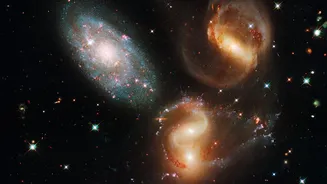
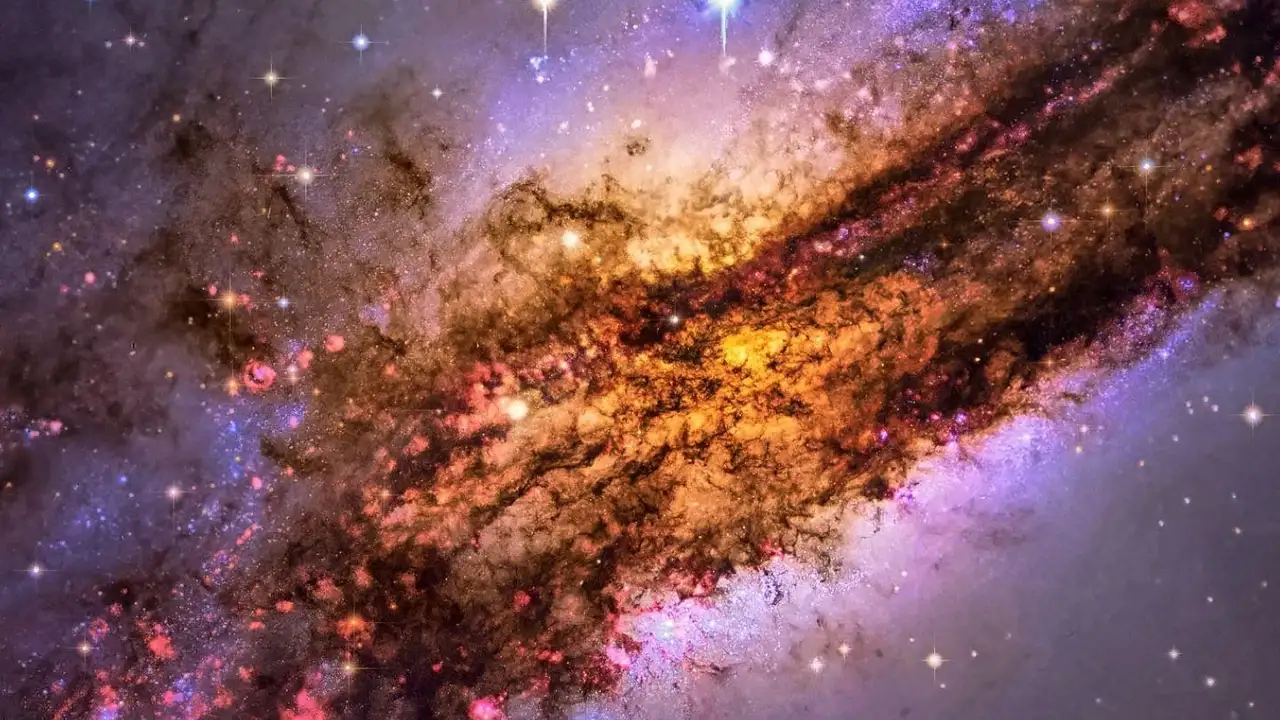
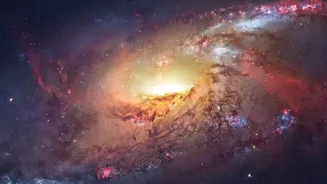
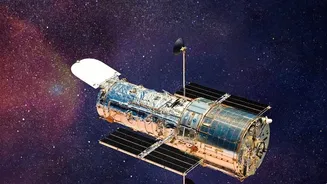
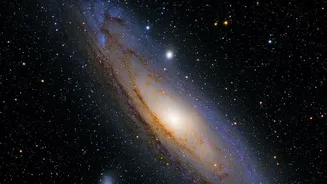
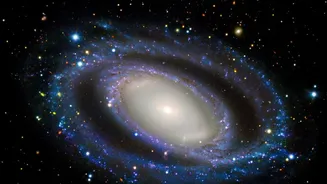
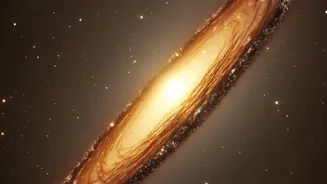
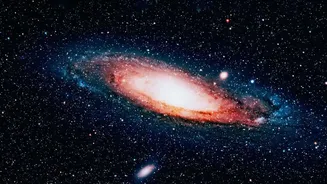
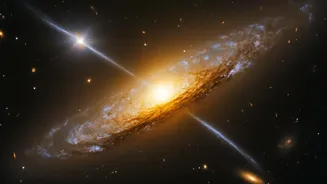
In visible light—the kind our eyes detect—a galaxy like Andromeda or Centaurus A appears as a majestic collection of stars. We can see the bright glow from billions of suns and the dark, dramatic lanes of cosmic dust that often trace a spiral structure. This view, captured famously by telescopes like Hubble, shows us where the majority of a galaxy's stars are. However, these dust lanes, while beautiful, are opaque and block our view of what lies behind and within them, effectively hiding huge parts of the galaxy from sight.
Infrared: The Universe in Warm Tones
Switching to an infrared view is like putting on thermal goggles. Infrared light can pass through the dense clouds of dust that obscure our visible-light view. Suddenly, the dark lanes light up, revealing the glow of cool stars and warm dust. More importantly, infrared allows astronomers to peer into the heart of stellar nurseries—the dense clouds where new stars and planets are being born. Telescopes like the James Webb Space Telescope are designed to be incredibly sensitive to this part of the spectrum, giving us an unprecedented look at star formation and the otherwise hidden structures of galaxies.
Ultraviolet: Hot, Young, and Energetic
At the other end of the visible spectrum lies ultraviolet (UV) light. UV radiation is a sign of youth and energy. It is emitted by the most massive, hottest, and youngest stars. These stars live fast and die young, so a galaxy that is bright in UV light is a place of active, recent star formation. Observing in UV helps astronomers map out these hotbeds of activity and understand how quickly a galaxy is building new generations of stars. However, like visible light, UV can be blocked by dust, so it gives a different but complementary picture to the infrared view.
X-rays and Gamma Rays: A Violent Cosmos
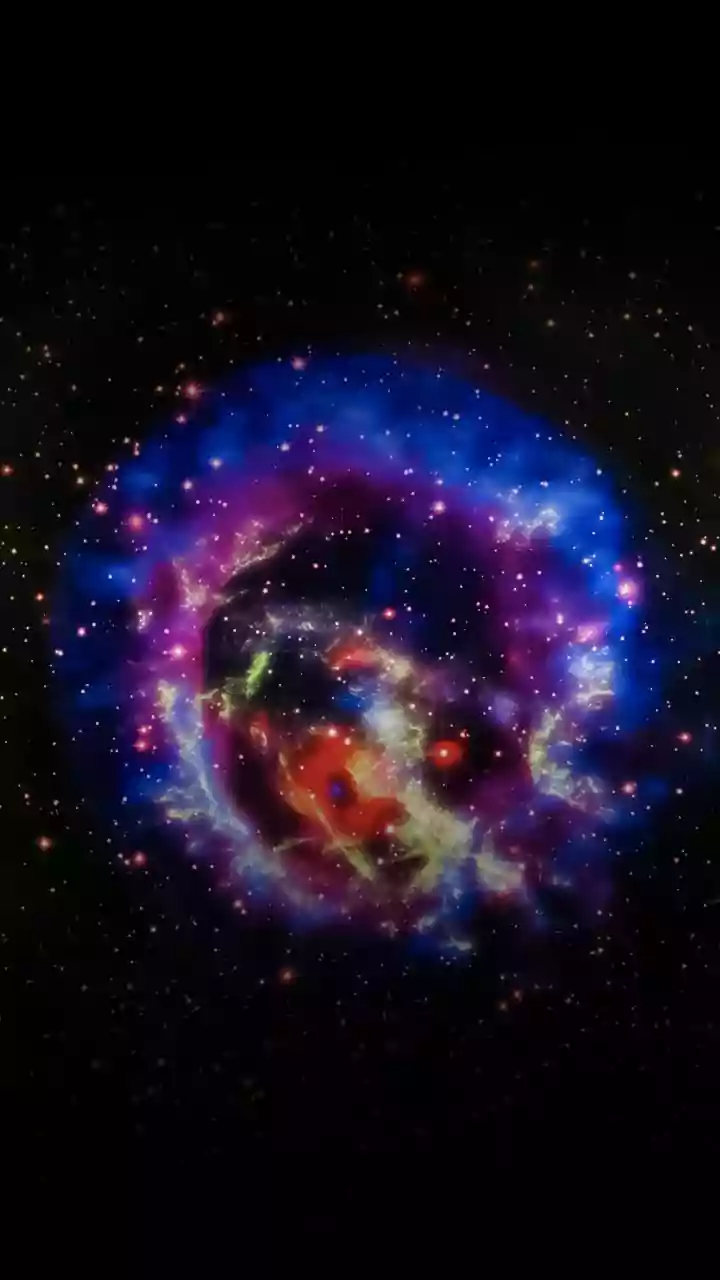
When astronomers look at a galaxy in X-rays, they are no longer seeing stars, but the most extreme and violent phenomena in the universe. X-rays are produced by material heated to millions of degrees. This happens in the chaotic environments around supermassive black holes at the centers of galaxies, where matter is torn apart before being consumed. X-rays also reveal neutron stars, the collapsed remnants of massive stars, and vast clouds of superheated gas floating between galaxies. Gamma rays, the most energetic form of light, point to even more extreme events, such as changes within the nucleus of an atom.
Radio Waves: The Cold and the Ancient
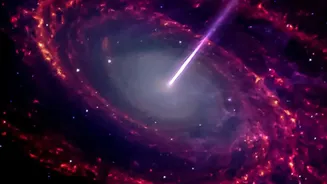
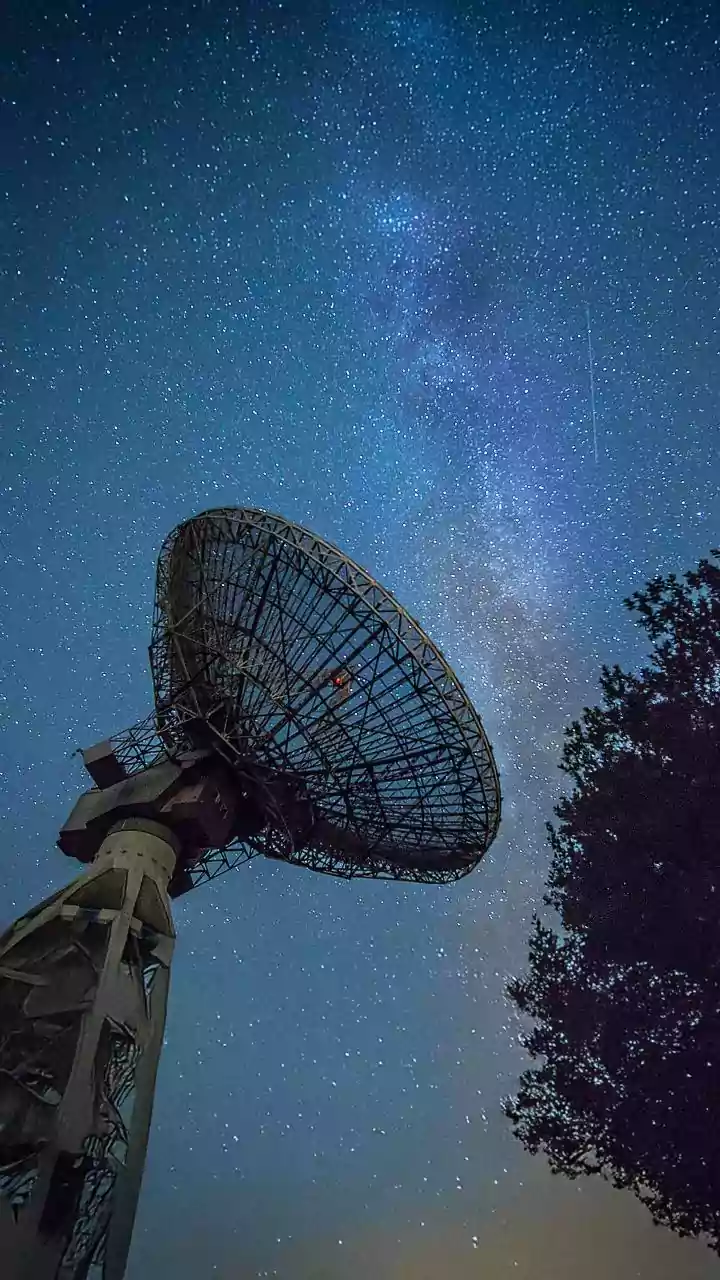
Looking at a galaxy in radio waves reveals two different extremes: the very cold and the very energetic. Radio telescopes can map vast clouds of cold hydrogen gas, the raw fuel from which future stars will be made. At the same time, radio waves are also generated by powerful jets of particles that are blasted out from the vicinity of a supermassive black hole, often extending far beyond the visible confines of the galaxy itself. These jets, invisible in optical light, show the immense influence a central black hole has on its host galaxy.