







The Soul of the Soil
The journey of a thousand pots begins with a single step: finding the right clay. This is no simple task. Artisans, known as 'kumhars', possess a deep, intuitive knowledge of the land. They can identify the perfect soil not just by sight, but by touch
and even smell. The clay must have the right plasticity and be free from impurities. Once sourced, the preparation is a laborious process of cleaning, soaking, kneading, and wedging to remove air bubbles and achieve a uniform consistency. This foundational stage is critical; the quality of the final product depends entirely on the perfection of the prepared clay. It’s a skill that balances science with a profound connection to the earth.
The Dance of the Wheel
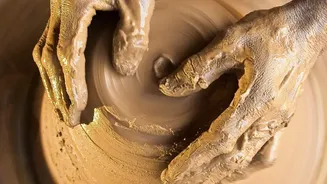
The potter's wheel is where clay truly comes to life. It's an iconic image of creation, but the skill involved is often underestimated. As the wheel spins, the potter must apply precise, controlled pressure to centre the lump of clay—a feat that requires immense strength and stability. Then, with subtle movements of the fingers and hands, they pull the clay upwards, shaping it into a vessel. This process is a delicate dance between the artist's vision and the clay's will. Creating symmetrical, uniform pieces like 'matkas' and 'surahis' at speed is a display of muscle memory and expertise honed over many years. However, not all pottery is wheel-thrown. Techniques like coiling, pinching, and slab building are also used, especially for unique or complex shapes.
A Canvas of Clay
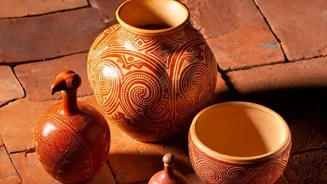
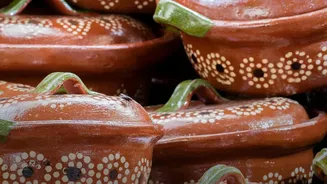
Once formed and dried to a leather-hard state, the pot becomes a canvas. This is where decorative skills transform a functional object into a piece of art. The techniques are as diverse as India itself. In Nizamabad, Uttar Pradesh, artisans are famous for their glossy black pottery, which involves incising designs onto the surface and then smoke-firing the piece with rice husks to achieve its distinctive sheen. The women of Khavda in Gujarat paint intricate geometric and natural motifs using bamboo sticks and clay-based paints, a style that echoes Harappan-era designs. Then there is Jaipur's famous Blue Pottery, which is unique as it doesn't use traditional clay at all. Instead, a dough is prepared from quartz powder, powdered glass, and other materials, which is then cast in moulds and painted with striking cobalt blue floral or geometric patterns.
The Trial by Fire
Firing is the final, and most perilous, stage. It is the moment of truth where the soft, fragile clay is transformed into hard, durable ceramic. The temperature must be controlled with immense precision. Too hot, and the pots will crack or warp; too cool, and they will be weak and porous. Traditional methods vary, from open firing where pots are stacked and covered with combustible materials like wood and cow dung, to more structured updraft kilns built into hillsides. The sagar, a large clay container, is often used to protect delicate pieces from direct flames, ensuring even heating. This stage is a high-stakes gamble that relies entirely on the artisan's experience and judgement, as a single mistake can ruin days or weeks of hard work.
An Art Form Under Pressure
Despite this incredible heritage of skill, traditional pottery is facing significant challenges. Competition from cheaper, mass-produced plastic and metal alternatives has drastically reduced demand for everyday earthenware. Potters often face unstable incomes, with demand peaking only during festivals like Diwali. Furthermore, a lack of direct market access and the declining interest of younger generations, who often seek more stable careers, threaten the continuity of this ancient craft. Many artisans are forced to abandon their ancestral profession, leading to a gradual loss of invaluable traditional knowledge.