



The Era of 'More Minutes'
For decades, the public health message around walking was dominated by quantity. The goal was to get people moving, and the simplest way to measure that was in steps or minutes. The 10,000-steps-a-day target, though originating from a 1960s marketing
campaign for a Japanese pedometer, became a global phenomenon. The logic was sound: accumulating minutes of activity is proven to benefit heart health, weight management, and mood. The recommendation for adults to get 150-300 minutes of moderate-intensity activity per week reinforced this focus on duration. For many, walking was the most accessible way to meet these targets. It's cheap, convenient, and easy on the joints. This 'more is more' approach successfully encouraged millions to embrace a more active lifestyle.
The Shift Towards Quality Over Quantity
As we age, however, the conversation is changing. After 40, the body undergoes subtle shifts. We begin to lose muscle mass, joint stiffness can increase, and balance might not be as sharp. It is during this phase that experts say the how of walking becomes just as, if not more, important than the how long. Studies have consistently found that walking pace is a strong predictor of health outcomes, with brisk walkers showing a significantly lower risk of mortality and cardiovascular disease compared to slow walkers, independent of the total time spent walking. A slow, shuffling gait might keep you moving, but it doesn't challenge the muscles or cardiovascular system enough to maintain strength, coordination, and stability for the years to come. Every walk after 40 is an opportunity to actively combat age-related decline.
What Good Walking Form Looks Like
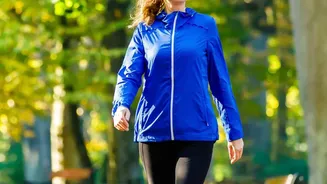
Improving your walking form isn't about adopting a rigid, unnatural posture. It’s about making small, intentional adjustments to move more efficiently and safely. Focus on standing tall, as if a string is pulling you up from the crown of your head; this elongates your spine and helps you breathe deeper. Keep your eyes looking about 10 to 20 feet ahead, not down at your feet, to reduce strain on your neck and back. Your shoulders should be relaxed, not scrunched up by your ears. Engage your core slightly to keep your back straight. Allow your arms to swing naturally with a slight bend. Finally, focus on a smooth, heel-to-toe foot strike: land on your heel, roll through your foot, and push off with your big toe. These small tweaks transform a simple stroll into a more powerful, beneficial exercise.
Why Form Unlocks Greater Benefits
Adopting a better walking form does more than just make you look confident; it's a direct investment in your long-term mobility. Proper mechanics reduce unnecessary strain on your knees, hips, and lower back, which are common areas of discomfort for adults over 40. By engaging your muscles more effectively—from your core and glutes to your arms and back—you turn your walk into a full-body workout that strengthens muscles and supports bone health. Furthermore, walking with a purposeful, brisk pace challenges your heart and lungs, boosting cardiovascular fitness far more effectively than a slow meander. This increased intensity, even in short bursts, has been linked to better metabolic health and a lower risk of chronic disease. Good form makes every minute of your walk count for more.
Finding Your Perfect Balance
This new focus on form doesn't mean you should throw your step counter away. The ideal approach isn't about choosing form or minutes, but about integrating quality into your quantity. Continue to aim for a consistent walking routine, as duration still matters for overall health and calorie burn. However, start dedicating part of your walks to conscious improvement. You might designate the first five minutes of every walk to a 'form check-in.' Or, try incorporating 'power intervals': walk at a brisk, purposeful pace for one minute, focusing on your technique, then recover at a normal pace for two minutes, and repeat. The goal is to make good habits second nature, so that every step you take is a step toward better strength, balance, and lifelong mobility.