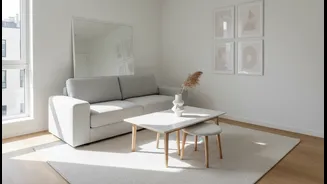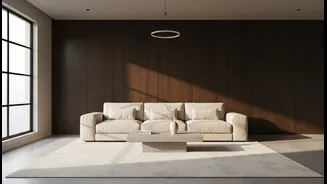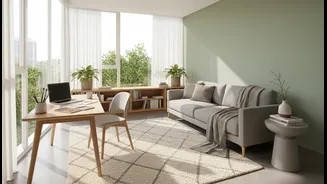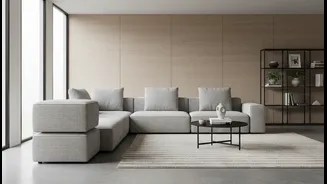





What is a Modular Sofa?
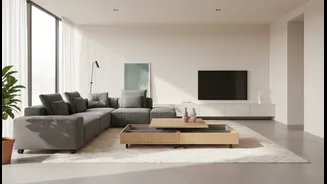
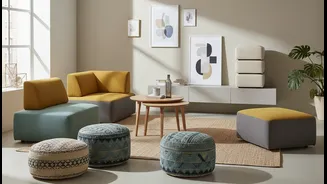
Think of a modular sofa as furniture's version of building blocks. Instead of being one large, fixed piece, it consists of several independent sections, or 'modules'. These can include corner pieces, armless single seats, ottomans, and chaises. The core
idea is that you can arrange and rearrange these sections to create different shapes and sizes—from a classic L-shape to a sprawling U-shape, a simple straight couch, or even separate seating areas. This inherent flexibility is what allows it to evolve with your life and your living arrangements.
The Ultimate Solution for Renters and Movers
The most significant advantage of a modular sofa is its adaptability, especially for those who rent or move often. A sofa that perfectly fits your spacious flat today might overwhelm a smaller living room tomorrow. With a modular design, you don't have to sell your beloved couch; you simply reconfigure it. Remove a section to shrink it, or change an L-shape into a straight sofa to fit along a different wall. Furthermore, moving a modular sofa is dramatically easier. Each section is lighter and more manageable, making it simple to navigate narrow stairwells, tight corners, and small elevators without the stress and potential damage associated with a bulky, traditional couch.
Beyond Flexibility: Other Key Benefits
The advantages extend beyond just fitting into new spaces. If your family grows, you can often purchase additional modules to expand your seating instead of buying a whole new sofa. This makes it a scalable, long-term investment. Another practical benefit is maintenance. If a single section gets irreparably stained or damaged, you only need to replace that one module, not the entire piece of furniture. Many designs also feature removable, washable covers, a lifesaver for households with children or pets. The ability to use pieces in different ways—an ottoman can be a footrest, a coffee table, or extra seating—adds another layer of functionality.
What to Consider Before You Buy
While modular sofas offer incredible benefits, they aren't without potential drawbacks. A common complaint is that modules can sometimes shift or separate, especially on smooth floors. Look for models with robust connecting systems, like alligator clips or metal brackets, to ensure a stable setup. The initial cost can also be higher than for a standard sofa of a similar size, due to the complex engineering required for versatility. However, many find this upfront cost is offset by the long-term value and adaptability. Finally, the sheer number of choices in configuration and fabric can feel overwhelming, so it pays to measure your space carefully and have a clear idea of your needs before you shop.
Making the Right Choice for Your Home
A modular sofa is an excellent choice for anyone whose life is dynamic. It is particularly well-suited for renters, people in their first homes, growing families, and anyone who enjoys rearranging their decor. For small apartments, a simple two or three-piece configuration with a chaise can provide ample seating without cramping the room. In larger, open-plan homes, a U-shaped arrangement can create a cozy, defined conversation area. Before committing, assess your lifestyle. If you value stability and a uniform look above all, a high-quality traditional sofa might still be your best bet. But if you crave furniture that can keep up with life's changes, a modular sofa is hard to beat.