



Why Your CV Is No Longer Enough
For decades, the curriculum vitae, or resume, has been the key to unlocking job opportunities. It’s a neat, tidy summary of your education, skills, and work history. But in today’s digital-first, project-based economy, it’s becoming a relic. A text resume is a static
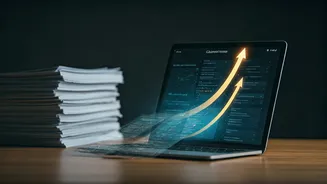
document in a dynamic world. It tells a recruiter what you’ve done, but it can’t show them *how* you did it. It lists 'Project Management' as a skill, but it doesn't display the complex project you successfully navigated. It says you’re a 'Creative Thinker', but it offers no proof. In a stack of hundreds of similar-looking documents, a text-based resume struggles to convey your unique value, your problem-solving process, and the tangible results of your work. It’s a list of ingredients, not the final, delicious dish.
The Portfolio as Your Professional Story
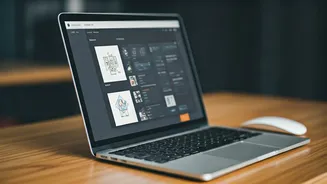
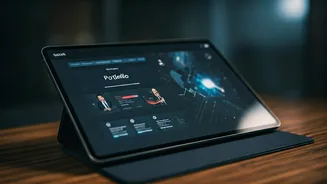
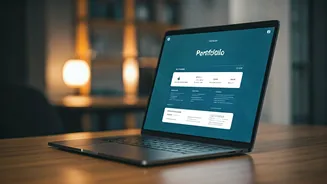
This is where a web portfolio changes the game. Think of it not as a digital art gallery (unless you’re an artist!), but as your professional storybook. It’s a dedicated space online where you control the narrative. While a resume is built to be scanned in six seconds, a portfolio invites a hiring manager to explore. It’s the difference between reading the back cover of a book and actually reading a few of its best chapters. Through a portfolio, you can move beyond bullet points to showcase case studies. You can explain the 'why' behind your work: the problem you were trying to solve, the process you followed, the challenges you overcame, and the measurable impact you delivered. This narrative approach demonstrates critical thinking, resilience, and a results-oriented mindset—qualities that are impossible to capture on a single page of text.
What to Include for Maximum Impact
A great portfolio is curated, not comprehensive. You don’t need to show everything you’ve ever done. Focus on quality over quantity. Aim to include 3-5 of your best projects. For each one, create a mini case study: start with the problem or goal, describe your specific role and actions, and end with the results, using metrics and data wherever possible. Include an engaging 'About Me' page that reveals your personality and passion for your field—this is your chance to connect on a human level. Make sure your contact information is prominent and easy to find. Finally, add testimonials or quotes from colleagues, managers, or clients if you have them. This social proof adds a powerful layer of credibility to your claims.
But I’m Not a Designer or Developer!
This is the most common hesitation, and it’s a myth. You do not need to be a coder or a graphic designer to build an effective portfolio. For professionals like marketers, writers, project managers, and consultants, the focus is on clarity and content, not on flashy animations. Today, user-friendly platforms like Squarespace, Wix, Carrd, or even Notion make it incredibly simple to create a clean, professional-looking site with zero coding knowledge. You can use simple templates and let your project descriptions and results do the talking. For developers, a well-maintained GitHub profile can function as a de facto portfolio, but a separate site that explains the context and purpose of your key repositories can be even more powerful. The goal isn't to win a web design award; it's to clearly and compellingly communicate your professional value.
Making Your Portfolio Work for You
Creating your portfolio is just the first step. The next is to integrate it into your professional presence. It should not be a secret you only share upon request. Add the link to your portfolio in your email signature, on your LinkedIn profile, and at the top of your resume itself (yes, you still need a resume, but now it acts as a gateway to your richer portfolio). When networking or in interviews, you can refer to specific projects and say, “You can see the full case study on my portfolio.” This transforms you from a candidate who claims to have skills into a professional who proves them. Remember, your portfolio is a living document. Plan to revisit and update it every few months with new projects and achievements to keep it fresh and relevant.