





Understanding Mountain Fog
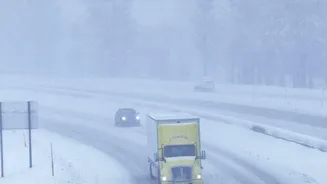
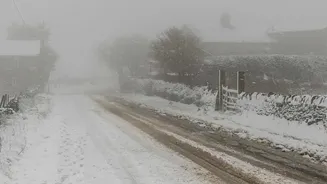
Fog in mountainous regions is unpredictable and can drastically reduce visibility to just a few feet, obscuring sharp turns and other hazards. Unlike city smog, mountain fog, such as valley fog or upslope fog, can form rapidly. Valley fog develops overnight
as cold, dense air sinks into lower elevations, filling valleys from the bottom up. Upslope fog occurs when moist air is pushed up a mountain slope, cooling and condensing as it rises. This means a driver can go from a clear road into a thick, disorienting whiteout in an instant, making it difficult to judge distances and spot dangers like wildlife or fallen branches.
The Hidden Threat of Black Ice
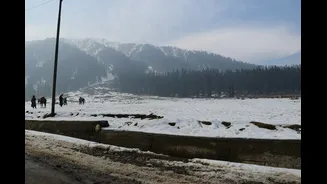
Frost on the road is more than just a pretty white coating; it can create 'black ice'. This is a thin, transparent layer of ice that is nearly invisible because it blends in with the dark tarmac of the road. It often forms in the early morning or late evening when temperatures drop below freezing, especially on shaded parts of the road, bridges, and overpasses where sunlight can't reach. Black ice is extremely dangerous because it offers almost no traction, and a driver may not realise they are on it until their vehicle starts to skid. The glossy, wet appearance of the road surface can be the only clue.
Prepare Your Vehicle Before You Go
Before starting any winter mountain journey, a thorough vehicle check is critical. Ensure your headlights, taillights, and fog lamps are clean and working correctly. Check your tyres to make sure they have adequate tread for gripping slick surfaces; winter or all-season tyres are highly recommended. Your windshield wipers must be in good condition, and the defroster should be functioning properly to keep the glass clear of frost and condensation. It's also wise to check your battery, as cold weather can reduce its efficiency. Keeping your fuel tank at least half full can help prevent the fuel line from freezing.
Safe Driving Techniques in Low Visibility
When you encounter fog, your first action should be to slow down significantly. Fog creates a false sense of slow motion, so you may be driving faster than you think. Use your low-beam headlights; high beams will reflect off the fog and worsen your visibility. If your car has fog lights, use them. Increase the distance between your vehicle and the one in front to at least five or six seconds to allow for longer stopping distances. Use the white line on the edge of the road as a guide to stay in your lane, and avoid the temptation to overtake. It can also be helpful to roll down a window slightly and turn off the radio to listen for traffic you cannot see.
How to Handle Icy Patches
If you hit a patch of black ice, the most important rule is to remain calm and make no sudden movements. Do not slam on the brakes, as this will lock the wheels and cause an uncontrollable skid. Take your foot off the accelerator and keep the steering wheel straight, allowing the vehicle to glide over the icy patch. If you feel the car begin to slide, gently steer in the same direction as the skid to regain control. Using lower gears, a technique known as engine braking, can help control your speed on descents without relying solely on brakes.
When to Pull Over or Postpone
There are times when the safest decision is not to drive at all. Before you leave, check weather forecasts and road advisories from sources like the India Meteorological Department (IMD). If dense fog advisories are in effect, consider delaying your trip. If you are already on the road and visibility drops to near-zero, it is best to pull over. Find a safe location like a designated rest area, pull your vehicle as far off the road as possible, and turn on your hazard lights to ensure other drivers can see you.