





The Metal World Mystery
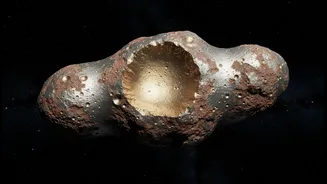
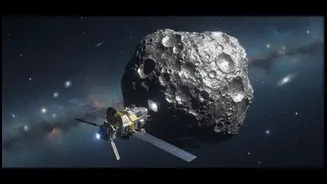
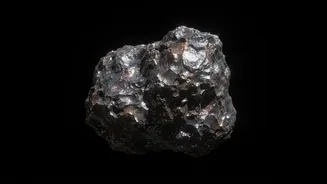
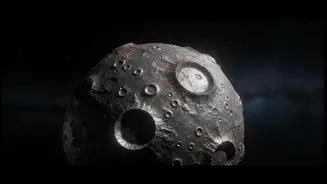
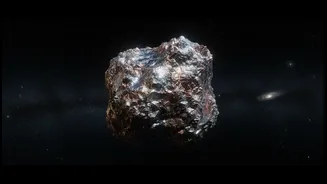
Orbiting the sun in the main asteroid belt between Mars and Jupiter, 16 Psyche is one of the most intriguing objects in our solar system. Discovered in 1852, this massive body, about 222 kilometres in diameter, was long thought to be the exposed metallic
core of a protoplanet—a small, early planet that was smashed apart during the violent formation of the solar system. This theory was exciting because it offered a chance to study a planetary core, something impossible on Earth where our own core is buried thousands of kilometres beneath us. Early observations supported this, suggesting Psyche was a giant, solid hunk of incredibly valuable iron and nickel.
Recalculating the Riches
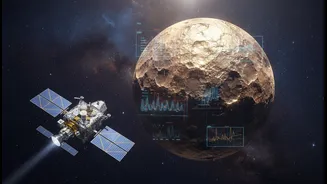
The long-held idea of a pure metal world began to crack when scientists gathered more precise data. By observing the tiny gravitational pull Psyche exerts on other asteroids, researchers could calculate its mass. When they combined this mass with updated volume estimates from radar and occultation measurements (watching the asteroid block starlight), they could finally calculate its bulk density. The result was a surprise. Pure iron-nickel has a density of about 7.9 grams per cubic centimetre (g/cm³). However, recent studies calculate Psyche's density to be much lower, somewhere in the range of 3.4 to 4.1 g/cm³. This figure was too low for a solid metal object, which meant something else had to be going on.
A Porous and Complex World
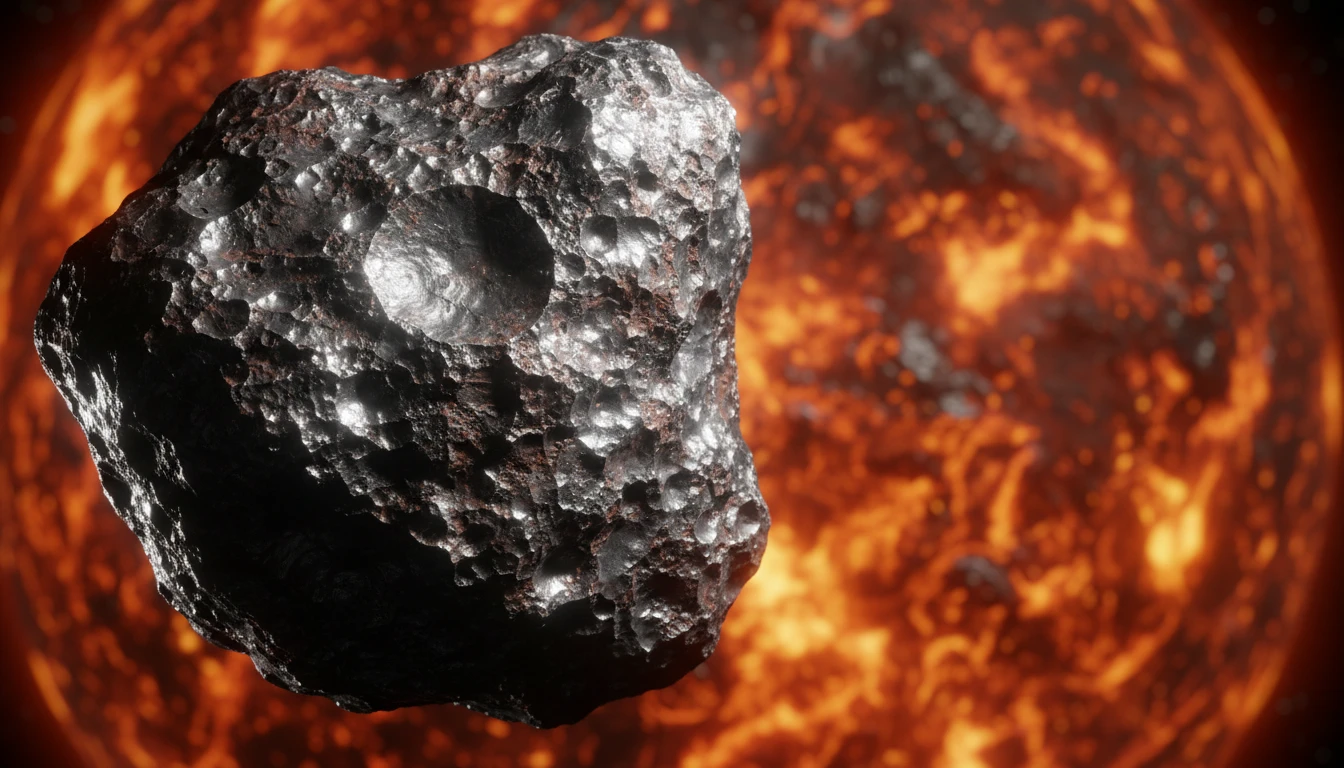
The new density measurement forced a major rethink. For Psyche to be pure metal, it would need to be about 50% porous—meaning half of its volume is empty space. For an object so large, such high porosity is considered highly unlikely. The latest data from ground-based telescopes using thermal inertia (how it heats and cools) and radar reflections suggests a different story. Psyche is not a solid metal lump but likely a complex mix of metal and silicate rock. Some studies now estimate its metallic content to be between 30% and 60% by volume. One analysis even proposed a composition of 82.5% metal, 7% rocky minerals, and 10.5% carbonaceous material, possibly deposited by other impacting asteroids. This suggests Psyche might be more of a 'rubble pile' than a solid core.
What the New Data Tells Us
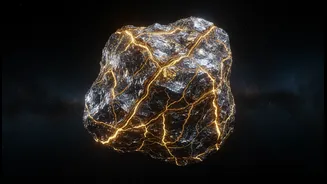
This evolving picture shows that Psyche's surface is surprisingly diverse. New maps reveal vast regions that are indeed metal-rich, but they are interspersed with areas that seem to be covered in rocky silicate material. This has led to new theories, including the idea of 'ferrovolcanism'—ancient volcanoes that spewed molten metal lava across the surface. The presence of both metal and rock, along with significant variations across its surface, indicates a far more dynamic and violent history than previously imagined. Rather than a simple remnant core, Psyche could be the product of multiple collisions that mixed everything together instead of stripping layers away.
The Trillion-Dollar Question Mark
While headlines often tout Psyche's value at an astronomical $10,000 quadrillion or more, that number is a highly theoretical exercise. It's calculated by taking a rough estimate of the asteroid's metal content and multiplying it by current Earth commodity prices. The reality is that introducing such a massive supply of iron, nickel, and other precious metals would completely crash global markets. Furthermore, the new data suggesting a mixed composition of metal and rock, rather than a pure metallic core, complicates any valuation. The true value of Psyche is scientific. It's a unique natural laboratory for understanding how planets form, differentiate, and evolve.