






From Footprints to a Foothold
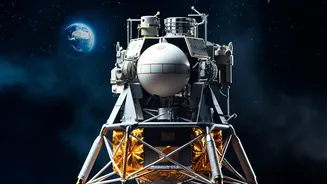
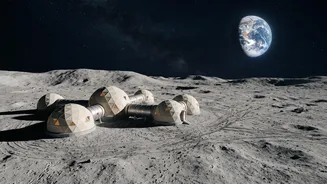
For over half a century, the Apollo missions were humanity's last footsteps on the Moon. Now, NASA's Artemis program aims not just for a return, but for a permanent residence. The vision is to establish an Artemis Base Camp near the lunar South Pole,
a region believed to hold water ice in its permanently shadowed craters. This long-duration outpost would serve as a hub for science, resource utilisation, and a critical proving ground for the next giant leap: sending astronauts to Mars. The plan is phased, beginning with robotic missions to scout the terrain and demonstrate technologies, before moving on to constructing habitats and infrastructure for sustained human crews.
India's Proven Lunar Expertise
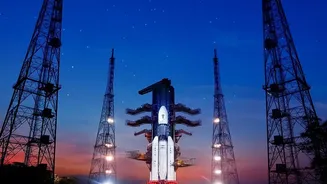
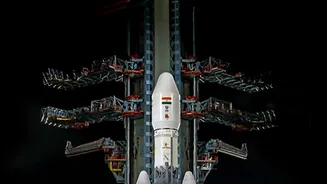
India's invitation to this monumental project is no coincidence. The Indian Space Research Organisation (ISRO) has demonstrated formidable capabilities in lunar exploration. The historic success of the Chandrayaan-3 mission, which achieved the first-ever soft landing near the challenging lunar South Pole, placed India in an elite group of spacefaring nations. This mission showcased ISRO's mastery of precision landing, autonomous navigation, and rover operations on the lunar surface—all critical skills for building and maintaining a base. Beyond technical prowess, ISRO is globally recognised for its cost-effective engineering, a highly valuable asset for a project as complex and expensive as a Moon base.
A Framework for Cooperation
The foundation for this partnership was laid when India signed the Artemis Accords in 2023. These accords are a set of non-binding principles designed to guide civil space exploration, promoting transparency, interoperability, and the peaceful use of space. By joining, India signalled its alignment with a collaborative, US-led vision for the future of space governance, moving from a traditionally independent path to one of global engagement. The recent invitation to join the Moon base program, extended during the India-U.S. Civil Space Joint Working Group meeting, is the most significant step yet in this deepening relationship.
What India Could Bring to the Base
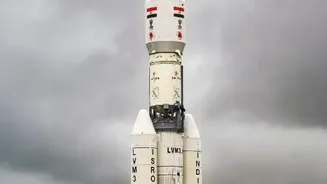
While specifics are still being negotiated, India's potential contributions are significant and varied. Experts suggest ISRO could provide scientific instruments, robotic systems for exploration and construction, or expertise in communications and data analysis. Given the success of the Pragyan rover, which analysed the lunar surface's chemical composition, India could play a key role in resource mapping and prospecting for water ice. As India develops its own heavy-lift launch vehicles, it could also contribute to delivering cargo and equipment to the Moon. Furthermore, this partnership would open up massive opportunities for India's rapidly growing private space sector.
A Shared Future in the Cosmos
This collaboration offers immense benefits for both nations. For India, it provides access to cutting-edge technologies, shared scientific data, and the opportunity for Indian astronauts to potentially participate in crewed lunar missions. For the United States, India represents a capable and reliable partner to share the enormous financial and technical burden of establishing a permanent human presence beyond Earth. This partnership is a cornerstone of the broader U.S.-India strategic relationship, strengthening ties in technology and geopolitics. The joint effort transforms the narrative from a 20th-century space race to a 21st-century model of international cooperation.