


Why 'Seasonal' Is a Magic Word
Before we dive into the specific varieties, let’s appreciate why ‘seasonal’ matters so much. When beans are in season, they are at their absolute peak. They are harvested at the right time, meaning they travel shorter distances to get to your plate. This
results in produce that is not only fresher and more flavourful but also retains more of its nutritional value. Vitamins and antioxidants begin to degrade after harvesting, so the less time produce spends in transit and storage, the better it is for you. Furthermore, seasonal eating is often more economical. When a crop is abundant, its price naturally drops, making it a smart choice for your wallet as well as your health. It’s a simple, delicious way to eat in harmony with nature’s cycles.
Cluster Beans (Gawar Phali): The Humble Powerhouse
Often overlooked, the humble gawar phali, or cluster bean, is a nutritional giant. It has a slightly bitter, distinctive taste that pairs beautifully with bold spices. What makes it special is its incredible fibre content, particularly a soluble fibre called galactomannan. This fibre is excellent for digestive health, helping to regulate bowel movements and keep you feeling full for longer. Gawar is also a good source of iron, calcium, and vitamins A, C, and K. In Indian kitchens, it’s commonly prepared as a dry sabzi, sautéed with potatoes, garlic, turmeric, and a hint of amchur (dry mango powder) to balance its bitterness. This simple preparation transforms it into a tasty and deeply satisfying dish that’s perfect with hot rotis.
Broad Beans (Sem Phali): The Meaty Delight
Broad beans, known as sem phali or papdi, are a beloved winter vegetable across India. These flat, wide beans have a tender, almost meaty texture and a subtly sweet, earthy flavour. They are an excellent source of plant-based protein and folate, a crucial B-vitamin for cell growth and metabolism. They also provide a healthy dose of minerals like manganese and phosphorus. One of the most popular ways to enjoy them is in a simple curry like ‘Aloo Sem’, where the beans are cooked with potatoes in a fragrant tomato-onion gravy. The beans absorb the spices wonderfully, becoming soft and succulent. They are also fantastic when stir-fried with a simple tempering of mustard seeds, cumin, and asafoetida (hing).
French Beans (Fansi): The Versatile Favourite
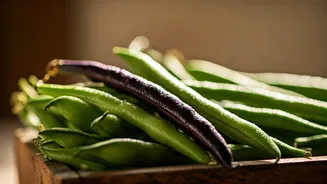
No list of beans would be complete without the universally loved French bean. Slender, crisp, and mildly sweet, these beans are incredibly versatile. While available year-round, their seasonal peak brings out the best in their texture and taste. Nutritionally, they are a fantastic source of Vitamin K, essential for blood clotting and bone health, and Vitamin C, a powerful antioxidant. They also contain silicon, a mineral important for connective tissue health. Their mild flavour makes them a perfect canvas for various culinary styles. In South India, they are finely chopped and made into a ‘thoran’ or ‘poriyal’ with grated coconut and spices. In the North, they are often stir-fried with carrots and a light masala. They can be blanched and added to salads, tossed into fried rice, or simply steamed as a healthy side dish.
Long Beans (Chawli/Lobia Phali): The Crunchy Wonder
Also known as yardlong beans or asparagus beans, chawli are impressively long, sometimes reaching over a foot in length. They have a distinctively chewy and crunchy texture that holds up well during cooking, unlike some of their more delicate cousins. They are rich in fibre, Vitamin A, and Vitamin C. Their robust texture makes them ideal for stir-fries and sautés, where they can be cooked quickly over high heat to retain their signature crunch. In Maharashtrian cuisine, they are often used in ‘usal’ (a sprouted bean curry) or a simple sabzi with goda masala. Their ability to absorb strong flavours while staying crisp makes them a favourite in many regional dishes, offering a delightful textural contrast.