







The Allure of the Human Touch
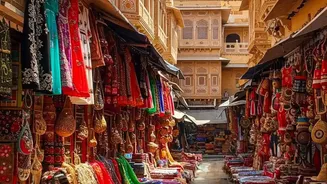
Our first encounter with this world wasn't in a sterile, air-conditioned store, but in a bustling Jaipur market, surrounded by colour and sound. The initial draw to handmade goods is often sensory. It’s the slight irregularity in a block-printed pattern,
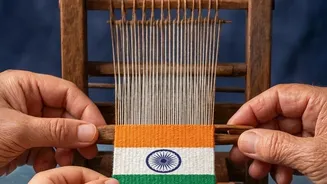
the visible texture of hand-woven fabric, or the unique form of a hand-thrown pot. Unlike the flawless uniformity of machine-made products, these imperfections tell a story. They are a visible record of the artisan's hand and a quiet rebellion against the soulless perfection of an assembly line. This 'kinetic imperfection' is not a flaw; it is the sign of an object that is alive with human skill, where every piece is unique.
Woven Stories, Not Just Threads
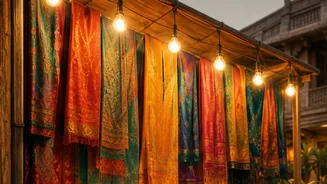
In a Sanganer workshop, we watched artisans create intricate floral designs using hand-carved teakwood blocks—a craft that has flourished for over 400 years. A single block can take days to carve and may be used for decades. The process is slow and methodical; each colour requires a separate block, meticulously aligned by eye. This patient craftsmanship results in textiles that are built to last. Handloom weaving involves lower tension on the yarn compared to power looms, which helps retain the fibre's natural strength. The fabrics are often made with superior natural materials like cotton and silk and feature tighter weaves and stronger edges, designed to soften and improve with age rather than fray and fade.
The Surprising Resilience of Blue Pottery
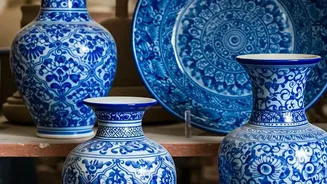
One of the most enduring symbols of Jaipur is its Blue Pottery, a craft with Persian origins. Its beauty is matched by its surprising durability, which comes from its unique composition. Unlike conventional pottery, it contains no clay. Instead, artisans create a dough from quartz powder, powdered glass, fuller's earth (Multani Mitti), borax, and gum. This mixture is low-fired, a delicate process that can take days, but the resulting product is remarkably resilient. A key advantage is that true Blue Pottery doesn't develop cracks over time, making it hygienic and suitable for daily use, a stark contrast to mass-produced ceramics that chip and lose their lustre.
Soles with Soul: The Enduring Mojari
In a quiet lane, a shoemaker was stitching a pair of Mojaris, the traditional Rajasthani leather footwear. Handmade shoes, particularly those crafted from high-quality full-grain leather, are fundamentally different from their factory-made counterparts. Artisans select the best parts of the hide and use construction methods like hand-stitching that create a stronger, more flexible bond between the upper and the sole. While a factory-made shoe often uses industrial adhesives and cannot be repaired once the sole wears out, a handmade Mojari is built for longevity. The seam allowances are designed to be restored, allowing the shoes to be resoled and kept in use for decades, becoming more comfortable as the leather ages.
The True Economics of an Heirloom
The initial cost of a handmade quilt or a pair of leather shoes from a Rajasthani artisan is almost always higher than a similar-looking item from a big-box store. However, the comparison stops there. The factory item is often designed for a short lifecycle, part of a high-volume business model that prioritizes trend replication over lifespan. The handmade good is an investment in quality materials and meticulous craftsmanship. It is built to be used, cared for, and even repaired. Over a lifetime, the single purchase of a durable, timeless piece proves far more economical than the cycle of buying, discarding, and replacing cheap, disposable products. It shifts the definition of value from 'how much it costs' to 'how long it lasts'.