







The Body's Natural Cooling System
To understand why humidity is such a game-changer, we first need to look at how the body keeps itself cool. During exercise, your muscles generate a tremendous amount of heat. To prevent overheating, your body has a brilliant, built-in air conditioner:
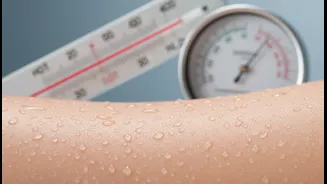
sweating. Your brain signals sweat glands to release moisture onto your skin. As this sweat evaporates into the air, it takes heat with it, effectively cooling you down. This process is the single most important way your body offloads heat during a tough workout.
How Humidity Sabotages Sweat
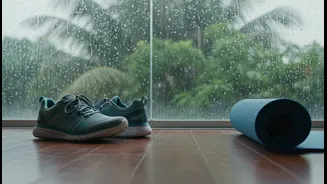
Humidity is the amount of water vapour already present in the air. When the air is saturated with moisture—as it often is in a crowded indoor gym or during India's monsoon season—it can't easily absorb more. This means your sweat has nowhere to evaporate. Instead of cooling you, it simply drips off your skin, leading to a useless loss of water and electrolytes without providing the cooling benefit. Your body's primary cooling mechanism is effectively disabled, forcing it to work much harder to regulate its temperature.
The Cascade of Consequences
When your body can't cool itself through evaporation, a chain reaction of physiological stress begins. Your core body temperature starts to rise. To compensate, your body diverts more blood flow to the skin in a desperate attempt to release heat. This shunts blood away from your working muscles. With less blood returning to the heart, your stroke volume (the amount of blood pumped per beat) decreases. To maintain the same cardiac output and deliver oxygen to your muscles, your heart is forced to beat faster. This phenomenon is known as 'cardiovascular drift', and it’s why your heart rate is significantly higher for the same level of effort in humid conditions. The end result is that everything feels harder, and you fatigue much more quickly.
Why 'Toughing It Out' Is a Bad Idea
Pushing through this intense physiological strain is not a sign of toughness; it’s a path to poor performance and potential danger. The inability to cool down can lead to heat exhaustion, a serious condition with symptoms like dizziness, nausea, headache, and heavy sweating. If ignored, heat exhaustion can progress to heatstroke, a life-threatening emergency where the body's core temperature rises to dangerous levels, potentially causing organ damage. For an athlete, training is about quality, not just suffering. Pushing to the brink in high humidity compromises the quality of the workout, increases injury risk, and requires a longer recovery time, ultimately hindering progress.
The Elite Strategy: Smart and Strategic Scaling
Elite athletes understand this science intimately. They know that a workout's success is measured by the training stimulus, not by how much they sweat or suffer. In humid conditions, they scale down their intensity to match their body's reduced capacity. This is a strategic decision, not a sign of weakness. Scaling down might mean reducing the weight they lift, shortening high-intensity intervals, extending rest periods between sets, or lowering their target pace on a cardio machine. The goal is to achieve the desired physiological adaptation without overloading the cardiovascular system or risking heat-related illness. By moderating intensity, they can still complete a high-quality session that supports their long-term goals.
How to Apply This to Your Own Workouts
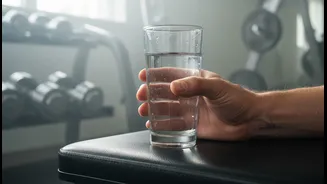
You don’t need to be a professional athlete to train smarter in the heat and humidity. On days when the air feels thick and heavy, listen to your body. Pay attention to your perceived effort and heart rate rather than just the numbers on the weights or the speed on the treadmill. Start with a longer warm-up and consider reducing your overall workout intensity. Stay well-hydrated, and don't just drink water; be sure to replenish the electrolytes like sodium that you lose through sweat. Wear light, moisture-wicking clothing to help any evaporation that can occur. Remember, adapting your workout to the conditions is a sign of an experienced and intelligent approach to fitness.