

A Tale of Two Moons
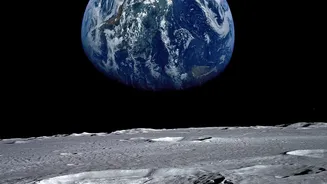
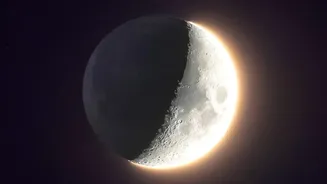
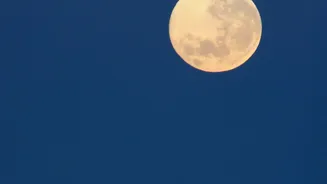
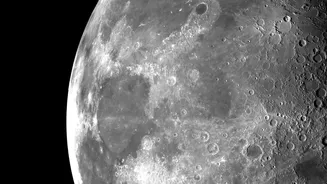
Anyone who has ever looked up at the Moon is familiar with the 'man in the moon'— vast, dark plains of ancient volcanic rock called 'maria'. These features dominate the Earth-facing side, known as the nearside. For decades, scientists have known that
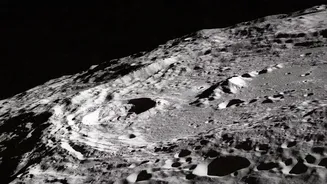
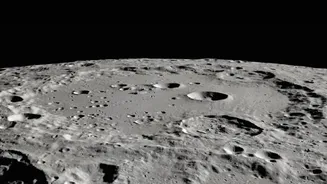
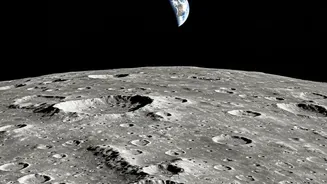
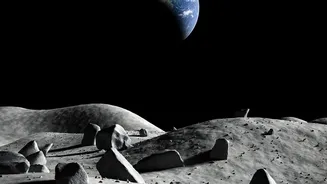
the farside, permanently hidden from our view, is a different world. It is rugged, relentlessly cratered, and has a much thicker crust with very few maria. This stark contrast, known as the lunar dichotomy, has been one of the most persistent puzzles in planetary science. Previous theories have pointed to everything from a giant impact to asymmetric convection in the Moon's ancient magma ocean, but none have fully explained how two halves of the same body could have evolved so differently.
Clues From the Far Side
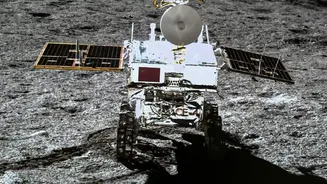
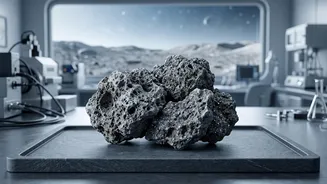
A breakthrough has come from an unprecedented source: the first-ever samples returned from the Moon's farside. Research led by Professor Hejiu Hui of Nanjing University, analyzing rocks collected by China's Chang'e-6 mission, provides a new and elegant explanation. By comparing these farside samples with rocks brought back from the nearside by the Apollo and Chang'e-5 missions, the team found a crucial clue. While rocks from the deep lunar mantle were chemically similar on both sides, the crustal rocks were not. The farside crust was richer in magnesium, while the nearside crust contained a much higher concentration of a unique geological cocktail known as KREEP.
The KREEP Connection
KREEP is an acronym for a material rich in potassium (K), rare-earth elements (REE), and phosphorus (P). It also contains a high concentration of heat-producing radioactive elements like thorium and uranium. This material is thought to be the last dregs of the massive magma ocean that covered the Moon after its formation. As the magma ocean cooled and solidified, heavier minerals sank to form the mantle, while lighter ones floated to form the initial crust. The incompatible elements that make up KREEP were concentrated in a final liquid layer sandwiched between the crust and mantle. The problem was explaining why this heat-generating layer ended up almost entirely on the nearside, creating a thermal imbalance that has shaped the Moon for billions of years.
A New Theory: A Gravitational Push
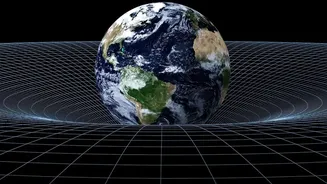
The new study proposes a model that ties all these observations together. The process began after the Moon became tidally locked, with one side permanently facing Earth. Billions of years ago, the Moon was much closer to our planet, and the gravitational pull was immense. According to the researchers' model, this powerful tidal force generated more heat on the nearside than on the farside. This uneven heating created massive, slow-moving currents within the still-molten lunar interior. These vast flows of magma essentially pushed material around on a global scale. Early-forming, magnesium-rich crustal materials were transported from the nearside toward the farside, causing the crust to pile up and become thicker there. At the same time, the KREEP-rich material, which was the last to solidify, was left concentrated on the nearside. This created a hemisphere that was not only thinner-crusted but also supercharged with heat-producing elements, fueling the widespread volcanism that formed the dark maria we see today.