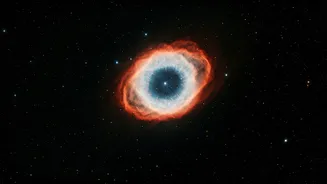









A Ghostly Ring in the Cosmos
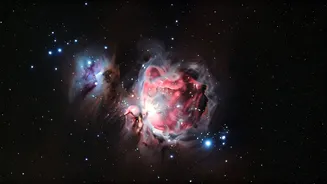
Located about 2,500 light-years away in the constellation Lyra, the Ring Nebula, also known as Messier 57 (M57), is one of the most famous examples of a planetary nebula. But the name is a little misleading; it has nothing to do with planets. Instead,
it’s the beautiful, glowing remains of a star, much like our own sun, that has reached the end of its life. Over thousands of years, the dying star shed its outer layers of gas into space. The hot, dense core left behind, called a white dwarf, now illuminates this expanding cloud of gas, causing it to glow in intricate colours. What we see from Earth is a celestial smoke ring, a vibrant doughnut of cosmic dust and gas—a final, beautiful sigh from a star that died long ago.
Why the Renewed Excitement?
The Ring Nebula has been a favourite target for amateur and professional astronomers for centuries, but recent images from the JWST have sparked a new wave of fascination. Thanks to its powerful infrared capabilities, Webb has peered through the cosmic dust to reveal unprecedented details. The new pictures show intricate filament structures within the main ring and faint, concentric shells in the outer halo, hinting at the complex processes that shaped the nebula. Scientists are studying these images to better understand the life cycles of sun-like stars and learn about a possible companion star that may have influenced the nebula’s unique shape. This fresh scientific insight makes seeing it for yourself more compelling than ever.
The Magic of a Midnight Star Party
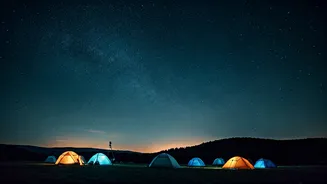
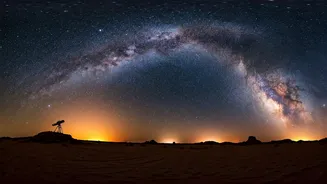
While you won't see the same kaleidoscopic colours as the JWST with a backyard telescope, the experience of finding this faint, ghostly ring in the sky is uniquely magical. This is where local astronomy clubs come in. Across India, groups in cities like Delhi, Bengaluru, Mumbai, and Pune regularly organize 'star parties' or overnight observation camps. These events take enthusiasts away from the light-polluted city skies to darker, rural locations. The atmosphere is one of shared wonder. Experienced amateur astronomers set up powerful telescopes, guiding newcomers to spot distant galaxies, nebulae, and star clusters. There's a communal joy in huddling together in the dark, sipping chai, and sharing a collective gasp as Saturn’s rings or the craters of the moon swim into focus.
How You Can Join the Hunt
Joining one of these events is easier than you might think. A quick search for 'astronomy club' in your nearest major city will likely bring up several options. These clubs are incredibly welcoming to beginners, and you don't need any equipment to start. They often organize transport from the city and provide all the necessary gear. For the Ring Nebula, which is best viewed during the summer and autumn months from India, these clubs will have their telescopes pointed towards the constellation Lyra. Even with a good pair of binoculars under a dark sky, you can spot the nebula as a tiny, faint smudge. But through a decent-sized telescope at one of these camps, you can clearly make out its distinct ring shape—a truly unforgettable sight.
Preparing for Your First Outing
If you decide to go, remember a few key things. Dress in warm layers, as nights can get surprisingly cold, even in summer. Bring a red-light torch if you have one, as white light ruins night vision for everyone. Pack some snacks and water. Most importantly, bring your curiosity. Don't be afraid to ask questions. The members of these clubs are passionate about sharing their knowledge and love for the night sky. It's a chance not just to see a cosmic wonder, but to connect with a community and with the universe in a way that staring at a screen never can.