




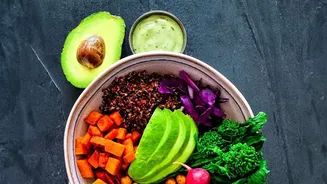
In the world of healthy eating, quinoa and lentils are superstars. One is an ancient grain-like seed hailed as a superfood, the other a humble pulse that's a staple in every Indian kitchen. But which one truly packs the bigger nutritional punch?
The Main Event: A Fibre Face-Off
When it
comes to dietary fibre, lentils are the undisputed champion. A 100-gram serving of cooked lentils provides roughly 7-8 grams of fibre, which is more than double the 2.8-3 grams found in the same amount of cooked quinoa. This is a significant difference. Fibre is crucial for maintaining a healthy digestive system, promoting feelings of fullness, and helping to regulate blood sugar levels. Both foods contain a mix of soluble and insoluble fibre. Soluble fibre dissolves in water to form a gel-like substance that can help lower cholesterol, while insoluble fibre adds bulk to stool, aiding in regular bowel movements. For anyone looking to specifically increase their fibre intake for better gut health or weight management, lentils offer a much more potent dose per serving.
Beyond Fibre: The Protein Power
Here's where the comparison gets more nuanced. Lentils again come out on top in sheer quantity, offering about 9 grams of protein per 100g cooked serving, compared to quinoa's 4.4 grams. However, quinoa has a unique advantage: it's a 'complete protein'. This means it contains all nine essential amino acids that our bodies cannot produce on their own. Lentils, like most legumes, are an 'incomplete protein', typically low in the amino acids methionine and cysteine. This isn't a major issue in a typical Indian diet, as these missing amino acids are easily found in grains like rice or wheat. The classic combination of 'dal chawal' (lentils and rice) cleverly forms a complete protein. So, while quinoa offers protein convenience in one package, lentils provide more protein overall when part of a balanced meal.
Carbohydrates and Blood Sugar Impact
Both quinoa and lentils are considered low on the Glycemic Index (GI), meaning they cause a slower, more controlled rise in blood sugar compared to refined grains like white rice. This makes them excellent choices for sustained energy and for individuals managing blood sugar levels. However, lentils typically have a lower GI, often around 32, while quinoa's GI is around 53. Both are still in the 'low' category, but the slower release of energy from lentils may give them a slight edge for those particularly focused on blood sugar control. Their total carbohydrate content is quite similar, with both containing around 20-21 grams per 100g cooked serving.
Micronutrient Scorecard
When we look at vitamins and minerals, the contest is a mixed bag, but lentils tend to have a broader and more impressive profile. Lentils are an absolute powerhouse of folate, with one cup providing a substantial portion of the daily recommended intake. They are also significantly richer in iron and potassium. Quinoa, on the other hand, shines when it comes to magnesium, providing more than double the amount found in lentils. It is also a good source of manganese. For overall mineral and vitamin density, lentils often have the advantage, but quinoa provides a significant boost of specific minerals that are vital for muscle function and energy production.
The Indian Kitchen Test: Cost and Versatility
In India, lentils, or dal, are a familiar, affordable, and beloved staple. Available everywhere and costing very little, they are the foundation of countless everyday dishes from dal makhani and sambar to simple tadka dal and khichdi. They are incredibly versatile, but are typically used in soups, stews, and curries. Quinoa, while increasingly popular and available, is still considered a premium or 'lifestyle' product. It is significantly more expensive than lentils. Its culinary use is different; its fluffy texture makes it a great substitute for rice, a base for salads and upma, or an addition to breakfast bowls. For budget-friendly, everyday nutrition, lentils are the clear winner. Quinoa offers a different texture and versatility that many find appealing, but it comes at a higher price point.