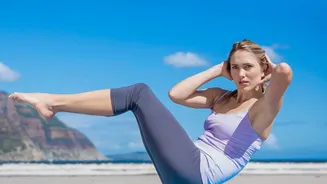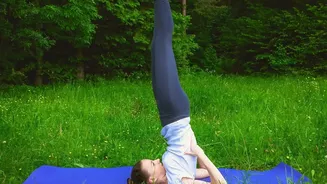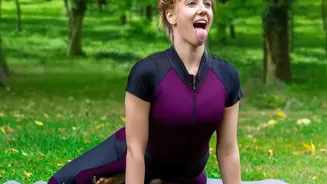





More Than Just Abs
When we think of core strength, we often picture a chiselled six-pack. But the core is a complex system of muscles that wraps around your entire torso, including your back, hips, and pelvic floor. A strong core is the foundation for good posture, balance,
and safe movement in everyday life. Unlike repetitive exercises that can target only superficial muscles, yoga takes a holistic approach. It engages the entire trunk, training deep stabilising muscles like the transverse abdominis—which acts like a natural corset for your midsection—to create functional strength from the inside out. This focus on stability over aesthetics helps protect the spine and can reduce the risk of back pain.
The Power of the Hold
The magic of this gentle approach lies in isometric contraction—tensing a muscle without changing its length. When you hold a yoga pose like Plank or Bridge, your core muscles fire continuously to maintain the position. This sustained effort builds incredible endurance and deep strength. This is different from dynamic movements like sit-ups, which involve shortening and lengthening the muscles. Holding poses trains your muscles to be stable and supportive for longer periods, which is crucial for maintaining posture throughout the day. Remember to breathe deeply and consistently throughout the hold; this ensures your muscles get the oxygen they need and helps maintain the connection between mind and body.
Cat-Cow Pose
This foundational movement is an excellent way to gently awaken the spine and begin engaging the core. Start on your hands and knees with your wrists under your shoulders and knees under your hips. As you inhale, drop your belly, lift your chest, and look forward (Cow Pose). As you exhale, press into your hands, round your spine toward the ceiling, and tuck your chin to your chest (Cat Pose). While it seems simple, focusing on pulling your navel toward your spine in Cat Pose begins the process of core activation, gently strengthening your abdominal wall. Move slowly and connect the motion with your breath for five to ten rounds.
Bird-Dog Pose
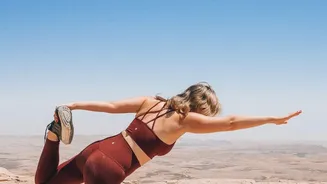
A beginner-friendly pose, Bird-Dog is a fantastic exercise for building core stability because it challenges your balance. From your hands and knees, engage your core to keep your back flat. Extend your right arm straight forward and your left leg straight back, keeping both parallel to the floor. The key is to prevent your hips from tilting or your lower back from arching; your core muscles must work hard to keep your torso stable. Hold for a few breaths, return to the start, and switch sides. This teaches your abdominal and lower back muscles to work together.
Bridge Pose
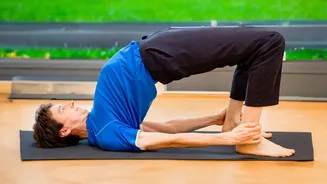
Bridge Pose strengthens your glutes, back, and abdominals. Lie on your back with your knees bent, feet flat on the floor hip-distance apart, and arms at your sides. Press through your feet and lift your hips off the floor. Crucially, you should avoid simply arching your back. Instead, focus on engaging your core and gluteal muscles to create the lift. Imagine keeping your ribs from flaring out and maintaining a straight line from your shoulders to your knees. Hold the position, breathing steadily, to feel the muscles in your core and the back of your body working in unison.
Modified Forearm Plank
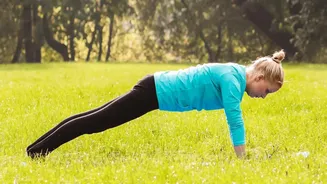
The plank is a quintessential core-strengthening pose, and the forearm variation is often kinder on the wrists. For a gentler approach, start with a modified version. Begin by resting on your forearms and knees, ensuring your elbows are directly under your shoulders. Engage your core by pulling your navel toward your spine to prevent your hips from sagging. You should feel your abdominal muscles working to hold your torso in a straight line. Even in this modified position, holding for 20-30 seconds provides an excellent isometric workout for the deep muscles of the core.