








What is a Local AI Assistant?
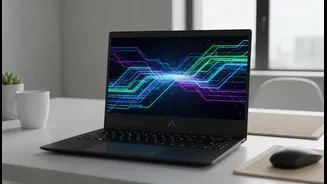
Think of popular AI tools like ChatGPT or Gemini. When you ask them a question, your data is sent over the internet to massive data centres, processed by enormous AI models, and then a response is sent back. A local AI assistant does all of this directly
on your device. Using smaller, highly efficient models, they can perform tasks like summarizing documents, answering questions, and even writing code without your information ever leaving your phone or computer. This is made possible by recent breakthroughs in creating smaller, yet surprisingly capable, AI models from tech giants like Microsoft (with its Phi-3 family) and Meta (with Llama 3), which are designed to run on consumer hardware.
The Ultimate Privacy Upgrade
The single biggest advantage of local AI is privacy. When your data stays on your device, it is fundamentally more secure. There’s no risk of your sensitive information—be it personal financial details, confidential business plans, or private conversations—being exposed in a server-side data breach. You aren't sending your queries to a third-party company that might use it to train their future models or for other purposes you might not be aware of. For businesses in India, this helps with data regulation compliance, and for individuals, it offers peace of mind that your digital life remains truly private.
Making Sense of Complexity, Offline
Local AI isn't just about privacy; it's also incredibly useful. Imagine you're a student trying to understand a dense academic paper or a professional reviewing a complicated contract. You can use a local AI to summarize the key points or define complex terms, all without an internet connection. Because the AI is running on your device, the response is almost instantaneous, with no network lag. This offline capability is a significant benefit, ensuring you have a powerful tool at your disposal whether you're on a flight, in a remote area with spotty internet, or just want a quick answer without connecting to the web. These assistants can help you review code, organize your personal notes, or even draft emails, all while keeping the context confidential.
Are There Any Downsides?
While impressive, local AI assistants are not a complete replacement for their cloud-based cousins. The most powerful AI models, like GPT-4, are still too large to run on a personal device and remain in the cloud. This means that for highly complex reasoning, creative brainstorming that requires a vast repository of knowledge, or tasks that need the most up-to-the-minute information from the web, cloud AI still has the upper hand. The performance of a local AI also depends on the power of your device's processor. Older phones or budget laptops may struggle to run them effectively, while newer devices with dedicated AI chips, like those with the latest Snapdragon or Intel processors, will deliver a much smoother experience.
The Future is a Hybrid Approach
The trend isn't about local AI versus cloud AI, but rather a smart combination of both. Your future operating system might use a local AI for quick, private tasks like summarizing your recent emails or managing your schedule. When you ask a more complex question that it can't handle, it might then securely query a more powerful cloud model. This hybrid approach offers the best of both worlds: the speed and privacy of local processing for everyday tasks, with the immense power of cloud AI available on demand. As companies like Qualcomm, Meta, Microsoft, and Google continue to invest in this technology, expect to see more of these private, capable assistants integrated directly into the devices you use every day.