





The Science of a Great Brew
Every time you brew coffee, you are performing a scientific process called extraction. This is simply the act of hot water dissolving flavours from your coffee grounds. The goal isn't to pull out everything; roasted coffee is about 30% water-soluble,
but the ideal extraction for a balanced cup is between 18% and 22%. The flavours dissolve in a predictable sequence: first come the bright, fruity acids, followed by sweetness and body, and finally, the harsher, bitter compounds. Your brewing technique is all about stopping this process at the right moment to capture the perfect balance. The coffee-to-water ratio is one of the most powerful tools you have to control this outcome.
Finding the 'Golden Ratio'
In the coffee world, experts often refer to a 'golden ratio'. While the exact numbers vary slightly, a widely accepted starting point is a ratio between 1:15 and 1:18. This means for every 1 gram of coffee, you use 15 to 18 grams of water. The Specialty Coffee Association (SCA) often cites 1:18, which is about 55 grams of coffee per litre of water. However, most home brewers and cafes find a slightly stronger ratio, like 1:16 or 1:17, provides a more satisfying cup that isn't too weak. Think of 1:16 as your reliable default—it's strong enough to stand up to a splash of milk but balanced enough to be enjoyed black.
Sour vs. Bitter: Decoding Your Cup
If your coffee tastes 'off', the ratio is often the culprit. The two most common problems are under-extraction and over-extraction. Under-extracted coffee tastes sour, sharp, and thin. This happens when there isn't enough extraction, meaning the sweet notes didn't have a chance to balance out the initial acidity. It’s like drinking lemon juice instead of lemonade. Over-extracted coffee tastes bitter, harsh, and sometimes dry or astringent. This is what happens when the brewing process goes on too long, pulling out the unpleasant compounds that emerge at the end of the extraction sequence. If your coffee is sour, you need to extract more; if it's bitter, you need to extract less.
Ratios for Your Favourite Brewer
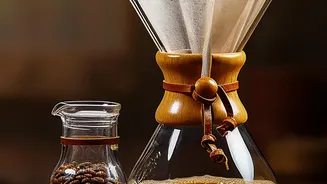
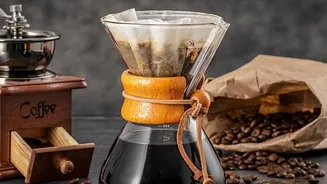
Different brewing methods require slightly different approaches to get the best results. - Drip Coffee Maker: A ratio of 1:16 or 1:17 is ideal. This creates a balanced, classic cup. For a standard 12-cup pot (which is usually about 60 ounces, not 96), you'll need around 100-110 grams of coffee. - French Press: Because this is an immersion method, a slightly stronger ratio of 1:15 often works best to produce a full-bodied, robust flavour. - Pour-Over (V60, Chemex): This method excels with a 1:16 ratio, which highlights the delicate and aromatic notes. - Cold Brew: This requires a much more concentrated ratio to create a concentrate, typically between 1:4 and 1:8. You then dilute the concentrate with water or milk to your desired strength when serving.
How to Measure Without a Scale
Using a digital kitchen scale to weigh your coffee and water in grams is the most accurate way to ensure consistency. However, you can still get great results without one. As a general rule, one level tablespoon of ground coffee is approximately 5-6 grams. A standard 'cup' in a coffee maker is about 6 ounces (177ml) of water. Therefore, a good starting point is two tablespoons of ground coffee for every 6 ounces of water you intend to brew. While this method is less precise because grind size and bean density can affect volume, it's a reliable approximation that will get you much closer to a balanced cup than simply guessing.