


A Tale of Two Moons
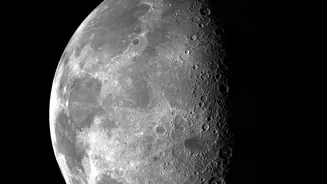
Anyone who has looked up at the night sky is familiar with the 'face' of the Moon—its vast, dark volcanic plains, known as mare. But this is only half the story. The far side, permanently hidden from Earth, is a different world. It is dominated by ancient,
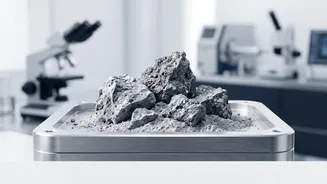
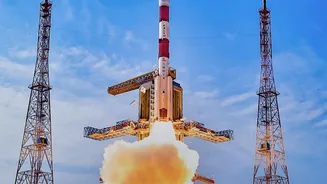
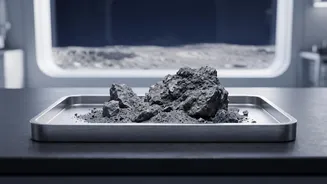
heavily cratered highlands and has a much thicker crust. For decades, scientists have debated why this profound asymmetry exists, but without physical samples from the far side, their theories were based on remote sensing data and computer models. That all changed in June 2024, when China's Chang'e-6 mission successfully returned with nearly two kilograms of rock and soil from the South Pole-Aitken basin, the largest and oldest impact crater on the Moon.
Unlocking an Ancient Puzzle
The first analyses of these precious samples, conducted by research teams in China, are providing tantalising clues. A study published in the National Science Review presents a compelling new hypothesis. Scientists compared the new far-side samples with those brought back from the near side by the Apollo and previous Chang'e missions. They found that while the deep mantle from which volcanic rocks originated seems chemically similar on both sides, the crustal rocks tell a different story. The far-side crustal samples were found to be richer in magnesium. In contrast, they contained less material enriched in potassium, rare earth elements, and phosphorus—a cocktail of elements known by the acronym KREEP, which is notably abundant on the near side.
A Theory Tied to Earth's Pull
Based on these chemical differences, researchers now propose a new theory rooted in the Moon's ancient past. Shortly after its formation, the Moon was a molten ball of rock, which gradually cooled. The theory suggests that after the Moon became tidally locked—with the same side always facing Earth—our planet's immense gravity continued to exert influence. This gravitational pull generated stronger tidal heating on the near side. This uneven heating could have driven vast, continent-sized currents in the remaining molten material beneath the newly forming crust. According to the model, these massive flows essentially pushed the lighter, early-forming crust rich in magnesium toward the far side, causing it to pile up and become thicker, while concentrating the remaining KREEP-rich magma on the near side.
An Idea, Not a Conclusion
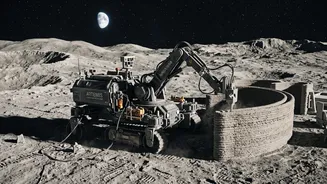
As the headline suggests, this is a compelling proposed theory, not a settled answer. The scientists behind the study are careful to note that their model is one possible explanation, and more evidence is needed. The samples were collected from a single location within the enormous South Pole-Aitken basin and may not be representative of the entire far side. Science is a process of building evidence. Other studies on the Chang'e-6 samples have yielded different, though complementary, insights. One theory suggests a massive impact event heated materials deep in the far-side mantle, leading to a loss of volatile elements and suppressing later volcanic activity. Another found that the soil grains on the far side are sharper and more angular, which has important engineering implications for future lunar bases.
The Next Chapter in Lunar Science
Ultimately, the Chang'e-6 samples have opened a new chapter in our understanding of the Moon. They provide the first 'ground truth' to anchor decades of speculation. The theory of tidal heating offers a powerful explanation for how two halves of the same body could have such different histories, despite seemingly originating from a similar mantle composition. Proving or disproving it will require further analysis and, ideally, more samples from other regions of the far side. Each new finding helps piece together the Moon's complex evolutionary story, which in turn holds clues to the formation of our own planet and the early, violent history of the solar system.