
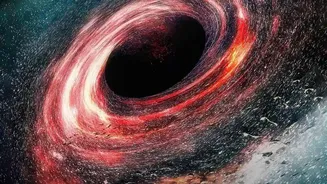

For decades, science has told us that 95% of our universe is made of mysterious dark matter and dark energy. Now, University of Ottawa researchers are testing a radical new model that suggests they might not exist at all.
The Standard Model's Big Mysteries
Our current best picture of the
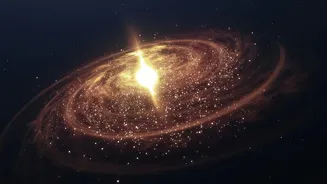
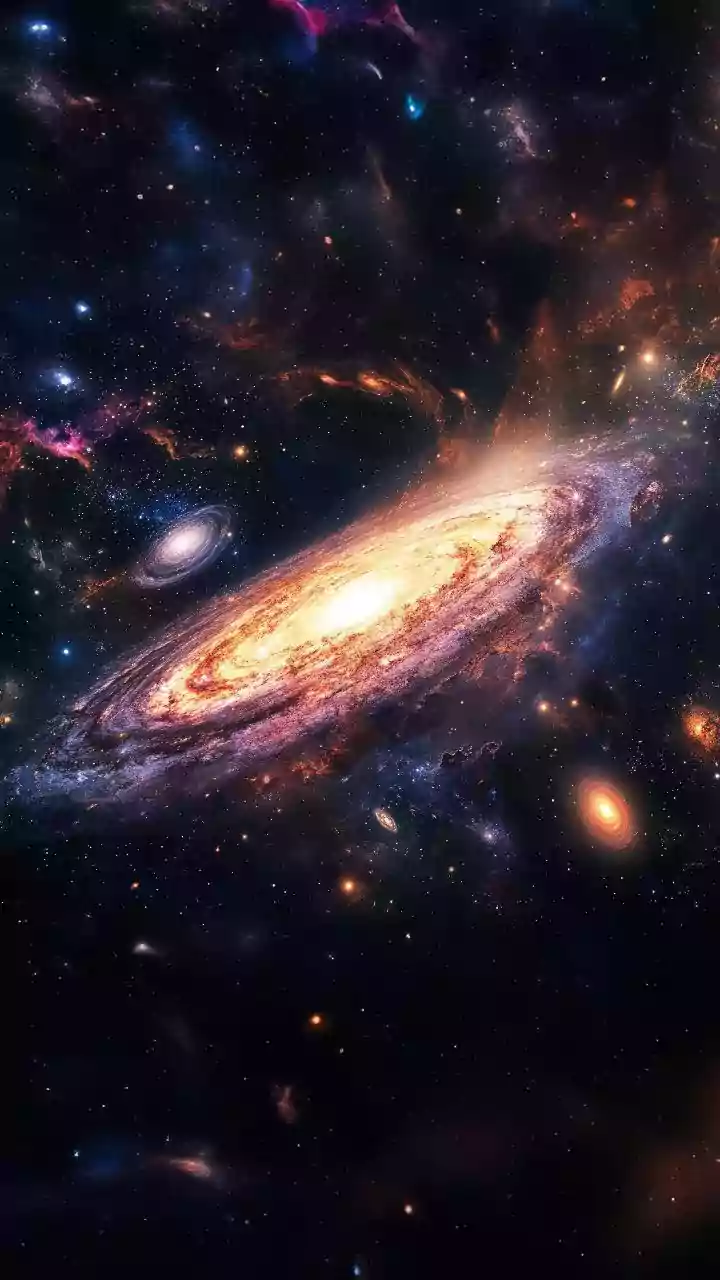
cosmos is called the Lambda-CDM (ΛCDM) model. It’s been incredibly successful, explaining everything from the afterglow of the Big Bang (the cosmic microwave background) to the large-scale structure of galaxies. But it relies on two massive, yet-to-be-proven ingredients. 'CDM' stands for 'cold dark matter', an invisible substance whose gravity is needed to hold galaxies together. 'Lambda' (Λ) represents dark energy, a strange repulsive force causing the universe's expansion to speed up. Together, they are thought to make up about 95% of the cosmos, but despite decades of searching, neither has ever been directly detected.
Cracks in the Cosmic Foundation
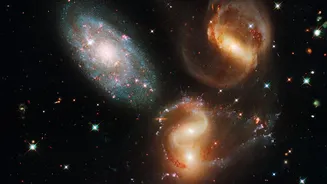
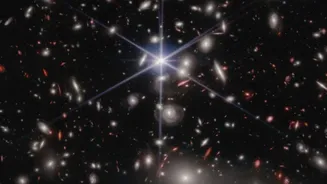
Recently, the Lambda-CDM model has faced new challenges. Observations from the James Webb Space Telescope (JWST) have revealed galaxies in the early universe that are surprisingly massive and mature. According to our standard timeline, these 'impossible' galaxies seem to have formed far too quickly after the Big Bang. Furthermore, there's the 'cosmological crisis' or 'Hubble tension', where different methods of measuring the universe's expansion rate give conflicting results. These discrepancies have led some scientists to question whether the standard model is incomplete or if a new approach is needed entirely.
A Radical New Proposal from Ottawa
This is where Rajendra Gupta, an adjunct professor of physics at the University of Ottawa, enters the picture. He and postdoctoral researcher Dr. Nikolaos Samaras are developing and testing an alternative framework known as the CCC+TL model. The name stands for 'Covarying Coupling Constants' plus 'Tired Light'. Instead of inventing new substances like dark matter and dark energy, this model proposes that the fundamental 'constants' of physics—the numbers that govern forces like gravity and electromagnetism—might not be constant at all. It suggests they have evolved over cosmic history.
How a No-Dark-Energy Universe Works
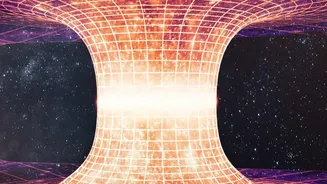
The CCC+TL model combines two ideas. The 'Covarying Coupling Constants' (CCC) part proposes that the natural forces we observe change over time. The 'Tired Light' (TL) hypothesis suggests that light particles (photons) lose energy as they travel across billions of light-years. When combined, these two concepts can explain the universe's expansion and the rotation of galaxies without needing dark energy or dark matter. A major implication of this model is that the universe could be 26.7 billion years old, nearly double the standard model's estimate of 13.8 billion years. This extra time would neatly solve the puzzle of how those 'impossible' early galaxies had time to mature.
Putting the Theory to the Test
A new theory is only as good as the observations it can explain. So far, Gupta's CCC+TL model has held up against several key cosmological tests. According to recent papers, it successfully accounts for the amount of light elements created after the Big Bang and aligns with observations of galaxy rotation that are usually cited as evidence for dark matter. The researchers stress that while the initial results are promising, their model is still in its early stages. It challenges decades of established cosmology and requires much more scrutiny and testing from the wider scientific community before it can be considered a replacement for the standard model. However, its success so far suggests it's a model worth taking seriously.