

The Promise of the 'Goldilocks Zone'
The habitable zone, or 'Goldilocks Zone', is defined by one primary factor: the potential for liquid water to exist on a planet's surface. Water is considered essential for life as we know it, acting as a universal solvent that allows the chemical reactions
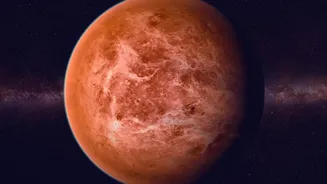
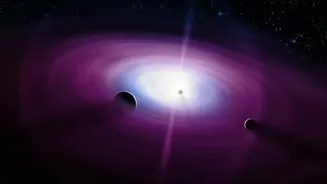
necessary for biology to occur. This zone is a specific range of distances from a star. If a planet is too close, its water will boil away into space, like on Venus. If it's too far, its water will freeze solid, like on Mars in its current state. The size and temperature of the star determine where this habitable zone lies; for hotter, brighter stars, the zone is farther out, while for cooler, dimmer stars, it's much closer. So, when astronomers find a rocky planet in this region, it's a cause for excitement because it clears the first major hurdle. It means the planet receives the right amount of energy to potentially support surface water, making it a compelling place to search for life.
An Atmosphere Is Not Optional
Having the right temperature is meaningless without an atmosphere. A substantial atmosphere does several critical jobs. Firstly, it creates pressure. Without sufficient atmospheric pressure, liquid water can't remain stable on the surface; it would either freeze or boil away. This is one of the key reasons Mars, despite being in the Sun's habitable zone, is a barren desert today; its thin atmosphere can't maintain liquid water. Secondly, an atmosphere acts as a protective shield, blocking or absorbing harmful radiation like X-rays and ultraviolet rays from the host star, which can be lethal to life. Finally, it provides insulation through greenhouse gases, trapping heat to keep the planet's temperature stable when it rotates to its night side. Venus is a prime example of this gone wrong; though it is in our habitable zone, its incredibly thick, toxic atmosphere has created a runaway greenhouse effect, making it the hottest planet in the solar system.
A Magnetic Field and a Solid Foundation
Even a perfect atmosphere needs protection. A planet's magnetic field, generated by a molten, rotating core, is a vital defense against the star's solar wind—a constant stream of charged particles. Without a magnetic shield, this solar wind can slowly strip a planet's atmosphere away over millions of years. This is believed to be part of what happened to Mars, which has a very weak magnetic field. Furthermore, the planet itself must be the right type. The search for life focuses on rocky, terrestrial worlds like Earth, not gas giants like Jupiter. Life needs a surface to develop on. Active geology, like plate tectonics and volcanism, is also now seen as crucial. This activity helps regulate the planet's climate over long timescales by recycling carbon and other essential elements between the atmosphere and the planet's interior.
The Host Star's Behaviour Matters
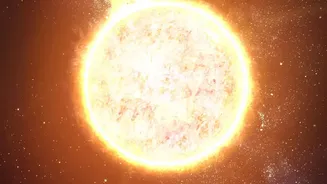
Not all stars are created equal when it comes to nurturing life. The type of star a planet orbits plays a huge role in its long-term habitability. For instance, the most common stars in our galaxy are red dwarfs. While they have habitable zones, these zones are very close to the star because red dwarfs are small and cool. Planets orbiting this close are often exposed to intense flares of high-energy radiation that can sterilize the surface and strip away atmospheres. These planets are also likely to become 'tidally locked', meaning one side always faces the star, creating a world with a permanent scorching day side and a frozen night side. Even the star's age and stability are critical. Stars naturally grow brighter as they age, causing the habitable zone to move outward over billions of years. A planet that was once 'just right' could later become too hot.