



Want stronger, more defined thighs? The path often begins with two foundational exercises: squats and lunges. While both are staples for lower-body workouts, they play distinct and complementary roles in building powerful and resilient legs.
The Squat: A Foundation for Strength
The squat
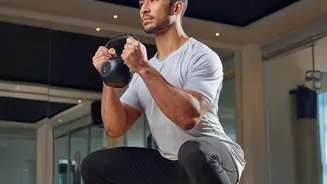
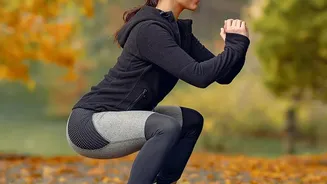
is often hailed as the king of leg exercises, and for good reason. It's a compound movement that mimics fundamental human actions like sitting and lifting. When you perform a squat, you engage multiple major muscle groups simultaneously, including the quadriceps (front of the thighs), hamstrings (back of the thighs), and glutes. This makes it an incredibly efficient exercise for building overall lower-body strength and muscle mass. Beyond just the legs, squats also require significant core engagement to stabilize the spine, making them a full-body functional movement. The ability to progressively add weight—whether with barbells or dumbbells—allows you to consistently challenge your muscles, which is a key driver for growth and strength gains.
How Squats Build Powerful Thighs
The primary role of the squat in building stronger thighs lies in its ability to handle heavy loads through a large range of motion. This combination stimulates the large muscles of the legs, particularly the quadriceps, to adapt and grow stronger. During the downward phase of a squat, your muscles work eccentrically (lengthening under tension) to control the descent. During the upward phase, they contract concentrically (shortening) to push you back up. This entire cycle, especially when performed with challenging resistance, creates the mechanical tension necessary for hypertrophy, or muscle growth. Studies have shown that squat training is a reliable way to improve maximal lower-body strength, which translates to better performance in everything from daily activities to athletic pursuits like running and jumping.
The Lunge: The Unilateral Challenger
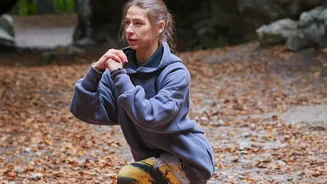
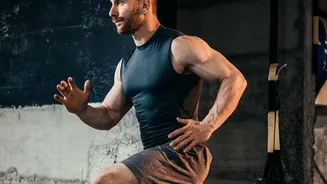
While squats work both legs at the same time (bilateral), the lunge is a unilateral exercise, focusing on one leg at a time. This is its key advantage. By working each leg independently, lunges expose and correct strength imbalances between your left and right sides. This single-leg focus forces your body to work harder to maintain balance, engaging smaller stabilizing muscles in the hips and core that might be less active during a stable, two-footed squat. Lunges are highly versatile, with variations like forward, reverse, and lateral (side) lunges each targeting the thigh muscles from different angles and improving mobility.
Lunges For Balance And Stability
The inherent instability of the lunge is precisely what makes it so effective for developing balance, coordination, and functional strength. Your core and hip muscles, particularly the gluteus medius on the side of your hip, must fire constantly to keep your pelvis level and prevent you from wobbling. This translates directly to real-world activities that often involve single-leg movements, like climbing stairs or changing direction while running. Because they challenge stability, lunges are excellent for injury prevention. Reverse lunges, in particular, are often recommended as they tend to place less stress on the knee joint compared to forward lunges, making them a great option for many people.
A Partnership, Not A Rivalry
So, which is better? The answer is neither; they are partners. Squats are unparalleled for building raw strength and muscle mass due to the heavy loads you can lift. Lunges excel at improving balance, correcting muscular imbalances, and enhancing stability. Squats build the powerful engine, while lunges fine tune the steering and suspension. Research indicates that while both exercises work the same primary muscles, squats may activate the quadriceps more, while lunges bring in more work from stabilizer muscles and the hamstrings. For a truly well rounded and resilient lower body, a routine that includes both movements is ideal.
Getting Started With Proper Form
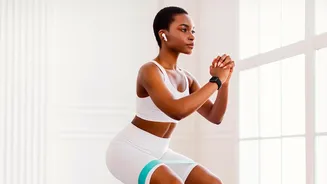
To get the benefits without the risk of injury, proper form is non negotiable. For a basic bodyweight squat, stand with your feet shoulder width apart, push your hips back as if sitting in a chair, and lower yourself until your thighs are parallel to the floor, keeping your chest up and back straight. For a lunge, step one foot forward and lower your hips until both knees are bent at approximately a 90 degree angle, ensuring your front knee stays aligned with your foot. For beginners, starting with bodyweight or using a wall for support can help build confidence and master the movement before adding weights.