




The Month of Rain and Renewal
Karkidakam, the last month of the Malayalam calendar, typically falls between mid-July and mid-August. Historically, it was known as the 'Panja Masam' or the month of scarcity. The incessant rains would bring work to a standstill, making life difficult
for farmers and labourers. However, this period is also seen as a sacred time for spiritual reflection and physical healing. It is often called 'Ramayana Masam', a month dedicated to reading the epic Ramayana in households to foster strength and confidence. From an Ayurvedic perspective, the wet, cool climate makes the body more receptive to healing therapies, opening up pores and softening tissues to better absorb medicinal treatments.
More Than Just a Simple Gruel
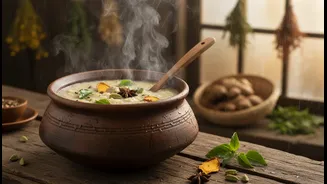
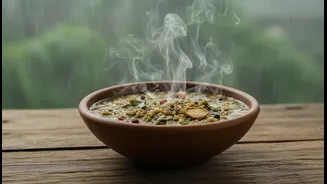
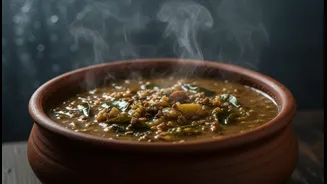
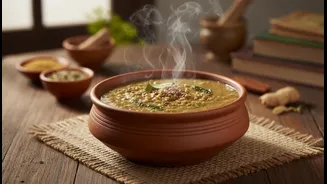
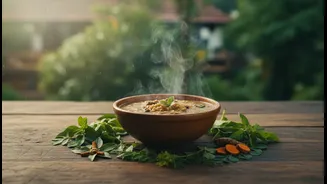
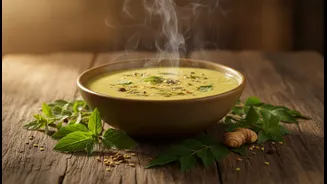
At the center of this seasonal wellness regimen is Karkidaka Kanji, also known as Oushadha Kanji (medicinal porridge). This is not the simple rice gruel one might imagine. It is a complex, carefully formulated meal designed to be both food and medicine. The philosophy stems from Ayurveda, which holds that during the monsoon, the body's digestive fire, or 'Agni', is weakened, and the 'doshas' (bodily humors) are imbalanced, making one susceptible to illness. The kanji is a warm, easily digestible, and deeply nourishing meal designed to counteract this, boosting immunity and cleansing the body from within.
An Ayurvedic Powerhouse of Ingredients
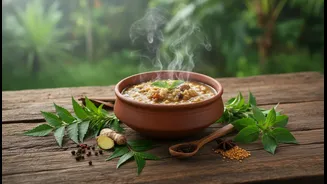
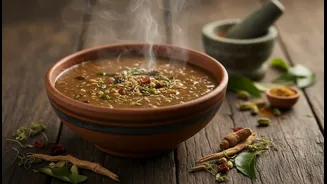
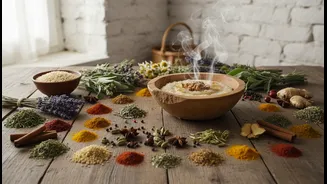
The power of Karkidaka Kanji lies in its ingredients. The base is typically Njavara rice, a medicinal variety native to Kerala known for its strengthening and nourishing properties. To this are added a host of spices and herbs. Common spices include fenugreek, cumin, dry ginger, and black pepper, all chosen for their ability to kindle the digestive fire. The most vital component is a collection of medicinal herbs, often including 'Dasapushpam' (a group of ten sacred flowers) and 'Dashamoola' (a blend of ten medicinal roots). These herbs are lauded for their anti-inflammatory, detoxifying, and immune-boosting properties. The porridge is finished with coconut milk and sometimes jaggery for taste and added nourishment.
A Ritual of Family and Rejuvenation
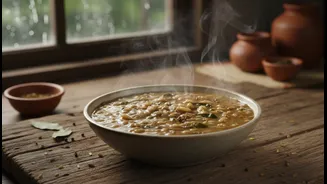
Traditionally, the preparation of Karkidaka Kanji is a household ritual, with recipes and knowledge passed down through generations. It is typically consumed for a set period, ranging from seven to even 41 days, often as the final meal of the day. This practice is not just about physical health; it is a holistic ritual that involves the mind and spirit. Consuming the warm, fragrant porridge while listening to the sound of the rain and the recitation of the Ramayana creates a deeply restorative experience. It represents a commitment to self-care, a way of honouring the body's connection to the cycles of nature and preparing it for the year ahead before the harvest festival of Onam.
From Tradition to Modern Convenience
In recent decades, this ancient tradition has found new life. While many families still prepare the kanji from scratch, the demands of modern life have given rise to a new market. Today, you can easily find 'Karkidaka Kanji kits' in supermarkets and Ayurvedic pharmacies across Kerala. These kits contain the pre-portioned dry ingredients, making the process accessible for busy individuals and those who may not have access to all the rare herbs. This commercialisation, while raising questions about authenticity, has also played a crucial role in keeping the tradition alive and introducing it to a new generation, ensuring that the wisdom of Karkidakam continues to thrive.