
Your Kitchen's Unseen Speed Limit
Every home cook has experienced it: a sauce that scorches in the middle while the edges are barely warm, or a pot that takes forever to simmer. The culprit is often a mismatch between your pan and your burner. Using a large pan on a small burner creates
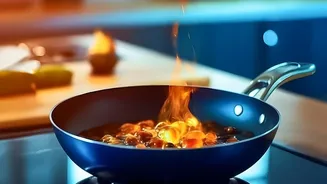
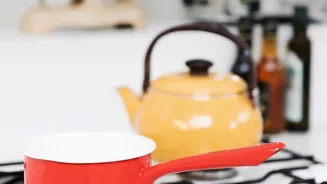
a central hot spot, leading to uneven cooking. Conversely, a small pan on a large burner wastes energy and can cause flames to lick up the sides, overheating handles. Think of your burner's size and power output—measured in BTUs for gas or watts for electric—as a speed limit. To cook efficiently, you need to match your vehicle (the pan) to the right lane.
Know Your Burners: Gas, Electric, and Induction
Not all stovetops are created equal, and understanding yours is the first step. Gas ranges offer visual cues; you can see the flame and adjust it instantly. A key tip is to ensure the flame doesn't extend beyond the bottom of the cookware. Electric smoothtops, whether radiant coil or ceramic, provide a defined heating circle. Induction cooktops are the most distinct; they use an electromagnetic field to heat the pan directly, offering incredible speed and precision. This direct heating is highly efficient, but it also means the pan must be the right size for the magnetic element to work optimally.
The Science of a Bad Pairing
When a burner is too small for a pan, it concentrates intense heat in one area. This disrupts the cooking process, especially for delicate tasks like making a sauce. The center of your pan may reach a high temperature and start to burn ingredients before the heat has a chance to spread to the cooler edges. This leads to inconsistent reduction, a bitter, scorched taste, and the frustrating task of trying to salvage your creation. Even heat distribution is essential for developing complex flavors, like the Maillard reaction that gives seared foods their delicious brown crust. An improper burner match sabotages this from the start.
A Strategic Plan for a Crowded Stove
Cooking multiple dishes doesn't have to be chaotic. Start by mapping your stovetop. Identify your most powerful burner (often called a 'power boil' burner) and your smallest, or 'simmer,' burner. Reserve the power burner for tasks that require high heat, like boiling a large pot of water for pasta. Use the smaller burners for delicate sauces or keeping things warm. A critical part of the strategy is timing. Prepare all your ingredients before you start cooking. Stagger your tasks; not everything needs to be made at once. If one sauce requires constant stirring, place it on a front burner for easy access, while a soup that just needs to simmer can occupy a back burner.
Your Cookware Is Part of the Equation
The right pan can help mitigate some of the issues of a mismatched burner. Heavy-bottomed cookware, such as multi-ply stainless steel or cast iron, is designed to conduct and retain heat more evenly than thin aluminum pans. This quality helps distribute the heat from a smaller burner across a wider surface area, reducing the intensity of hot spots. While it’s always best to match pan to burner size, investing in quality cookware gives you a wider margin for error. For induction users, the material is non-negotiable—it must be magnetic, like cast iron or certain types of stainless steel, for the cooktop to even recognize it.