



The Sun's Unseen Temper
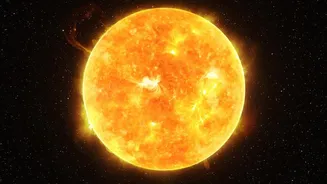
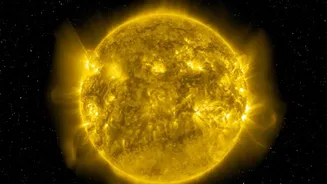
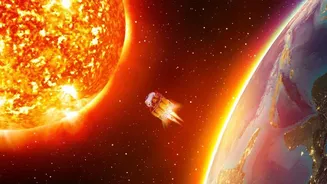
Space weather refers to changing conditions in space, driven primarily by the sun's activity. The main threats to our power grid come from events like solar flares and, more significantly, coronal mass ejections (CMEs). A CME is a massive explosion in the sun's corona that
flings billions of tons of charged particles and magnetic fields into space. If a CME is aimed at Earth, this cloud of plasma travels across the solar system, a journey that can take anywhere from 12 to 72 hours. While solar flares can disrupt radio and GPS signals within minutes, it's the slower-moving CMEs that pose the most serious risk to physical infrastructure on the ground.
From Solar Storm to Grid Threat
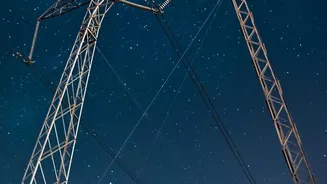
When a CME slams into Earth's magnetosphere, our planet's protective magnetic shield, it causes a major disturbance. This powerful interaction induces strong electrical currents in the ground, known as geomagnetically induced currents (GICs). These are quasi-direct currents (DC) that seek the path of least resistance, and long-distance high-voltage transmission lines are perfect conductors. The problem is that our power grid is built for alternating current (AC). When GICs flow into the large transformers at substations, they can cause the transformer's magnetic core to become saturated. This saturation leads to overheating, harmonic distortions in the power flow, and severe voltage instability. In a worst-case scenario, the transformer can be permanently damaged, leading to prolonged and widespread blackouts.
The First Defense: Forecasting
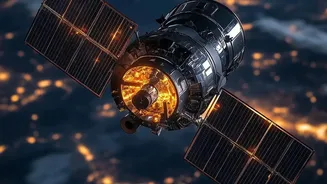
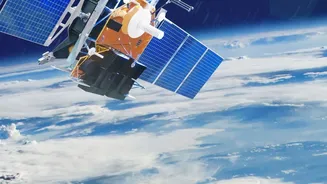
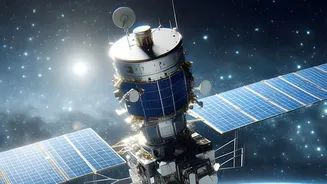
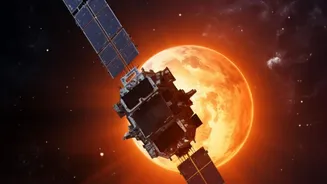
The first layer of protection is knowing a storm is coming. Organizations like the US National Oceanic and Atmospheric Administration's (NOAA) Space Weather Prediction Center (SWPC) constantly monitor the sun. Satellites like the Deep Space Climate Observatory (DSCOVR), positioned a million miles from Earth, act as an early-warning buoy. It measures the speed, density, and magnetic field of the incoming solar wind, giving grid operators crucial warning—from 30 minutes to several hours—before the storm hits. This lead time allows utilities to prepare for the impact. NASA and the USGS also provide critical models and data, helping to pinpoint which regions and even which specific transformers might be most affected.
Hardening the Grid Infrastructure
Beyond forecasting, the grid itself is being made more resilient. A key strategy is installing hardware to mitigate the effects of GICs. One promising technology is the neutral blocking device, which is installed on large power transformers to physically block the flow of GICs and prevent saturation. Series capacitors, which are already used on some long transmission lines, also have the benefit of blocking these damaging currents. Furthermore, some modern transformer designs are inherently more resistant to GIC effects than older models. By strategically upgrading and installing this protective equipment, especially in geographically vulnerable areas, utilities can harden their most critical and difficult-to-replace assets against solar storms.
Smart Operational Responses
Technology is only part of the solution. With advance warning from forecasters, grid operators can execute specific operational procedures to minimize damage. These actions can include reducing the load on particularly vulnerable transformers, temporarily taking certain assets offline, or reconfiguring the network to redirect power flow away from affected areas. Some strategies involve the targeted disconnection of a small number of lines to significantly reduce overall GIC risk without compromising grid stability. By having a plan in place, utility companies can use the warning time to shift the grid into a more defensive posture, effectively riding out the storm until the threat has passed. This proactive management is a crucial and cost-effective defense.