



The Junkyard Above Our Heads
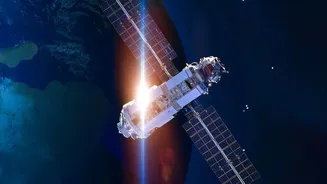
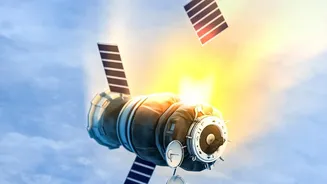
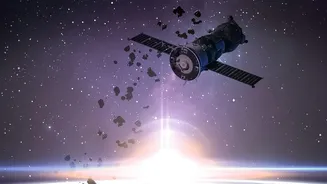
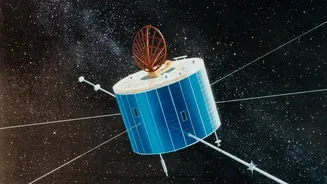
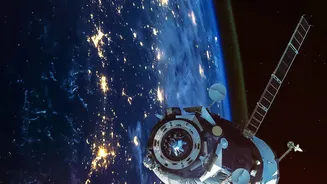
Since the dawn of the space age, humanity has launched thousands of rockets and satellites. While many are still operational, providing everything from GPS to global communications, many more are now just high-speed junk. This orbital debris includes
defunct satellites, spent rocket stages, and millions of smaller fragments from past explosions and collisions. According to NASA, there are over 25,000 pieces of debris larger than a softball, and hundreds of thousands more are the size of a marble. Traveling at speeds up to 28,000 kilometres per hour, even a tiny paint fleck can inflict catastrophic damage on a functioning satellite or a crewed spacecraft. The primary concern is a chain reaction scenario known as the Kessler Syndrome, proposed by NASA scientist Donald Kessler in 1978. He theorized that if the density of objects in low-Earth orbit becomes too high, a single collision could generate a cloud of debris that triggers more collisions, creating a self-sustaining cascade that could render entire orbits unusable for generations.
The Rise of the Orbital Tow Truck
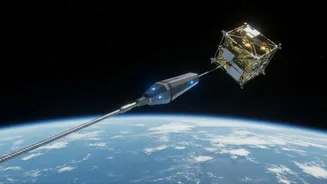
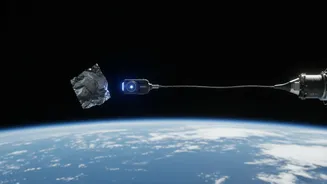
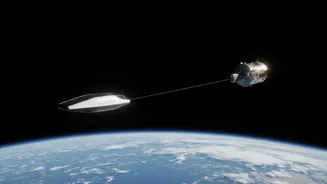
For decades, the primary strategy for managing space debris has been mitigation—designing satellites to deorbit themselves at their end of life. However, this doesn't address the thousands of objects already cluttering our orbital highways. This has given rise to the field of Active Debris Removal (ADR), an industry focused on building 'space tow trucks' to actively capture and remove existing junk. Several methods are being developed, including nets, harpoons, and robotic arms. The European Space Agency's ClearSpace-1 mission, for example, plans to use a four-armed 'claw' to grab a piece of a Vega rocket and drag it into the atmosphere to burn up. But these contact-based methods carry risks; grappling a tumbling, non-cooperative satellite could go wrong, potentially creating even more debris. This is where a more elegant, contactless solution comes into play: magnets.
A Magnetic Handshake in Orbit
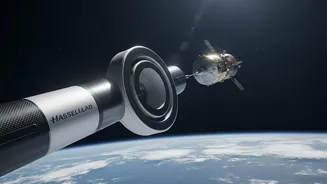
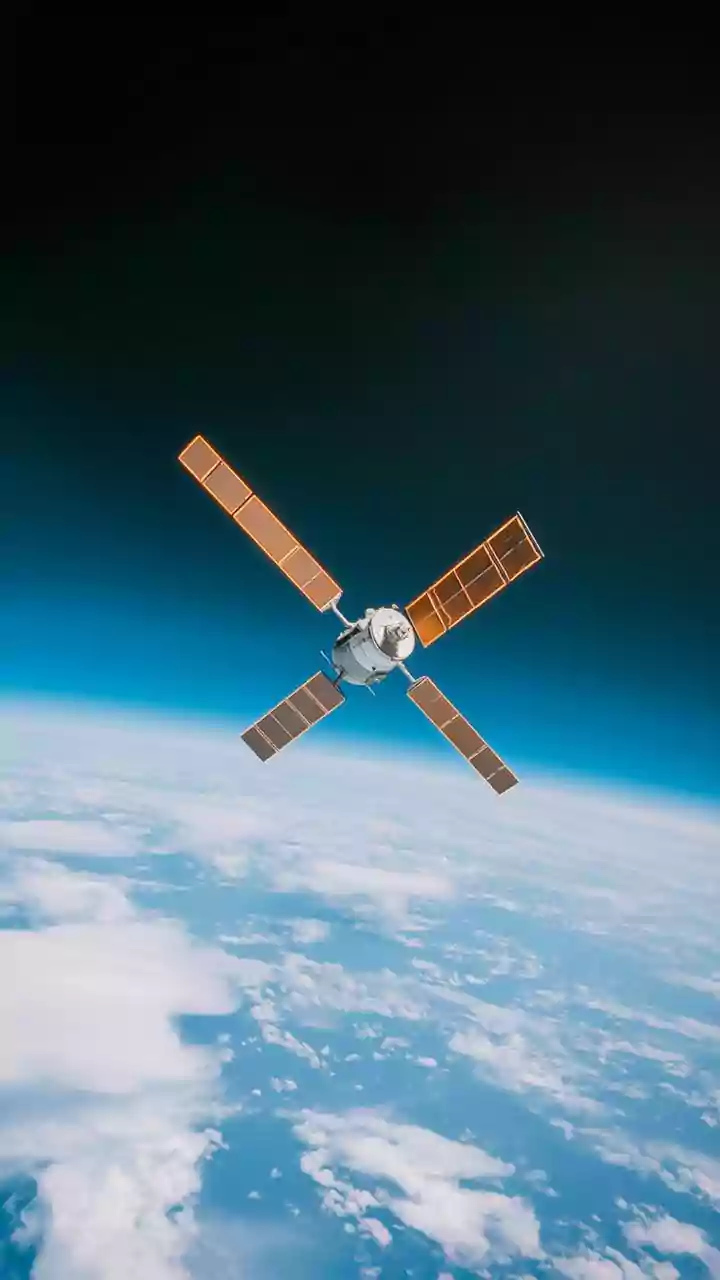
Magnetic capture technology offers a safer way to handle derelict satellites. One leading company, Japan's Astroscale, has pioneered a system where a servicer spacecraft uses a magnetic docking plate to attach to a target satellite. Their ELSA-d mission successfully demonstrated this capability in 2021 by repeatedly capturing and releasing a client satellite in orbit. This approach, however, requires future satellites to be built with a compatible docking plate. A more advanced concept involves using powerful electromagnets on a chaser satellite to influence a target object without touching it. This can be achieved in two ways. For satellites equipped with magnetorquers (devices that use magnetic fields to control orientation), a chaser can use its own powerful magnetic field to gently attract or repel the target, nudging it into a lower orbit where it will burn up. For debris made of conductive, non-magnetic materials like aluminum, a rapidly changing magnetic field can induce electrical eddy currents within the object. These currents generate their own magnetic field, allowing the chaser satellite to exert force and torque to de-tumble and steer the debris from a safe distance of 10-15 meters.
Pioneers of the Orbital Cleanup
Astroscale is a major player in this emerging market. Its upcoming ELSA-M mission, scheduled to launch in 2026, aims to perform the first commercial end-of-life service by capturing and deorbiting a defunct OneWeb satellite. The mission is a public-private partnership supported by the UK Space Agency and the European Space Agency (ESA), highlighting the growing international focus on space sustainability. While Astroscale has focused on magnetic docking, other entities are exploring the broader potential of magnetics. Research has shown that magnetic forces can not only deorbit debris but also stabilize tumbling objects for repair or capture. Companies like Airbus and Swiss startup ClearSpace are also key players in the ADR sector, developing complementary technologies like nets and robotic arms. Together, these efforts are creating a commercial ecosystem for in-orbit servicing and debris removal, turning a global problem into a new business frontier.
Challenges on the Final Frontier
Despite the promise of magnetic probes and other ADR technologies, significant hurdles remain. The primary challenge is technical: capturing an uncooperative object that may be tumbling unpredictably at high speed is incredibly complex. There are also major legal and financial obstacles. Who is responsible for removing debris, and who pays for it? The cost of a single ADR mission is high, and questions of liability and ownership for defunct objects in space are still being debated in international forums. Furthermore, developing and scaling these technologies requires significant investment. Astroscale's ELSA-M mission is backed by millions in funding from space agencies and private partners, a model that will need to be replicated to make a meaningful dent in the debris problem. As the number of satellites, particularly from large constellations, continues to grow, the urgency to solve these challenges is mounting. Without robust and routine cleanup operations, the risk of the Kessler Syndrome grows every year.