




A Cosmic Wake-Up Call
In a distant corner of the universe, something extraordinary is happening. A galaxy known as SDSS1335+0728, previously considered unremarkable, has suddenly burst into life. Located 300 million light-years away in the Virgo constellation, this galaxy began
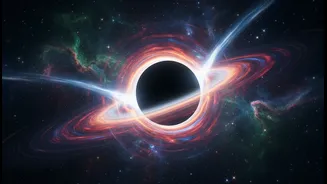
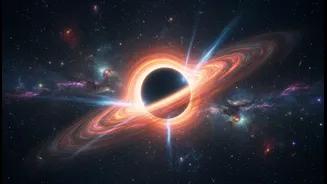
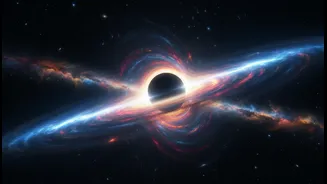
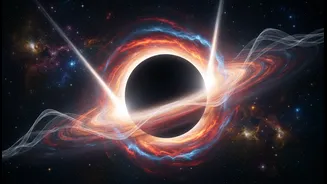
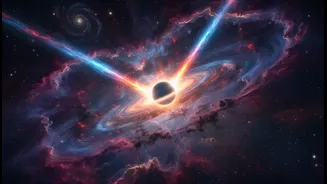
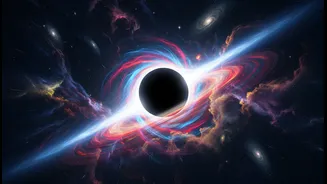
a dramatic and unexpected brightening in late 2019, a change detected by the Zwicky Transient Facility in California. Since then, astronomers have been glued to their telescopes, tracking a phenomenon that has never been observed in real-time before: the potential awakening of a sleeping supermassive black hole. Most large galaxies, including our own Milky Way, host a supermassive black hole at their core. These behemoths are usually dormant, their immense gravity not actively pulling in large amounts of surrounding matter. But in the case of SDSS1335+0728, it seems the giant has woken up and started to feast.
An Unprecedented Light Show
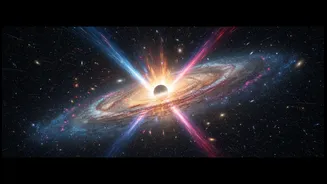
What makes this event so captivating is its persistence. Normally, a galaxy might light up temporarily due to a supernova explosion or a tidal disruption event (TDE), where a star gets too close and is shredded by a black hole. However, these events are fleeting, lasting only a few hundred days at most. SDSS1335+0728 has continued to grow brighter for more than four years, defying conventional explanations. Observations from the European Southern Observatory's Very Large Telescope and other facilities show the galaxy is now radiating far more light across ultraviolet, optical, and infrared wavelengths. According to Paula Sánchez-Sáez, the lead author of the study on this event, this behaviour is entirely unprecedented. It's as if scientists are witnessing the birth or activation of an Active Galactic Nucleus (AGN) for the very first time. An AGN is a bright, compact region at a galaxy's core, powered by a black hole actively consuming gas and dust.
Ripping Up the Rulebook
This discovery challenges long-held theories about how and how quickly galaxies can change. The transition from a quiet, inactive state to a brilliant, active one was thought to take thousands or millions of years. Watching it happen over a few years forces a major rethink. While the leading hypothesis is the birth of an AGN, researchers are still cautious. An alternative, though less likely, possibility is an extremely unusual and slow-moving tidal disruption event. If a star was torn apart, the process would have to be far longer and fainter than any TDE ever recorded. The ongoing monitoring of the galaxy will be crucial to distinguish between these scenarios. If it is indeed a black hole awakening, it provides a unique natural laboratory to study the early stages of AGN formation and how these cosmic engines influence their host galaxies.
A New Cosmic Puzzle
The event at SDSS1335+0728 isn't happening in isolation. It joins a growing list of recent discoveries that are reshaping our understanding of black holes. Another recent study highlighted J1007+3540, a 'reborn' black hole that reactivated its powerful jets after 100 million years of silence, creating structures that span nearly a million light-years. These observations, including some from India's upgraded Giant Metrewave Radio Telescope (uGMRT), show that black holes can have cycles of activity, turning on and off over cosmic timescales. The fact that we can now witness such an activation in real-time with SDSS1335+0728 is a monumental step forward. It suggests that our own galaxy's black hole, Sagittarius A*, could theoretically undergo a similar awakening. This cosmic event is more than just a distant light show; it's a fundamental lesson in galactic evolution, unfolding right before our eyes.