




The Problem With a Sedentary Workday
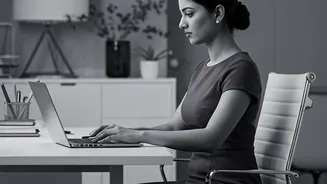
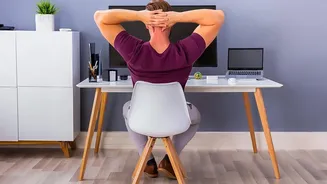
The modern workday often involves hours spent in a chair. While comfortable, this prolonged sitting places your body in a fixed position that can lead to significant physical issues. When you sit, your hip flexors—the muscles at the front of your hips—are
held in a constantly shortened state. Over time, this can cause them to become tight and restrictive. This tightness not only limits your range of motion but can also pull on your lower back, leading to chronic aches and poor posture. Simultaneously, another crucial muscle group, the glutes, switches off. Because they aren’t being used, they can weaken, a condition sometimes called 'gluteal amnesia'. This forces other muscles, like your hamstrings and lower back, to overcompensate, increasing strain and the risk of injury.
What Are Micro-Mobility Exercises?
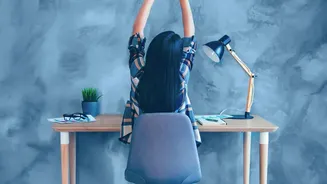
The solution isn't necessarily a marathon gym session after work; it's about integrating small, intentional movements throughout your day. This is the core idea behind micro-mobility. Think of them as 'exercise snacks'—short bursts of activity, often lasting just a minute or two, that you can do every hour. These aren't meant to replace your regular workout routine but to supplement it by breaking up long periods of inactivity. The goal is to consistently stimulate muscles, improve circulation, and move your joints through their intended range of motion. By doing so, you can counteract the stiffness and muscle imbalances that build up from being static, keeping your body more resilient and comfortable all day long.
Essential Seated Stretches
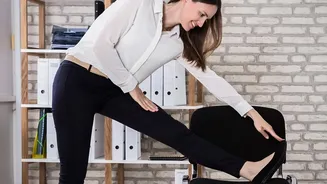
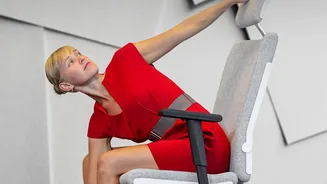
You can begin improving your hip mobility without even leaving your chair. One of the most effective seated movements is the 'figure-four' stretch. Simply cross one ankle over the opposite knee, creating a '4' shape with your legs. Sit up tall and gently lean forward until you feel a stretch in the glute and outer hip of the crossed leg. Hold for 20-30 seconds and repeat on the other side. Another great option is a seated hip flexor stretch. Scoot to the edge of your chair, extend one leg straight behind you with your toes on the floor, and gently press your hips forward while keeping your back straight. You should feel a light stretch along the front of the hip of the extended leg. These simple moves directly target the muscles that become tightest from sitting.
Desk-Side Movements to Stand For
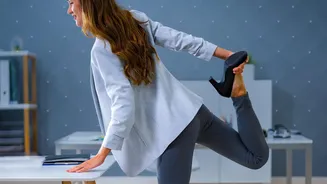
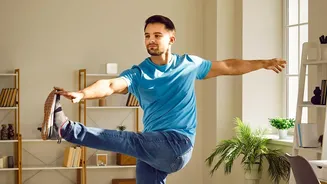
Taking a quick break to stand up opens up a new range of restorative movements. Hip circles are a perfect example. Stand with your feet hip-width apart and place your hands on your hips. Slowly rotate your hips in a large circle, first clockwise ten times, then counter-clockwise. This lubricates the hip joint. You can also perform standing quad stretches by holding onto your desk for balance, grabbing one ankle, and gently pulling your heel toward your glute. Be sure to squeeze your glutes to increase the stretch in the front of your thigh and hip. Finally, simple bodyweight squats, even just a few, help reactivate your glutes and legs, reminding your body how to move through a full range of motion.
Waking Up Your Glutes
Counteracting 'gluteal amnesia' is crucial for restoring proper muscle balance and supporting your lower back. You can start activating your glutes while seated. Simply squeeze your gluteal muscles, hold for five to ten seconds, and release. Repeat this 10-15 times periodically throughout the day. It’s a subtle but effective way to remind these powerful muscles to fire. When you have a moment to stand, glute kickbacks are excellent. Holding your desk for support, stand on one leg and slowly extend the other leg straight behind you, squeezing the glute at the top of the movement. The focus should be on a controlled motion, not on how high you can lift your leg. Activating your glutes helps them do their job of stabilising the pelvis, taking pressure off your lower back.
Building a Consistent Habit
The key to success with micro-mobility is consistency, not intensity. The best way to ensure you stick with it is to build these movements into your existing routine. Set a recurring timer for every 30 or 60 minutes as a reminder to stand up and perform one or two quick stretches. Alternatively, you can tie your movement breaks to specific tasks. For example, decide to do a set of hip circles every time you finish a long phone call, or perform a seated figure-four stretch after sending a series of emails. By linking these exercises to established habits, they become an automatic part of your workday. Starting small with just two or three chosen movements can make the practice feel manageable and sustainable over the long term.