






A Continent in Flux
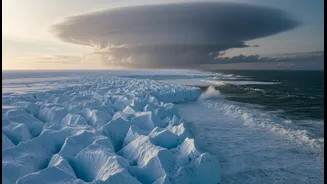
Antarctica is undergoing a profound and alarming transformation. For decades, the continent seemed relatively stable compared to the rapidly melting Arctic. However, recent years have shattered that illusion. In September 2025, Antarctic sea ice reached
its third-lowest winter peak on record. This wasn't an isolated event; it followed record-low levels in previous years, signalling a significant shift. The continent is currently missing about two million square kilometres of sea ice compared to historical averages for this time of year. This loss is critical because sea ice acts as a planetary shield, reflecting sunlight back into space. When it vanishes, the darker ocean below absorbs more heat, creating a feedback loop that accelerates warming. Beyond the sea ice, the land-based ice sheets are also showing signs of stress. The West Antarctic Peninsula has warmed by a staggering 3°C since the mid-20th century, contributing to the retreat of glaciers and the collapse of massive ice shelves. These are not subtle shifts; they are fundamental changes to one of Earth's major climate regulators.
How Trouble Travels Thousands of Kilometres
It’s natural to wonder how a melting glacier at the South Pole could possibly affect a heatwave in India. The answer lies in a concept scientists call “teleconnections.” Think of the atmosphere as a giant, interconnected fluid. A major disturbance in one part of the world, like a massive loss of reflective ice in Antarctica, creates ripples that travel across the globe. These ripples manifest as large-scale atmospheric waves, known as Rossby waves, which can alter the path and strength of jet streams—the high-altitude rivers of air that steer our weather systems. A weaker or wavier jet stream can lead to more extreme and persistent weather conditions. For example, a weakened polar vortex—a large area of low pressure and cold air surrounding the pole—can allow frigid air to escape to lower latitudes or, conversely, allow warm air to intrude into the polar region, further destabilising the system. The warming Southern Ocean also plays a role, influencing ocean currents that carry heat around the planet and affect regional climate patterns far away.
From Polar Forecasts to Monsoon Anxieties
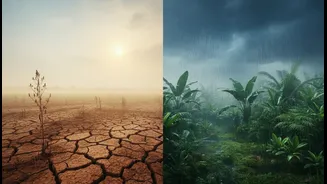
These atmospheric connections are having tangible effects on India's weather. Scientists are increasingly linking polar changes to the variability of the Indian monsoon, a lifeline for the subcontinent's agriculture and economy. Recent research from India's National Centre for Polar and Ocean Research (NCPOR) has drawn connections between melting sea ice in the polar regions and monsoon patterns. While much of this research has focused on the Arctic, the principles of teleconnection apply to both poles. Changes in polar temperatures can alter the temperature difference between the land and sea in the tropics, which is a primary driver of the monsoon circulation. A wavier jet stream can lead to more frequent and intense heatwaves and cold snaps, as weather systems get stuck in place for longer periods. The erratic rainfall, with long dry spells punctuated by extreme downpours that cause floods, is becoming a new and dangerous norm. What happens in Antarctica doesn't stay in Antarctica; it is increasingly being felt in the rising temperatures and unpredictable rains across India.
A New Vocabulary for a New Reality
As the science becomes clearer, the language we use to discuss the weather is also evolving. Terms that were once confined to climatology papers are now becoming part of mainstream conversation. Meteorologists on evening news bulletins increasingly reference the state of the polar vortex or shifts in the jet stream to explain why a heatwave is lasting so long or why a winter feels unusually cold. This shift in language reflects a deeper understanding: our weather is not purely a local affair. It’s part of a complex, global system where the health of the poles is directly linked to the conditions outside our window. The idea that melting ice thousands of kilometres away is a factor in local weather is no longer a fringe theory but an accepted part of modern meteorology. This growing public awareness is crucial, as it transforms an abstract environmental issue into a personal, immediate concern that affects daily life, from farming decisions to planning for urban flood risks.