

A Sweet Tied to a Sacred City
To understand the peda's significance, one must first understand Mathura's. As the birthplace of Lord Krishna, Mathura is one of Hinduism's most sacred cities. The region, known as Braj Bhoomi, is steeped in stories of Krishna's childhood, which are filled
with references to milk, butter, and other dairy products. Krishna himself is often called 'Makhan Chor' or the butter thief. This deep-rooted dairy tradition, born from a pastoral heritage, created the perfect environment for milk-based sweets to become central to the local culture and cuisine.
The Art of the Mathura Peda
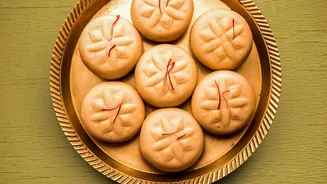
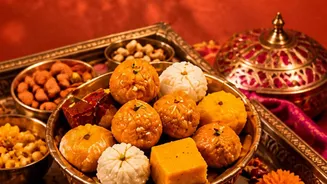
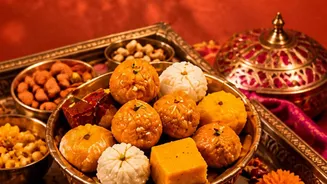
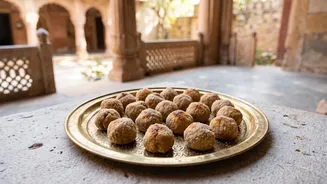
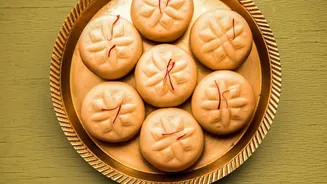
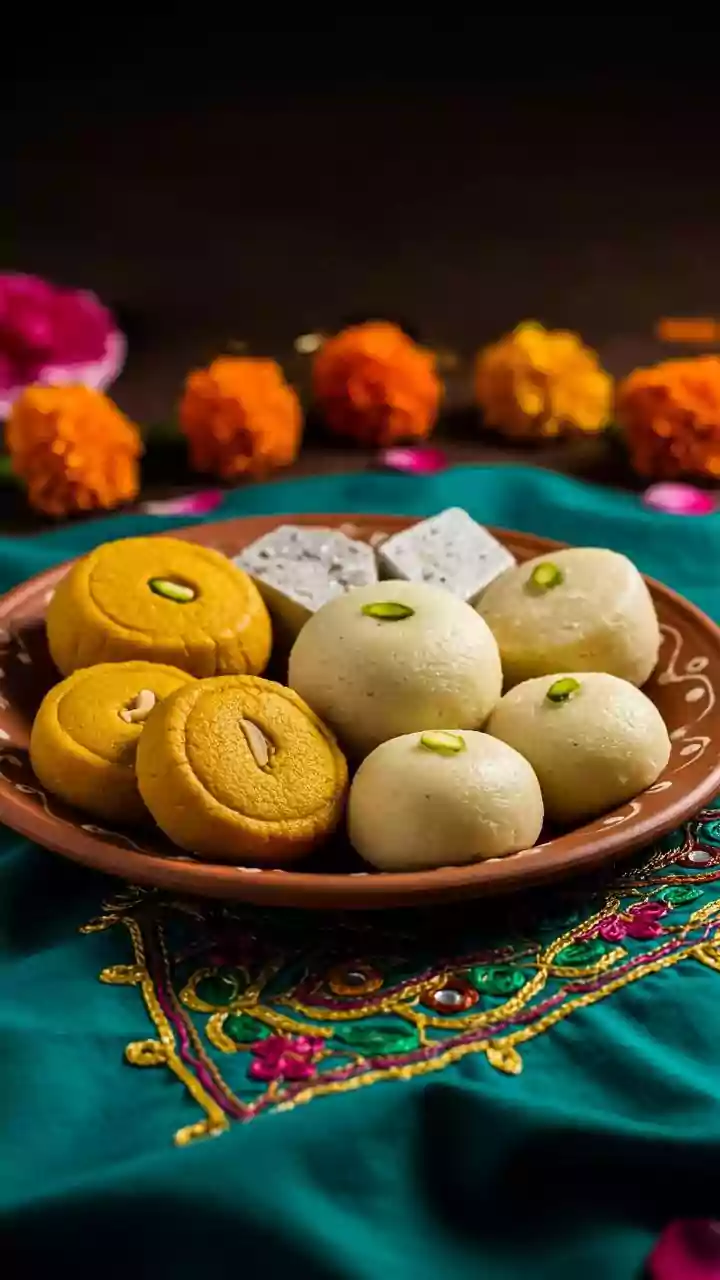
What sets Mathura's peda apart from its paler, softer cousins found elsewhere in India is its unique preparation, colour, and texture. The process begins with khoya, or mawa, which is made by slowly simmering milk in a large pan until most of the water evaporates, leaving behind crumbly milk solids. For the Mathura peda, this khoya is then roasted, often with ghee, until the milk sugars caramelize and turn a distinctive light to dark brown colour. This slow-roasting process is crucial, lending the sweet its signature grainy texture and a deep, nutty, caramelized flavour that is impossible to replicate with shortcuts. Finally, sugar and aromatic spices like cardamom are mixed in, and the sweet is shaped into discs, often coated in powdered sugar.
From Sacred Offering to Beloved Souvenir
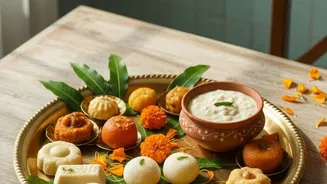
The peda's journey from a local delicacy to a famous food souvenir is deeply linked to its role as 'prasad'—a religious offering. In the temples of Mathura and the surrounding Braj region, peda is one of the most common offerings made to deities, especially Lord Krishna. Devotees who visit these temples receive the sweet as a blessed gift. Consuming this prasad is considered an act of devotion. Pilgrims began taking boxes of these blessed sweets home to share with family and friends, transforming the peda from a simple offering into a tangible, edible memory of their spiritual journey. This practice cemented its status as the quintessential food souvenir from Mathura, a taste of the holy city that could be shared and cherished.
A Taste of Authenticity
Today, the streets of Mathura are lined with countless sweet shops, many of which have been run by the same families for generations. Names like Brijwasi Mithai Wala have become institutions, known for their commitment to traditional methods. For many visitors, the experience of buying peda is as important as eating it—witnessing the fresh batches being made and smelling the rich aroma of roasting mawa. While many versions exist, the authentic Mathura peda is a testament to the power of simple ingredients and patient craftsmanship. Its fame is such that 'Mathura ka Peda' has become a brand in itself, a phrase that immediately evokes a specific taste, texture, and a deep connection to faith and tradition.