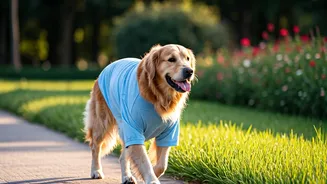






The Challenge: A Built-In Fur Coat
Dogs don’t sweat through their skin the way humans do to cool down. They primarily regulate their body temperature by panting, and through sweat glands in their paw pads. This system can be quickly overwhelmed in high heat and humidity, especially for
brachycephalic (flat-faced) breeds, senior dogs, or those with thick double coats. The fur that keeps them warm in winter can become a dangerous liability in summer, trapping heat and increasing the risk of dehydration and life-threatening heatstroke. That’s why shade, water, and avoiding the midday sun are non-negotiable summer safety rules for any dog owner.
Wait, Won't a Shirt Make My Dog Hotter?
This is the most common and logical question. For the most part, the answer is yes. A thick, dark, or tight-fitting sweater or novelty costume will absolutely trap heat and make a dog dangerously hot. This is not about dressing your dog up in their winter gear. The conversation changes completely when we talk about specific types of fabric designed for breathability and sun protection. Think about it this way: people who work outdoors in desert climates often wear long, loose-fitting, light-colored clothing. The goal isn't insulation; it's to create a barrier against direct solar radiation while still allowing for air to circulate and sweat to evaporate. A similar principle can be applied to dogs.
The Science of Breathable Fabrics
The magic of materials like Indian cotton—think of ultra-lightweight mulmul (muslin) or voile—lies in their physical properties. First, the loose weave of these fabrics allows for significant airflow. Unlike dense polyester or wool, air can pass freely through the material, which helps dissipate heat from the dog's body and prevents a stuffy, humid layer from forming against their skin. Second, when made in light colors like white or beige, the fabric reflects sunlight rather than absorbing it. A dark fur coat can get incredibly hot to the touch when a dog sits in the sun; a light-colored, lightweight shirt acts as a physical sunblock, reflecting away a significant amount of that thermal energy before it ever reaches your dog’s body.
How to Choose the Right Summer Apparel
If you decide to try this method, choosing the right product is critical. Look for items specifically marketed as cooling or summer apparel for dogs. Check the material tag: it should be 100% lightweight cotton or another highly breathable, natural fiber. The fit should be loose and comfortable, not restrictive. It shouldn't chafe under the legs or around the neck, and it must allow for a full range of motion. The color is also key—stick to white, off-white, or very light pastels to maximize sun-reflecting properties. Before committing to a long walk, let your dog wear it for short periods at home to ensure they are comfortable and don't show any signs of distress or overheating.
An Extra Tool, Not a Magic Bullet
It is crucial to understand that a breathable shirt is just one tool in your summer safety arsenal, not a complete solution. It does not replace the fundamental rules of canine heat safety. Always provide unlimited access to fresh, cool water. On hot days, walk your dog in the early morning or late evening, and stick to shady routes. Test the pavement with your hand; if it’s too hot for you to hold your hand on for seven seconds, it’s too hot for your dog’s paws. And, it bears repeating, never, ever leave your dog in a parked car, not even for a minute. A cooling shirt can offer an extra layer of protection from the sun, but it can't defy the laws of physics inside a hot vehicle.