
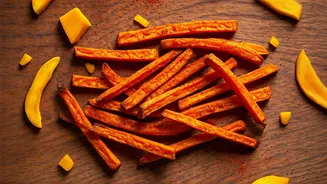


The Challenge of the Sweet Potato
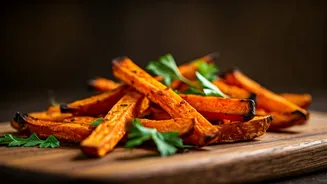
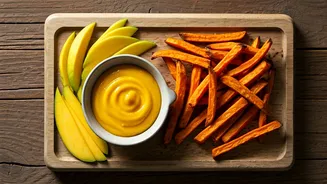
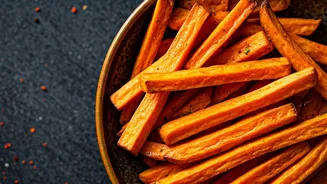
The primary reason homemade sweet potato fries often fail to crisp up is their composition. Compared to regular potatoes, sweet potatoes have a higher moisture and sugar content. [2] When they hit the heat of the oven, this excess moisture turns to steam,
effectively steaming the fries from the inside out instead of allowing them to roast and develop a crispy exterior. The higher sugar content also means they can go from perfectly caramelized to burnt very quickly, making the cooking process a delicate balancing act. [6] Many home cooks have experienced the frustration of pulling a tray of either soft or scorched fries from the oven, but achieving that desired restaurant-quality crunch is entirely possible with a few key adjustments to your method.
A Three-Step Method for Ultimate Crispiness
To combat the sogginess, a simple three-step preparation process is essential. First, after cutting the potatoes into uniform ¼ or ½-inch sticks, give them a soak in cold water for at least 30 minutes. [3] This helps draw out some of the excess starch and sugar. Second, and this is crucial, you must pat the fries completely dry with paper towels. [2] Any remaining surface moisture is an enemy of crispiness. Finally, toss the dry fries in cornstarch. [2, 3] This is a non-negotiable step. The cornstarch creates a dry, thin outer coating that absorbs any lingering moisture and bakes into a wonderfully crisp shell. Only after tossing with cornstarch should you then toss them with oil. [1]
Understanding Peri Peri's Magic
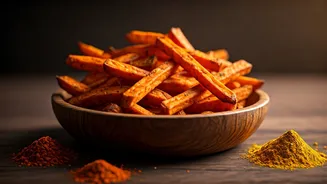
Peri peri, also spelled piri-piri, is the Swahili name for the African Bird's Eye chili. [12, 13] The history of the flavour is a tale of global exploration, believed to have been created in the 15th century when Portuguese explorers in Mozambique combined the local chili with European ingredients like garlic and vinegar. [13, 16] Today, the powder form is a complex blend that typically includes paprika, cayenne pepper (often used as a substitute for the harder-to-find African Bird's Eye chili), garlic powder, onion powder, and dried herbs like oregano. [4, 9] The resulting flavour profile is a journey in itself: smoky, earthy, and savoury with a bright, zesty heat and a hint of sweetness. [13, 17]
Crafting Your Own Peri Peri Blend
While store-bought versions are convenient, making your own peri peri powder allows you to control the heat and flavour balance. A fantastic and simple blend can be made by combining pantry-staple spices. In a small bowl, mix together 2 tablespoons of sweet paprika, 2 tablespoons of garlic powder, 1 tablespoon of onion powder, and 1 tablespoon of dried oregano. [5] To this base, add 2 teaspoons of ground coriander, 1 teaspoon of smoked paprika for depth, 1 teaspoon of ground ginger, and ½ teaspoon of ground cardamom. [5] For the crucial heat, add 1 to 2 teaspoons of cayenne pepper, adjusting based on your spice preference. [4, 5] Mixing these ingredients thoroughly will give you a versatile powder that can be stored in an airtight container for months. [4]
The Final Dusting: Technique and Timing
To truly elevate your fries, the application of the peri peri powder is key. The headline’s mention of a "dusting" is an important clue. For maximum flavour, employ a two-stage seasoning process. Before baking, after coating the fries in oil, toss them lightly with some of your peri peri blend and salt. [3, 18] This bakes the initial layer of flavour directly onto the fries. Bake them on a single, uncrowded layer on a baking sheet at a high temperature, around 415-425°F (215-218°C), for 25-30 minutes, flipping halfway through. [2, 3] The second stage comes the moment they are out of the oven. While the fries are still piping hot and glistening with oil, give them their final, more generous "dusting" of the peri peri powder. This second addition sticks to the hot surface, providing a fresh, potent burst of flavour and aroma that makes all the difference.