

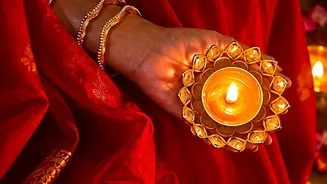
For many, Diwali means one thing: celebrating Lord Rama’s triumphant return to Ayodhya. But across India, the festival of lights is illuminated by a rich tapestry of stories, each with its own hero and profound meaning.
North India: The Homecoming of a King
The most widely known legend of
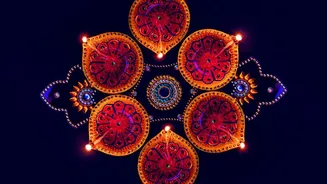
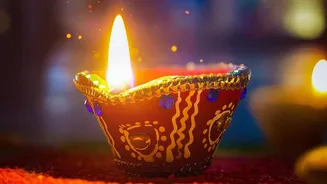
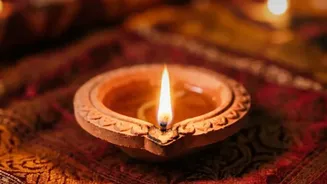
Diwali is centred on the epic Ramayana. In North India, the festival primarily commemorates the return of Lord Rama to his kingdom of Ayodhya after a 14-year exile. Along with his wife Sita and brother Lakshmana, his homecoming after defeating the demon king Ravana was celebrated by the citizens of Ayodhya, who lit rows of earthen lamps, or 'diyas', to illuminate their path and welcome their righteous king. This narrative powerfully symbolises the victory of good over evil, light over darkness, and righteousness ('dharma') over unrighteousness ('adharma'). The lighting of lamps, bursting of firecrackers, and exchange of sweets are all acts that echo this ancient, joyous welcome.
South India: The Slaying of a Demon
Travel south, and the protagonist of the Diwali story changes. In states like Tamil Nadu, Karnataka, and Andhra Pradesh, the festival's focus shifts to Lord Krishna's victory over the demon king Narakasura. According to this legend, Narakasura, the ruler of Pragjyotishpur (present-day Assam), had become a tyrant, tormenting the heavens and earth and imprisoning 16,000 women. Lord Krishna, accompanied by his consort Satyabhama—who, in some versions, is the one to deal the final blow—defeated the demon and liberated the captives. The day is celebrated as Naraka Chaturdashi, often a day before the main Diwali festivities in the north, and begins with a ritual oil bath before sunrise to symbolise purification. Here, the celebration is not of a homecoming, but of liberation from a powerful oppressor.
East India: The Worship of the Fierce Mother
In West Bengal, Odisha, and Assam, the Amavasya (new moon) night of Diwali is dedicated to the worship of Goddess Kali, the fierce and powerful form of Durga. Kali Puja celebrates the goddess as the destroyer of evil forces. Legend tells of her emerging to defeat demons like Raktabija, but her fury was so intense that she continued her dance of destruction until Lord Shiva lay down in her path to stop her. Shocked, she calmed down, and her worship on this dark night signifies the vanquishing of ego and ignorance. This tradition, popularised in the 18th and 19th centuries, sees devotees light lamps to honour the Divine Mother, seeking her protection from all evil.
Jainism: The Light of Enlightenment
For the Jain community, Diwali is not tied to gods and demons but marks a moment of profound spiritual significance. It commemorates the day that the 24th and last Tirthankara, Lord Mahavira, attained 'nirvana' or 'moksha'—the complete liberation of the soul from the cycle of birth and death. This is said to have occurred in Pawapuri, Bihar, in 527 BCE. According to Jain scriptures, the gods illuminated the heavens with lamps to mark the occasion, celebrating the light of Mahavira's holy knowledge. Jains celebrate with austerity and serenity, lighting lamps to symbolise knowledge and the removal of ignorance, and avoiding firecrackers out of their commitment to non-violence ('ahimsa'). For them, the day also marks the beginning of a new year.
Sikhism: A Celebration of Freedom
While Sikhs celebrate during Diwali, their observance, known as 'Bandi Chhor Divas' (Day of Liberation), has its own distinct history. It commemorates the release of the sixth Sikh Guru, Guru Hargobind, from imprisonment in Gwalior Fort in 1619. The Mughal emperor Jahangir had imprisoned him, and Guru Hargobind refused to leave until 52 Hindu princes who were also held captive were freed along with him. He cleverly had a special cloak made with 52 tassels, allowing each prince to hold onto one and walk out to freedom with him. His return to Amritsar coincided with Diwali, and the Golden Temple was illuminated with lamps to welcome him. Today, Gurdwaras are lit up and fireworks are set off to celebrate this act of justice and selflessness.