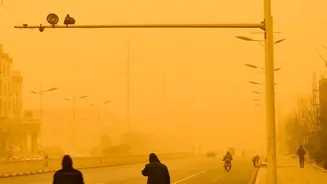





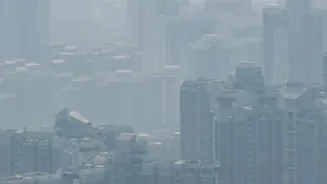
Diwali's festive spirit is in the air, but unfortunately, so is a sharp increase in pollution. As you plan your celebrations for this week, taking a moment to check the real-time Air Quality Index is more than a precaution—it's a vital step for health.
Decoding the Air Quality Index (AQI)
Before you can use it, it helps to understand what the Air Quality Index, or AQI, actually tells you. It's a simple, colour-coded scale from 0 to 500 that measures how clean or polluted your air is. The index tracks major pollutants like PM2.5 and PM10—tiny particles that can get deep into your lungs—as well as harmful gases. An AQI of 0-50 is 'Good' (green), while 51-100 is 'Satisfactory' (yellow). As the numbers climb, the colours change to orange, red, and purple, indicating 'Moderate', 'Poor', 'Very Poor', and 'Severe' air quality, with each level posing a greater health risk.
The Invisible Health Risks of Festive Air
During Diwali, the combination of firecracker emissions and specific weather patterns can cause pollution levels to skyrocket. Firecrackers release a cocktail of toxic substances, including sulphur dioxide, heavy metals, and vast amounts of particulate matter. When the AQI enters the 'Poor' or 'Very Poor' range (above 201), everyone is at risk. Short-term exposure can cause coughing, throat irritation, and shortness of breath. For children, the elderly, and those with pre-existing conditions like asthma or heart disease, the risks are far more severe, potentially triggering serious asthma attacks, respiratory infections, and cardiovascular stress. Studies show that every small increase in PM2.5 pollution raises the risk of health emergencies.
Why Diwali Celebrations Need an AQI Check
The very nature of Diwali celebrations—gathering on terraces, lighting diyas in courtyards, and community fireworks displays—puts us directly in the path of polluted air. Research shows that PM2.5 concentrations consistently and sharply increase during the Diwali period, with pollution levels spiking late at night, typically between 10 PM and 1 AM. This is often when families are outdoors. Furthermore, calm winter weather can trap these pollutants close to the ground for days, creating prolonged smog. This makes it essential to not just check the AQI, but to check it at the specific time you plan to be outside.
How to Check Real-Time AQI in Your Area
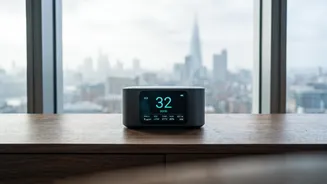
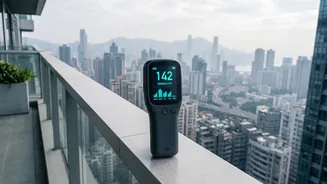
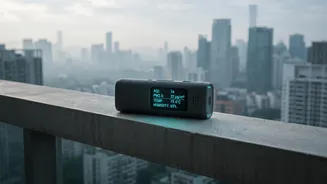
Checking your local AQI is easier than ever. Several userfriendly apps and websites provide realtime, locationspecific data. The governments SAFAR (System of Air Quality and Weather Forecasting and Research) and SAMEER apps offer hourly updates for major cities, collecting data directly from monitoring stations. You can see the levels of different pollutants and receive health advisories. Google Maps has also integrated a realtime AQI feature, allowing you to see colourcoded air quality levels directly on the map for your neighbourhood or any other location. These tools transform the abstract threat of pollution into a simple, visible metric you can act on.
Plan Your Celebrations for Cleaner Air
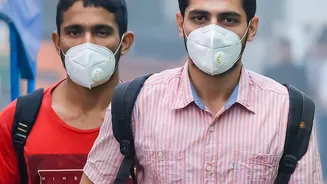
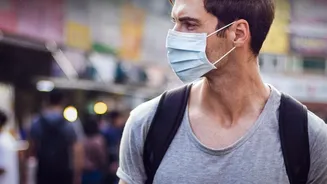
Using AQI data allows you to make smarter choices without sacrificing the festive spirit. If the AQI is in the 'Unhealthy' range (151+), consider moving your party indoors. If you must be outside, try to limit the duration and avoid strenuous activity. Plan outdoor events like lighting diyas or rangoli for earlier in the day, as pollution levels tend to be at their worst in the late evening and early morning. For sensitive individuals, it’s best to avoid outdoor exposure altogether when the AQI is above 100 ('Moderate'). Wearing a wellfitting N95 mask can also offer protection if you need to be outside during periods of poor air quality.