






The AI and Cloud-Fuelling Boom
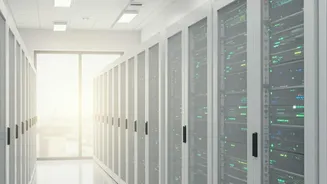
The world runs on data, and that data lives in sprawling, power-hungry facilities. From streaming video and online banking to the explosion in Artificial Intelligence, every digital interaction requires immense computing power. Globally, data centres
are expanding at a breakneck pace to meet this demand. The International Energy Agency (IEA) projects that global electricity consumption from data centres could double by 2030, reaching approximately 1,000 terawatt-hours. The primary driver of this surge is AI, which requires far more energy-intensive processing than traditional computing tasks. A single ChatGPT query, for example, consumes nearly ten times the energy of a standard Google search. This has turned data centres into one of the fastest-growing sources of new electricity demand worldwide, creating a significant challenge for energy grids.
India's Digital Infrastructure Surge
Nowhere is this expansion more dramatic than in India. Driven by government initiatives like 'Digital India,' widespread 5G adoption, and data localisation policies, the country is on track to become a global data centre hub. India's data centre capacity has already grown from just 375 megawatts (MW) in 2020 to over 1.5 gigawatts (GW) in 2026. Projections show this capacity could surge to between 8 and 10 GW by 2030, fuelled by billions of dollars in investments. This rapid growth means India’s data centre power consumption is expected to climb from around 13 terawatt-hours (TWh) in 2024 to as high as 57 TWh by 2030. This would increase the sector's share of national electricity demand from less than 1% today to nearly 3% by the end of the decade.
The Looming Energy Crunch
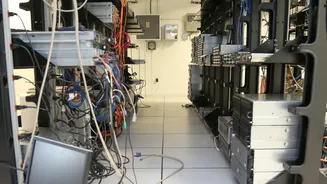
This insatiable appetite for power presents the '2030 test'. The challenge isn't just about generating more electricity, but also about the strain this concentrated demand places on local power grids. Data centres require a constant, high-quality power supply 24/7, and AI workloads can cause sudden, sharp spikes in demand, making it difficult for grid operators to maintain stability. Major data centre clusters in cities like Mumbai, Chennai, and Hyderabad are already creating pressure points on urban infrastructure. Beyond electricity, these facilities are also massive consumers of water for cooling systems, a significant concern in a water-stressed country like India. Without careful planning, this rapid expansion risks creating bottlenecks in grid connectivity, land acquisition, and water availability, potentially slowing down India's digital ambitions.
The Search for Sustainable Power
In response to this challenge, the industry and government are increasingly turning towards sustainable solutions. The government has granted infrastructure status to data centres, easing access to financing, and is promoting cleaner energy sources through various schemes. Data centre operators themselves are making significant commitments to renewable energy. Many are signing long-term power purchase agreements (PPAs) for solar and wind energy to power their operations, which can also reduce operating costs. Major players have pledged to run their facilities on 100% renewable energy by 2030. Furthermore, innovation in technology is playing a key role. More efficient cooling systems, like liquid immersion cooling, and AI-optimised energy management are helping to reduce the power and water footprint of new facilities.
Balancing Growth and Sustainability
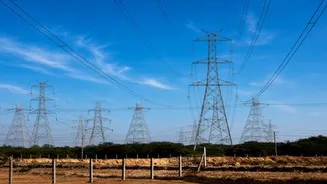
The path to 2030 requires a dual focus: building out digital capacity while ensuring the energy infrastructure can support it sustainably. This involves more than just building solar farms; it requires proactive grid planning, developing new high-capacity transmission corridors, and creating stable regulatory frameworks. State governments are playing a crucial role by offering incentives and streamlining approvals for land and power connections. For India, successfully navigating this power test is critical. It will determine whether the country can fully capitalise on the AI revolution and solidify its position as a leading digital economy without compromising its energy security and environmental goals. The future of India's digital dream depends as much on electrons as it does on data.