



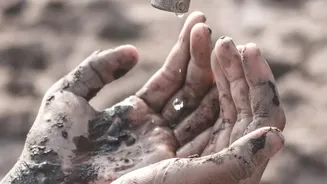
The Scale of the Shortage
India is grappling with a significant water crisis, a situation where demand is on track to outstrip supply. With nearly 18% of the world's population but only 4% of its freshwater resources, the margin for error is thin. NITI Aayog's Composite Water
Management Index has warned that nearly 600 million Indians face high-to-extreme water stress. Projections suggest the country's water demand could be double the available supply by 2030, which could lead to a 6% loss in GDP. As of late September 2026, with the southwest monsoon season concluding, water storage in 178 of the country's major reservoirs stood at about 70% of total capacity. This figure is notably below the ten-year average of 76.62%, signaling a potentially difficult dry season ahead.
Why Is This Happening? The Key Drivers
The crisis is not born from a single cause but a combination of factors. An uneven 2026 monsoon, with cumulative rainfall about 12% below normal, has failed to adequately replenish water sources. This climatic variability exacerbates a deeper issue: over-extraction. India is the world's largest user of groundwater, which supplies around 85% of rural drinking water and over 60% of irrigation needs. This dependence, fueled by electricity subsidies for agriculture, has led to rapidly falling water tables in many regions. Furthermore, rapid and often unregulated urbanisation contributes to the problem. Concrete surfaces prevent rainwater from seeping into the ground to recharge aquifers, while the encroachment of natural water bodies like lakes and wetlands destroys the very systems that help store water.
From Reservoirs to Reality: The Impact on Daily Life
The numbers translate into tangible hardships for millions. For farmers, who use approximately 80-90% of the nation's available water, the shortage means failed crops and mounting debt. In households, it means erratic supply, reliance on expensive private water tankers, and the daily burden, often falling on women and girls, of fetching water from distant sources. This directly impacts health, education, and economic stability. The crisis is not confined to rural areas; urban hubs are also facing severe shortages. The regional disparities are stark. In late 2026, reservoirs in Southern India were at just 50% of their capacity, reflecting a severe rainfall deficit and leading to drought declarations in parts of states like Karnataka and Maharashtra.
What Is Being Done to Turn the Tide?
The government's flagship Jal Jeevan Mission (JJM) aims to provide a functional tap connection to every rural household. Since its launch in 2019, the mission has significantly increased tap water coverage, with around 81% of rural households now connected. Recognising the challenge is not just about infrastructure, the mission has been extended to 2028 as JJM 2.0, with a renewed focus on ensuring the quality, reliability, and sustainability of the water supply. This involves strengthening community-led management through Village Water and Sanitation Committees. Other initiatives like the Atal Bhujal Yojana focus specifically on improving groundwater management in critically water-stressed areas. Experts also point to the need for a circular economy approach, where wastewater is treated and reused, and for promoting water-efficient practices in agriculture, such as drip irrigation.