



Our Restless Star
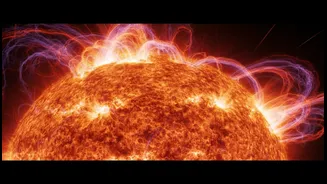
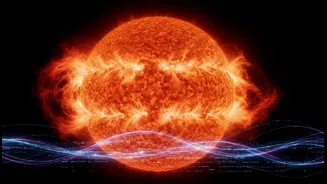
Our Sun may seem constant, a reliable source of light and warmth, but it is a tremendously active star. It experiences cycles of high and low activity that last roughly 11 years, marked by the appearance and disappearance of sunspots. These cycles are
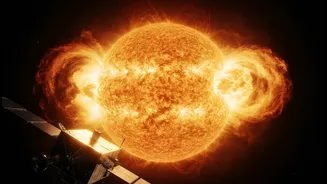
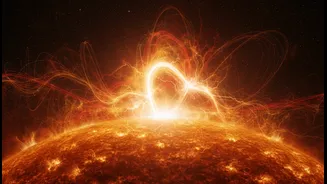
driven by the Sun's complex and powerful magnetic field. During periods of high activity, the Sun can unleash massive solar flares and coronal mass ejections (CMEs)—colossal bursts of plasma and magnetic fields that travel through space. These events create what is known as space weather, which can have significant effects here on Earth.
A New Era of Sun Gazing
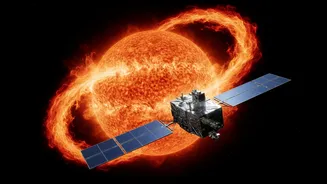
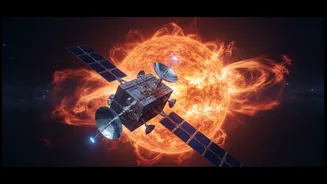
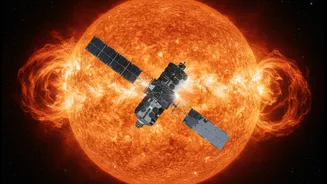
To better understand our star, space agencies around the world have sent missions to get a closer look. NASA's Parker Solar Probe is making record-breaking passes, flying through the Sun's outer atmosphere, the corona, at incredible speeds to sample solar particles and magnetic fields directly. ESA's Solar Orbiter is capturing unprecedented images of the Sun's poles. Critically for India, the Indian Space Research Organisation's (ISRO) Aditya-L1 mission is providing a continuous view from a unique vantage point 1.5 million kilometres from Earth. Together, these missions are providing a more complete picture of the Sun's behaviour than ever before.
Predicting the Sun's Mood
One of the most significant recent discoveries is a new method for predicting the strength of future solar cycles. Scientists have found that the most extreme solar activity doesn't just fade away; it stops abruptly at a specific point, like a switch being flipped. By observing the number of sunspots at this 'switch-off' point, researchers can forecast the intensity of the next solar cycle years in advance. This is a major breakthrough, as previous methods were far less reliable. Early predictions for the next cycle, Solar Cycle 26, suggest it may be similar to or slightly weaker than the current one, though scientists are awaiting more data for a precise forecast.
India's Aditya-L1 Delivers
India's Aditya-L1 has already made significant contributions. The spacecraft has observed a rare phenomenon called iron fluorescence during dozens of the most powerful X-class solar flares. This happens when X-rays from a flare travel back towards the Sun's surface, causing iron atoms to glow in a specific way. Scientists have found that this glow is strongest when flares occur near the centre of the Sun's disk. This discovery provides a new diagnostic tool to understand where these powerful eruptions originate, helping to decode the complex processes that trigger them.
Why It Matters for Earth
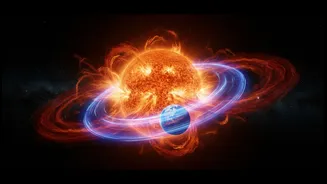
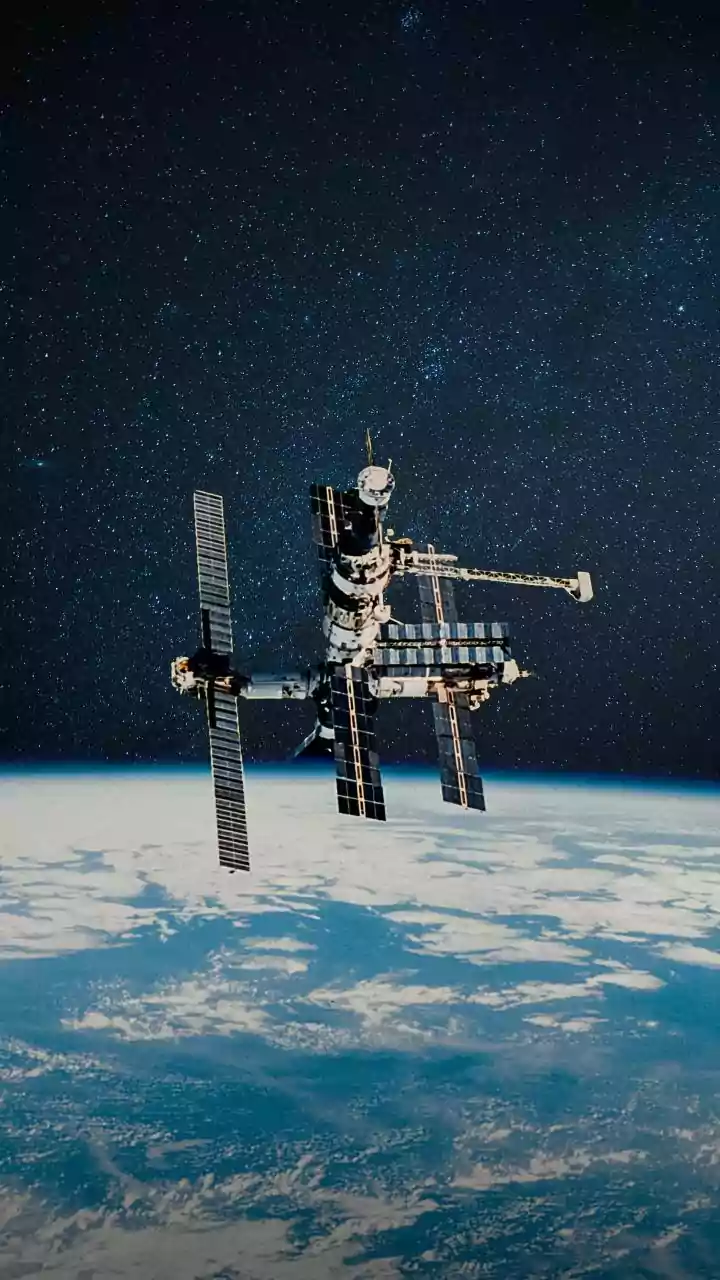
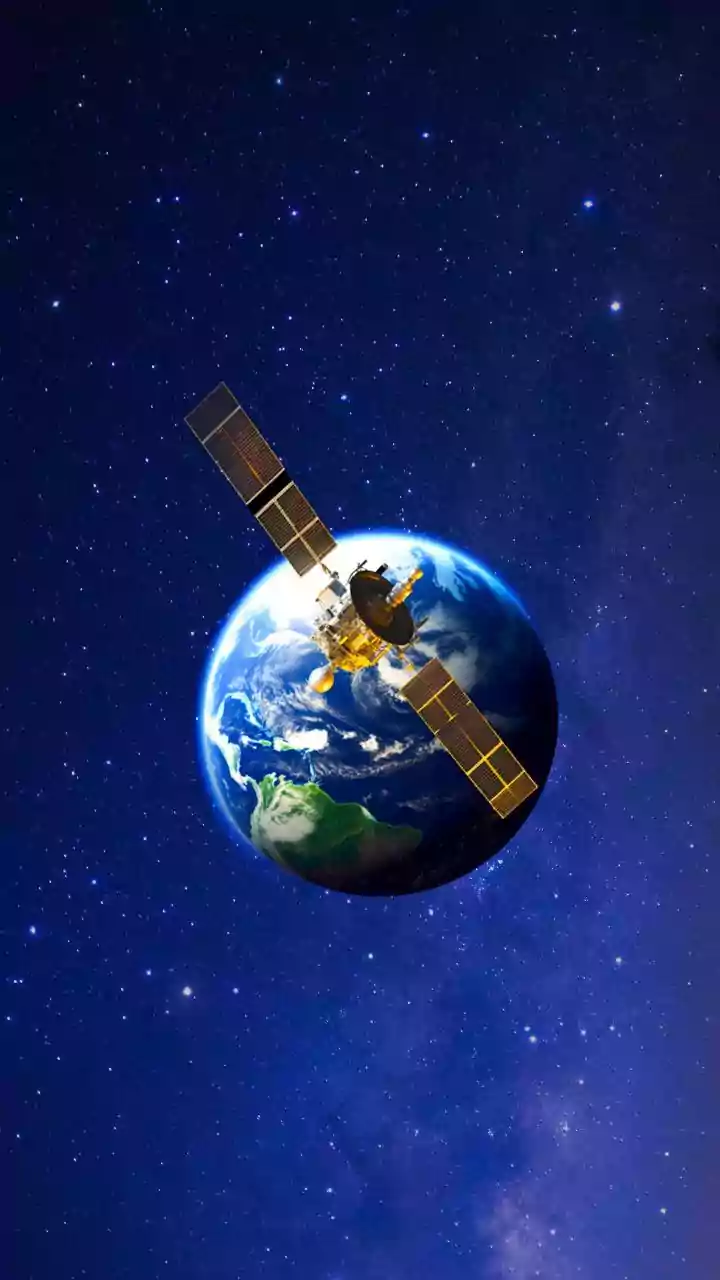
Understanding the Sun's changing behaviour isn't just an academic exercise. Powerful solar storms can have serious consequences for our technology-dependent world. They can disrupt satellite communications, damage GPS systems, and even knock out power grids on the ground. By improving our ability to forecast space weather, these new missions help us protect these vital infrastructures. The data from Aditya-L1, for instance, has already helped scientists analyse how a powerful solar storm compressed Earth's magnetic shield, briefly exposing some satellites to harsh conditions. The more we learn about the Sun's 'biorhythm', the better we can prepare for its more violent tantrums.