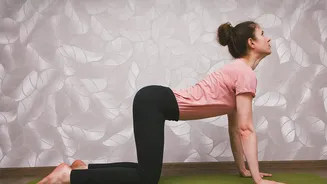





1. Seated Cat-Cow
This dynamic stretch is excellent for improving spinal mobility and relieving tension. Sit at the edge of your chair with both feet flat on the floor and hands on your knees. On an inhale, arch your back, push your chest forward, and look up slightly
(Cow Pose). On an exhale, round your spine, tuck your chin to your chest, and draw your navel in (Cat Pose). Flow between these two positions for 8-10 repetitions, moving with your breath to gently awaken the spine.
2. Seated Spinal Twist
A gentle twist helps to increase rotational flexibility in your spine and can alleviate stiffness in the mid and lower back. Sit tall in your chair with your feet flat on the floor. Inhale to lengthen your spine. As you exhale, gently twist your torso to the right, placing your left hand on your right knee and your right hand on the back or side of the chair for support. Hold for 15-30 seconds, breathing steadily, then return to the center and repeat on the left side. Avoid forcing the twist; only go as far as feels comfortable.
3. Chest Opener Stretch
Hours spent hunching over a keyboard can cause chest muscles to tighten and shoulders to round forward. A chest opener counteracts this. You can do this while standing in a doorway by placing your forearms on the frame and gently stepping forward. Alternatively, sit or stand and interlace your fingers behind your back. Straighten your arms and gently squeeze your shoulder blades together, lifting your chest. Hold for 15-20 seconds, feeling the stretch across the front of your body.
4. Standing Hip Flexor Stretch
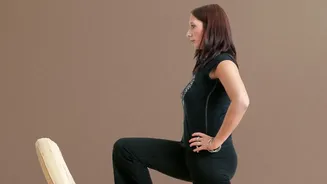
Sitting keeps your hip flexors in a shortened position, which can lead to tightness and lower back pain. To stretch them, stand up and take a step back with your right foot into a lunge position, keeping your back leg mostly straight. Gently bend your front knee and tuck your pelvis slightly, feeling a stretch in the front of your right hip. You can hold onto your desk or chair for balance. Hold for 20-30 seconds, then switch sides. This helps lengthen muscles that are chronically contracted during the day.
5. Glute Bridge
When you sit, your glute muscles can become underactive or 'switched off'. The glute bridge helps to reactivate them, which is crucial for pelvic stability and preventing back pain. Lie on your back with your knees bent and feet flat on the floor, hip-width apart. Rest your arms by your sides. Press through your heels to lift your hips off the floor until your body forms a straight line from your shoulders to your knees. Squeeze your glutes at the top, hold for a moment, and then slowly lower back down. Repeat 10-15 times.
6. Neck and Shoulder Rolls
Staring at a screen often leads to a stiff neck and tense shoulders. Simple movements can provide significant relief. Sit tall and gently drop your chin towards your chest. Slowly roll your right ear towards your right shoulder, then return to the center and repeat on the left side. Follow this with gentle shoulder shrugs, lifting your shoulders up towards your ears on an inhale and releasing them down on an exhale. Repeat each movement 5-10 times to release built-up tension.
7. Figure-Four Stretch
This seated stretch targets the glutes and the piriformis muscle deep in the hip, which can become tight and contribute to discomfort. While sitting in your chair, cross your right ankle over your left knee, creating a 'figure four' shape. Keep your back straight and gently lean forward from your hips until you feel a stretch in your right glute and hip area. For a deeper stretch, you can apply gentle pressure to your right knee. Hold for 20-30 seconds before switching to the other side.