






Beyond the Tyranny of Test Scores
For decades, the Indian education system has revolved around a few high-stakes examinations. Board results and competitive entrance tests have been the primary gatekeepers to higher education and coveted careers. While these metrics provide a standardized
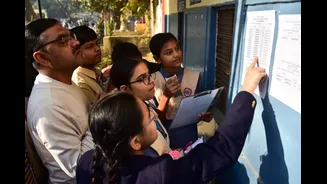
benchmark, they are increasingly seen as an incomplete, and often misleading, picture of a student's true potential. Standardized tests excel at measuring rote memorisation and performance under pressure, but they often fail to capture critical 21st-century skills like problem-solving, creativity, collaboration, and critical thinking. Critics argue that this intense focus on a single score can stifle genuine learning and penalise students who excel in ways not easily measured by a multiple-choice question. This is creating a significant gap between what academic institutions certify and what the modern workplace actually needs.
The Rise of 'Show, Don't Tell'
Enter the student portfolio. A portfolio is a curated collection of a student's work that demonstrates their skills, growth, and achievements over time. Unlike a resume, which is a list of claims, a portfolio provides tangible evidence. It’s the difference between saying you are a good writer and showing a well-researched article you wrote. For a tech student, it could be a link to their GitHub repository with code for a project they built. For a design student, it could be a collection of their creative projects and case studies. For an aspiring marketer, it might be a detailed breakdown of a mock social media campaign. This 'show, don't tell' approach allows students to present a rich, multi-dimensional narrative of their capabilities that goes far beyond a numerical grade.
What Employers in India Want Now
The Indian job market is undergoing a structural shift. Companies, especially in the fast-growing technology, AI, and digital sectors, are moving away from degree-based filtering towards skills-first recruitment. A 2026 TeamLease EdTech report highlights that project-based hiring has seen a significant surge, with employers prioritising candidates who can demonstrate their abilities through internships, projects, and portfolios. Recruiters increasingly want to see what a candidate has built, what problems they have solved, and what the outcome was. In a competitive market, a portfolio is a powerful differentiator. It allows a hiring manager to see a candidate's thought process and practical skills, making them a less risky and more compelling hire compared to someone with a similar resume but no proof of work.
Aligning with a New Vision for Education
This shift aligns perfectly with the goals of India's National Education Policy (NEP) 2020, which calls for a move away from rote learning towards a more holistic, competency-based assessment model. The NEP encourages methods that evaluate higher-order skills like analysis, critical thinking, and conceptual clarity. Digital portfolios, or e-portfolios, are identified as a key tool in this new landscape, enabling a more continuous and comprehensive evaluation of student competencies. As educational institutions adopt these principles, they are empowering students to build a body of work throughout their academic journey, preparing them for a world that values demonstrated skill over simple memorisation.
How Students Can Start Building Their Portfolio
The idea of creating a portfolio can seem daunting, especially for those with no formal work experience. However, the key is to start small and document your learning journey. Even mock or personal projects can showcase initiative and potential. Students can begin by documenting class projects, participating in hackathons, writing blog posts on subjects that interest them, or contributing to open-source projects. The goal is to create tangible proof of your skills and passion. Platforms now exist to help students easily compile their work into a digital format. Start by selecting 3-5 of your best pieces of work that are relevant to your career goals and write a short description for each, explaining the process and the outcome. This simple act can transform you from just another applicant into a candidate with proven abilities.