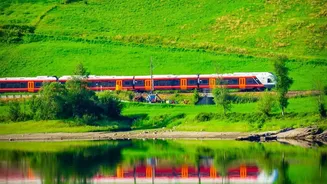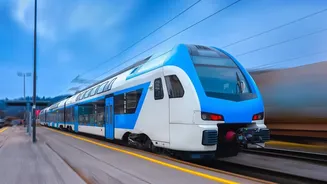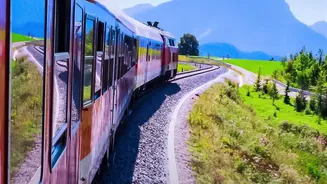




Another Major Step in Connectivity
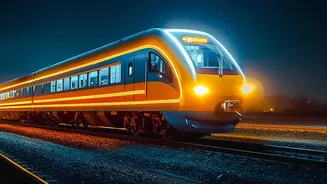
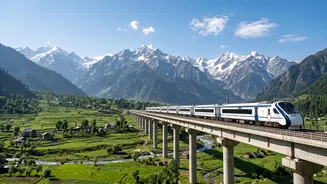
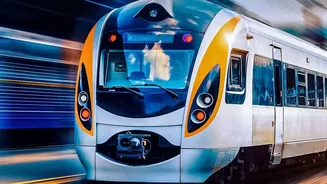
The Ministry of Railways has officially approved the introduction of a third Vande Bharat train connecting Jammu Tawi and Srinagar. The announcement, confirmed by Union Minister Ashwini Vaishnaw, comes in response to high passenger demand on the route,
which has seen the first two Vande Bharat trains running with full occupancy. The existing services, initially launched in June 2025 between Katra and Srinagar, were extended to Jammu Tawi in April 2026, creating a direct, modern rail link between the winter and summer capitals of the Union Territory for the first time. This new train, numbered 26407/26408, is a significant addition to the Udhampur-Srinagar-Baramulla Rail Link (USBRL), a century-old dream that has finally become a reality, providing reliable, all-weather connectivity to the region.
The Route and Reduced Travel Time
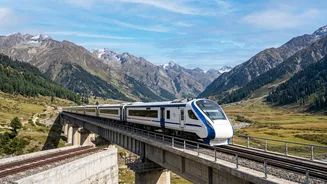
The new service will operate on the same breathtaking route as its predecessors, traversing the Udhampur-Srinagar-Baramulla Rail Link. A key feature of this new train is the inclusion of a stop at Martyr Captain Tushar Mahajan station in Udhampur, a move made in response to popular local demand. The existing Vande Bharat trains have drastically cut the grueling 8-11 hour road journey down to approximately 4 hours and 45 minutes. The journey is an engineering marvel, taking passengers across the world's highest railway bridge, the Chenab Bridge, which stands 359 metres above the riverbed, and India's first cable-stayed railway bridge, the Anji Khad Bridge. Recently, operational speeds on the critical Katra-Banihal section were increased to 100 kmph, further enhancing efficiency and potentially reducing travel times even more.
Special Features for Mountain Terrain
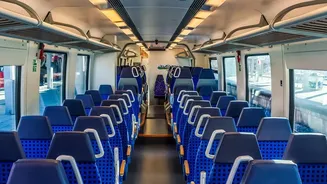
The Vande Bharat trains running in Kashmir are not standard models; they have been specially designed for the challenging Himalayan climate. To combat extreme cold, the coaches feature advanced heating systems for the passenger saloons and toilets. The water tanks and pipelines are fitted with heating elements to prevent freezing in sub-zero temperatures. The driver's cabin windshield is equipped with a micro-heating layer to ensure clear visibility by preventing ice buildup. The trains also boast airline-style rotatable seats, large observation windows for panoramic views, Wi-Fi, GPS-based information systems, and on-board catering, ensuring a comfortable and modern travel experience.
Impact on Tourism and Economy
The establishment of this robust rail link is already proving to be a game-changer for Jammu and Kashmir's economy. The all-weather connectivity provides a reliable alternative to the often-unpredictable road travel, which is prone to weather-related closures. This has given a significant boost to tourism by making the valley more accessible and affordable for visitors from across the country. Beyond tourism, the railway is transforming trade. Local producers of goods like apples, saffron, and handicrafts can now reach wider markets more quickly and at a lower cost. The improved supply chain for essentials like cement, foodgrains, and fertilizers has also helped stabilize prices in the valley. Economists project continued growth, with the J&K Economic Survey 2025-26 estimating a Gross State Domestic Product (GSDP) growth of 5.82 percent.