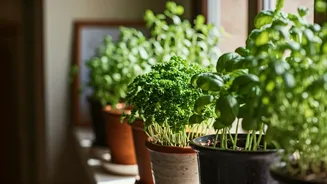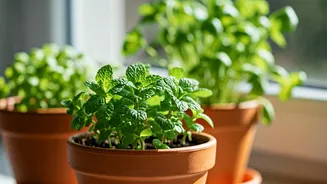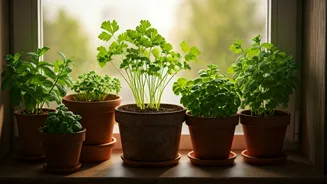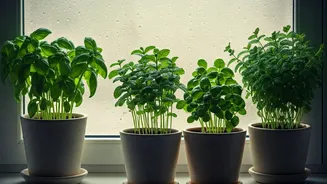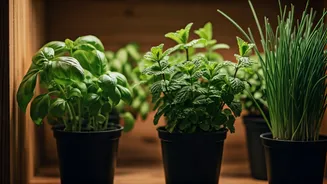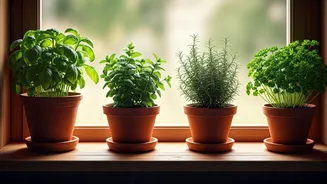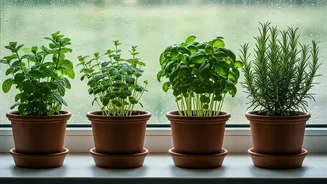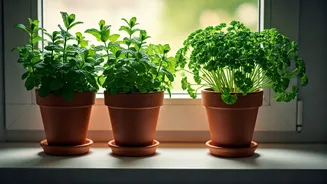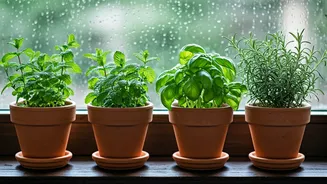



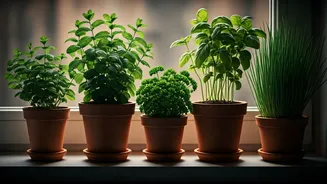


First, A Note on 'Low Light'
Before you start planting, it's important to understand what "low light" means for an indoor herb. No plant can survive in complete darkness. For our purposes, low light refers to a room with north-facing windows or a spot that is several feet away from
a brighter east- or west-facing window. These herbs can survive and produce leaves with indirect sunlight and don't require the 6-8 hours of direct sun that herbs like basil or rosemary demand. While their growth might be slower and less robust than in a sunny garden, they will still provide fresh flavour. If you notice any plant becoming too stretched and 'leggy' with sparse leaves, it's reaching for more light.
1. Mint
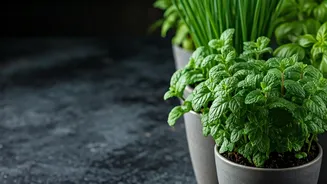
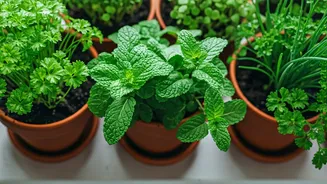
Mint is famously vigorous and one of the most forgiving herbs for beginners. Its tendency to spread aggressively outdoors is a feature, not a bug, when contained in an indoor pot. It adapts well to lower light levels, though it may grow less bushy than its outdoor counterparts. Keep the soil consistently moist but not waterlogged, as mint enjoys humidity but dislikes sitting in soggy soil. Regularly trimming the tips will encourage a fuller plant and provide you with plenty of fresh leaves for teas, chutneys, and refreshing summer drinks. Spearmint, peppermint, and even chocolate mint are all excellent varieties to try.
2. Parsley
Both flat-leaf and curly parsley are surprisingly tolerant of partial shade, making them a great fit for an indoor setting without direct sun. While they'd prefer a sunny spot, they can get by with just a few hours of gentle morning or indirect light. Ensure your pot has excellent drainage and water it whenever the top inch of soil feels dry. Parsley is a nutrient-rich herb, packed with vitamins, and harvesting is easy: simply snip the outer stems, allowing the new shoots in the centre to continue growing. This provides a continuous supply for garnishing soups, salads, and stews.
3. Chives
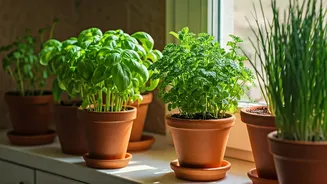
If you love a mild onion or garlic flavour, chives are a must-have. These hardy perennials are compact, low-maintenance, and grow happily in indirect light. They're not fussy about light and will still yield a decent harvest even on a less-than-sunny windowsill. Chives grow from small bulbs and like moist, well-draining soil. To harvest, use scissors to snip the green blades about an inch from the base. This encourages the plant to keep producing new growth. The pretty purple flowers are also edible and make a beautiful, flavourful addition to salads.
4. Lemon Balm
A member of the mint family, lemon balm shares its relative's resilience and adaptability to shade. It can grow quite well indoors with limited sunlight, filling your space with a lovely, uplifting citrus scent. Like mint, it prefers to be kept in a container to control its growth. Provide it with well-draining soil and water it when the top inch feels dry. Be sure to provide good air circulation to prevent issues like powdery mildew. The leaves are perfect for making calming herbal teas, adding a zesty twist to salads, or flavouring water. Pinching off the tips will encourage a bushier plant and prevent it from flowering, which can alter the leaves' taste.