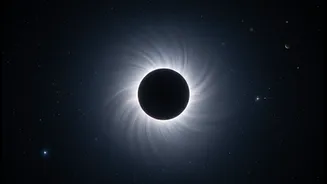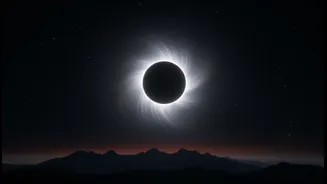



What Exactly Is a Total Solar Eclipse?
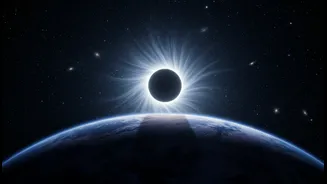
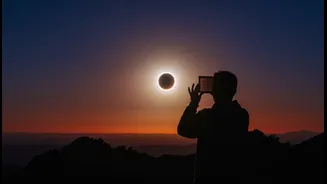
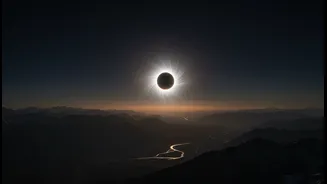
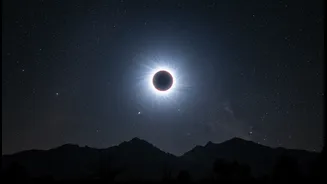
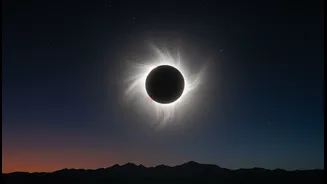
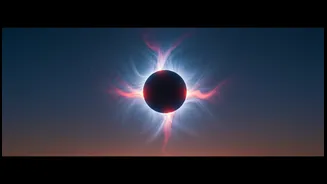
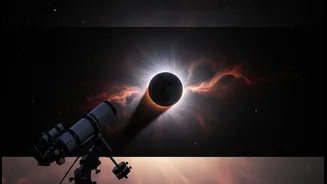
A total solar eclipse happens when the Moon passes directly between the Sun and Earth, completely covering the Sun's bright face. During this brief period, known as totality, the sky darkens as if it were dawn or dusk, and the Sun's ethereal outer atmosphere,
the corona, becomes visible. The corona is a pearly white crown of light that is otherwise hidden by the Sun's glare. For those located in the narrow path of the Moon's central shadow, it is an unforgettable and multi-sensory experience. Areas outside this path will only witness a partial eclipse, where the Moon obscures just a portion of the Sun.
The 2026 Path of Totality
The path of totality for the August 12, 2026, eclipse is quite exclusive. It begins over a remote part of Siberia, arcs over the Arctic, and then sweeps across Greenland and the western coast of Iceland. The main event for most viewers will be in northern Spain, where the path makes landfall, concluding over the Mediterranean. This will be the first total solar eclipse visible from mainland Europe since 1999. For Spain, the moment of totality will occur just before sunset, creating the potential for a breathtakingly beautiful “sunset eclipse” over the horizon. Cities like Valencia and Bilbao are within the path, while Madrid and Barcelona lie just outside.
What Will We See From India?
Unfortunately for sky-gazers in India, the total solar eclipse will not be visible. The event occurs between approximately 9:00 PM and 2:15 AM Indian Standard Time (IST), meaning the Sun will be well below the horizon for the entire subcontinent. While some highly specialised tools suggest a minuscule partial eclipse might be theoretically visible from the absolute northernmost tip of Ladakh, for all practical purposes, the event is not observable from India. As the eclipse is not visible, the religious customs and precautions associated with a 'Surya Grahan', such as Sutak Kaal, do not apply.
How to Watch the Eclipse Online
Just because you can't see it in person doesn't mean you have to miss out. Several international organisations will be live-streaming the eclipse, offering everyone a front-row seat. NASA, the European Space Agency (ESA), and the Exploratorium museum are all planning to host high-quality broadcasts from locations within the path of totality, such as Spain. These streams will feature telescope feeds and expert commentary, explaining the science as it happens. You can find these live feeds on their official YouTube channels and websites, allowing you to witness the magic of totality from the comfort of your home.
A Celestial Double Feature
As an added cosmic bonus, the August 12 eclipse coincides with the peak of the annual Perseid meteor shower. A solar eclipse can only occur during a new moon phase, which means the night sky will be exceptionally dark and free from moonlight. This creates perfect conditions for watching the Perseids, which are known for producing bright, frequent meteors. So, while the eclipse itself happens during the day for those in the path, the night that follows will offer a spectacular meteor shower for observers across the Northern Hemisphere, including those in India who can look for shooting stars in the pre-dawn hours of August 12 and 13.
Looking Ahead: India's Next Eclipses
While we miss out on this one, Indian astronomy enthusiasts have other events to look forward to. A partial solar eclipse will be visible across India on August 2, 2027, offering a great opportunity to witness the Moon take a 'bite' out of the Sun during the late afternoon. For those waiting for the grandest spectacle of all, the next total solar eclipse to cross through India will occur on March 20, 2034, when the path of totality will sweep across the northernmost regions of the country.