





The Modern-Day Monsoon Challenge
For anyone living in a compact urban apartment in India, the monsoon brings a unique set of challenges that go beyond navigating waterlogged streets. The real battle often begins at the front door. Limited entryway space quickly becomes a dumping ground
for wet raincoats, dripping umbrellas, and mud-caked footwear. This small zone, which is often just a corner, has to handle an onslaught of moisture and dirt, threatening to spread dampness and clutter throughout the home. With urbanisation intensifying and monsoon patterns becoming more extreme, the need for a practical solution has never been more pressing. The traditional, spacious mudroom of larger houses is a luxury most city dwellers can't afford, which has forced a rethink of entryway design.
Enter the Modular Mudroom Zone
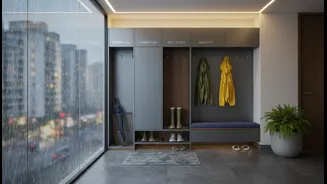
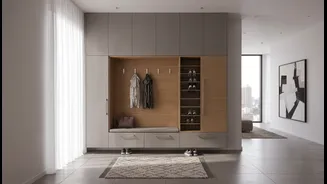
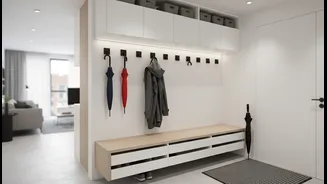
The solution gaining popularity is not a separate room, but a cleverly designed 'mudroom zone' or 'drop zone'. This concept involves using a combination of modular, often freestanding, furniture to create a dedicated transitional space right at the entrance. Unlike built-in fixtures, modular pieces like slim benches, wall-mounted hooks, and vertical shoe racks can be configured to fit even the tightest of spaces, making them ideal for smaller apartments and even rental homes. The focus is on creating a functional buffer that contains the mess from the monsoon before it infiltrates the main living areas, keeping the rest of the home clean and organised.
More Than Just a Place for Boots
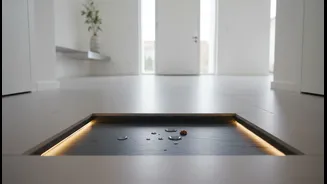
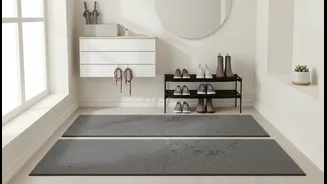
The benefits of a designated mudroom zone extend far beyond simply containing mud. It’s an organisational powerhouse. This small area becomes the command centre for daily comings and goings, providing a dedicated spot for keys, bags, and mail. During the monsoon, its value is magnified. A well-placed rack offers a space for wet umbrellas and raincoats to drip dry without ruining floors or other furniture. Shoe storage, especially vertical or covered options, keeps damp footwear off the floor, promoting faster drying and preventing the spread of moisture and musty odours. Some even incorporate water-absorbent mats and small trays to catch excess water, further protecting flooring.
Designed for Flexibility and City Living
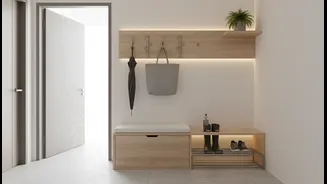
The 'modular' aspect is key to this trend's success in Indian cities. Urban life is dynamic; people move, and apartments come in all shapes and sizes. Modular furniture offers the flexibility to adapt. A wall-mounted set of shelves and hooks can be installed without major structural changes, a slim bench can provide seating and shoe storage underneath, and stackable plastic or metal organisers can be configured to fit a narrow nook. This approach is not only space-efficient but also budget-friendly. Homeowners can start with a few essential pieces and add on as needed, creating a customised system that works for their specific lifestyle and entryway layout.
Creating Your Own Monsoon-Ready Entryway
Building a modular mudroom zone is a practical project that can be tackled ahead of the heaviest rains. Start by identifying the essentials: a place to sit, a spot for wet outerwear, and storage for shoes. A slim bench with a shelf below is a classic multi-tasker. Above it, install a row of sturdy hooks for coats and bags. Consider a vertical shoe rack to maximise storage without sacrificing floor space. Finally, a good quality, anti-skid waterproof mat is non-negotiable for trapping water and dirt at the door. By combining these elements, even the smallest entryway can be transformed into a highly functional zone that brings order to the chaos of the rainy season.