



A Day Longer Than Its Year
Imagine living on a world where the day is endless, outlasting the entire year. Welcome to Venus. While Earth completes a rotation on its axis in 24 hours and a trip around the Sun in 365 days, Venus operates on a completely alien timescale. It takes
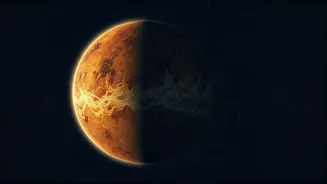
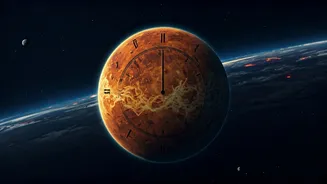
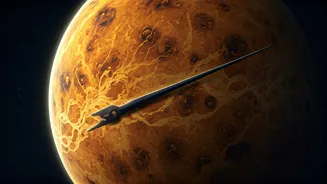
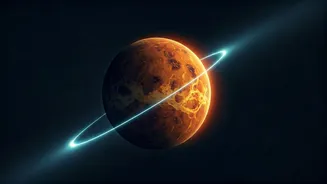
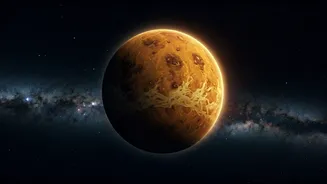
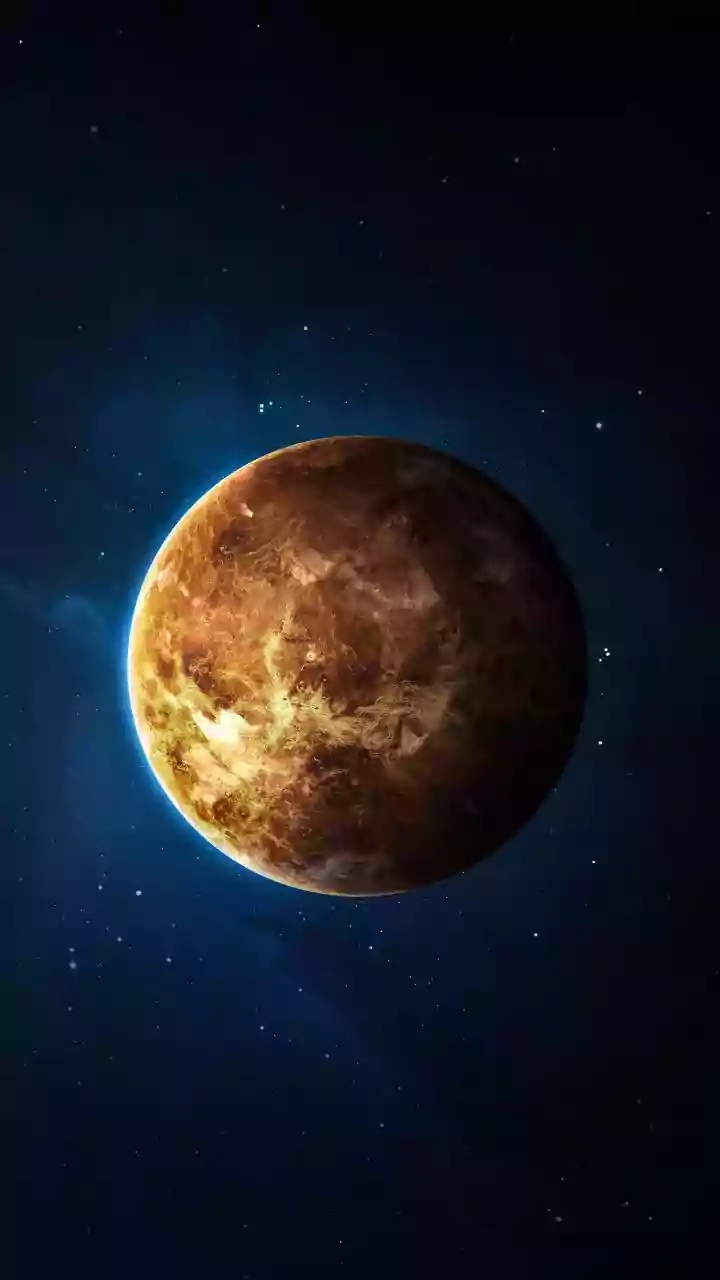
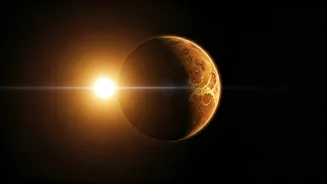
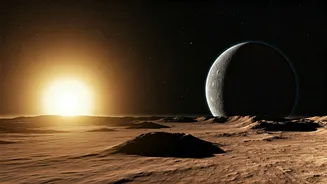
Venus approximately 225 Earth days to complete one orbit around the Sun, making that the length of its year. However, it takes the planet a staggering 243 Earth days to rotate just once on its axis. This means a single Venusian sidereal day (one full rotation) is longer than its entire year. If you were standing on Venus, the Sun would rise and set only about twice per year, but because of the slow rotation and the orbital motion, the time from one sunrise to the next (a solar day) is about 117 Earth days. It’s a concept so strange it sounds like science fiction, yet it’s happening right next door in our own solar system.
Spinning the Wrong Way
As if a day longer than a year wasn't strange enough, Venus also spins backwards. Most planets in our solar system, including Earth, rotate on their axis in a counter-clockwise direction when viewed from above the North Pole. This is called prograde rotation. Venus, however, exhibits retrograde rotation, spinning clockwise. The only other major planet that does this is Uranus, though Uranus is tilted so far on its side it’s almost rolling along its orbit. On Venus, this backward spin means the Sun rises in the west and sets in the east. This profound oddity is a major clue for scientists trying to piece together the planet's tumultuous history. Why would one of our closest neighbours defy the standard rotational direction established by the spinning disk of gas and dust that formed our solar system billions of years ago? The answer likely lies in a combination of violent past events and the planet’s extreme present-day conditions.
The Atmosphere's Crushing Grip
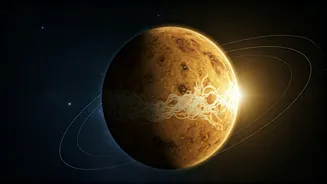
One of the leading theories for Venus’s slow, backward spin points to its incredibly thick and heavy atmosphere. The Venusian atmosphere is about 92 times denser than Earth’s at the surface, composed almost entirely of carbon dioxide with clouds of sulfuric acid. This dense blanket of gas is in a state of super-rotation, whipping around the planet at speeds exceeding 300 kilometres per hour—far faster than the planet itself spins. Scientists believe this powerful, fast-moving atmosphere creates immense friction and tidal forces on the planet's surface. Over billions of years, this atmospheric drag could have acted as a powerful brake, slowing Venus's original, likely much faster, rotation down to its current crawl. This thermal tide, created by solar heating, is so powerful that it effectively works against the planet's own momentum, locking it into its bizarrely long day.
Echoes of a Violent Past?
Another compelling theory suggests that Venus’s strange rotation is the result of a catastrophic event deep in its history. In the chaotic early days of the solar system, collisions between large, planet-sized bodies were common. One hypothesis posits that Venus was struck by a massive asteroid or protoplanet. Such an impact could have been powerful enough to not only halt its original prograde rotation but actually reverse it, sending it spinning in the opposite direction. Some models suggest a series of impacts could have also achieved this effect. This impact theory could also help explain why Venus has no moon, unlike Earth. A giant impact might have either failed to create a debris disk large enough to form a moon or created one that was eventually reabsorbed by the planet. It’s possible that both theories—atmospheric braking and a giant impact—are correct, with an ancient collision setting the stage for the atmosphere to later fine-tune the planet’s spin over billions of years.
Why This Cosmic Oddity Matters
Studying Venus's bizarre rotation isn't just about satisfying astronomical curiosity. It provides a crucial natural laboratory for understanding how planets evolve. Venus is often called Earth’s “evil twin” because it’s similar in size and mass but developed into a hellish world with surface temperatures hot enough to melt lead. Understanding the interplay between its rotation, thick atmosphere, and runaway greenhouse effect helps scientists model planetary climates, including our own. By figuring out what went so wrong on Venus, we gain a deeper appreciation for the delicate balance of factors—like a moderate rotation speed and a protective magnetic field (which Venus lacks)—that make Earth habitable. The slow day and extreme climate are intrinsically linked, offering lessons on the tipping points that can turn a rocky planet from a potential haven into an inferno.