





From Ladakh to Your Screen
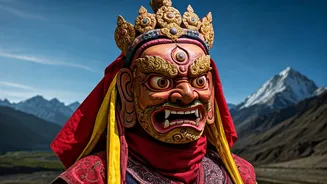
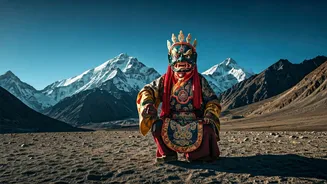
If you’ve been scrolling online recently, you’ve probably seen it: monks in elaborate, sometimes fearsome masks, spinning in a riot of colour against the stark, beautiful backdrop of the Himalayas. These captivating clips, racking up millions of views,
are from the Hemis Festival, one of the most important and visually spectacular cultural events in Ladakh. Held annually at the Hemis Monastery, the oldest and wealthiest monastery in the region, the festival is a two-day extravaganza that celebrates the birth anniversary of Guru Padmasambhava, the 8th-century Buddhist master credited with bringing Tantric Buddhism to Tibet. For centuries, this was a sacred event witnessed primarily by locals and devoted pilgrims. Now, thanks to the power of social media, its ancient rhythms are reaching a global audience, turning centuries-old traditions into a 21st-century viral sensation.
The Meaning Behind the Masks
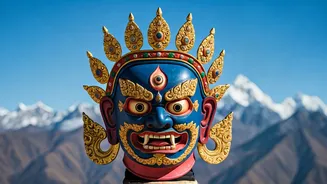
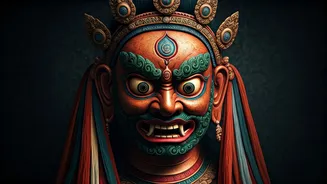
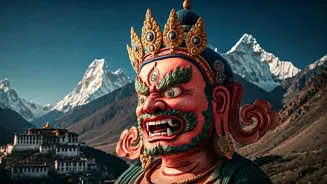
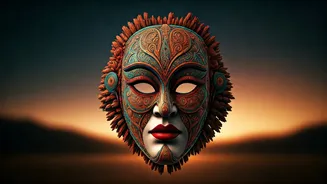
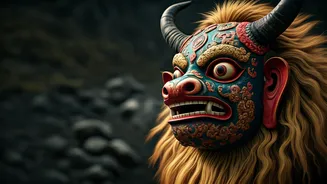
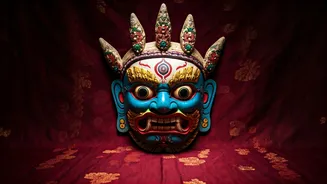
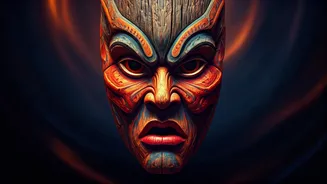
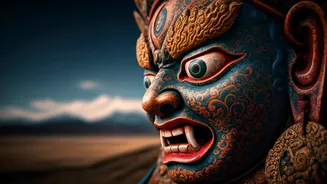
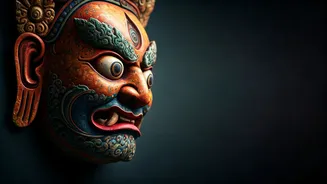
The most striking element of the festival is undoubtedly the masks. Far from being mere costumes, each one is a sacred object representing a specific deity, demon, or protector spirit from the Buddhist pantheon. The masks, often made of paper-mâché and painted in vivid detail, are believed to be vessels for the divine. When a trained monk wears a mask, he is thought to embody the spirit it represents, blurring the line between the human and the divine. The serene faces depict enlightened beings, while the wrathful, fanged visages represent Dharma protectors—powerful figures who destroy obstacles to enlightenment. Watching the dance is considered a form of blessing, a way for onlookers to witness the cosmic battle between good and evil and to be guided towards their own spiritual liberation.
The Sacred Dance: What Is 'Chams'?
The performance itself is known as 'Chams'. This is not a dance in the conventional sense but a highly ritualised form of meditation in motion. Every step, every gesture, and every turn is precisely choreographed according to ancient texts. The Chams dance serves multiple purposes. Primarily, it reenacts the triumph of good over evil, as personified by Guru Padmasambhava's victory over the demons who sought to prevent the spread of Buddhism. The slow, deliberate movements of the monks, accompanied by the dramatic sounds of long horns, cymbals, and drums, are designed to create a spiritual atmosphere, purify the grounds of the monastery, and bestow blessings upon all who witness the ceremony. The climax often involves the destruction of a dough effigy representing negative forces, symbolising the cleansing of the soul and the world.
Why Is It Captivating the Internet Now?
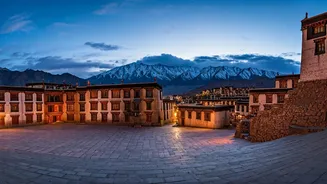
So, why has a centuries-old Buddhist ritual suddenly become a viral hit? The answer lies in a perfect storm of visual appeal and cultural curiosity. In an online world saturated with fleeting trends, the Hemis Festival offers something profound and authentic. The visuals are undeniably cinematic: the brilliant colours of the silk brocade costumes pop against the dramatic, mountainous landscape of Ladakh. The masks are otherworldly, tapping into a universal fascination with mythology and transformation. For a global audience increasingly seeking genuine cultural experiences, these videos offer a window into a world that is both ancient and intensely alive. It’s a powerful reminder that traditions can be both deeply sacred and incredibly compelling to a modern, digital-first generation.