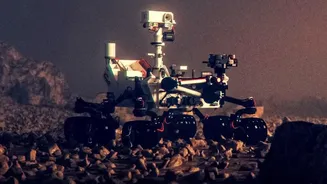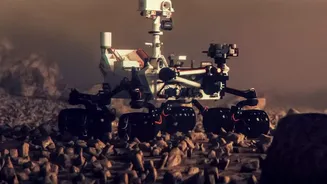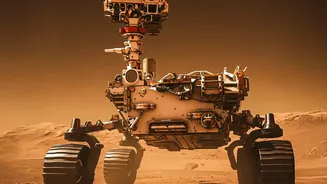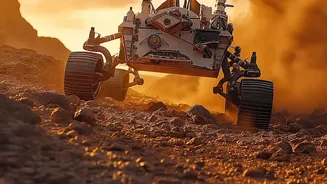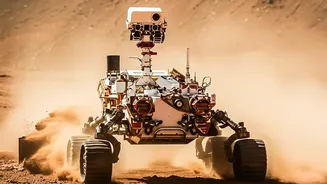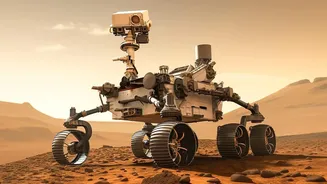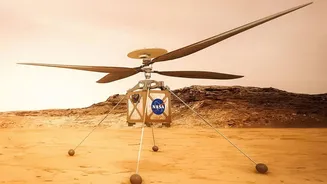




For the first time, humanity is on the verge of bringing pieces of another planet home. But how does NASA plan to get precious Martian rock samples back to Earth without endangering our own world? A new strategic plan offers the first clues.
A New Push for a Historic Return
NASA is kickstarting
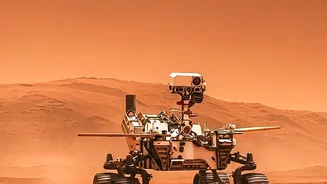
a new strategic effort, the Perseverance Sample Retrieval Architecture (PSRA), to formalize its plan for one of the most ambitious missions ever conceived: returning rock and atmospheric samples from Mars. Announced on November 9, 2026, by NASA's Mars Exploration Program director, Tiffany Morgan, this initiative aims to create a concrete and safe strategy for retrieving the samples currently being collected by the Perseverance rover and getting them back to Earth for study. The PSRA team is set to begin its work in January 2027, with a final report expected by winter 2027-2028. This comes after years of collaboration with the European Space Agency (ESA) on the broader Mars Sample Return (MSR) concept and amidst concerns over the mission's growing complexity and cost, which independent reviews have estimated could reach up to $11 billion.
Why We Need Martian Rocks
The samples collected by the Perseverance rover in Mars's Jezero Crater are scientifically priceless. Scientists believe this area was once an ancient lakebed, and the rocks and soil there could hold 'biosignatures'—potential signs that microbial life once existed on the Red Planet. Bringing these samples back would allow scientists to use advanced equipment far too large to send to Mars, enabling a level of analysis that could revolutionize our understanding of planetary formation, the history of water on Mars, and whether life has ever existed beyond Earth. Furthermore, studying Martian dust and soil is crucial for planning future human missions, as it will help engineers design better spacesuits and understand potential hazards, like toxic chemicals or fine dust particles, that could pose a risk to astronauts.
The Challenge of Planetary Protection
The core of the PSRA's mission is ensuring 'planetary protection'. This is a two-way street: protecting Mars from contamination by Earth-based microbes, and more critically for this mission, protecting Earth's biosphere from any potential Martian hazards. While the risk of bringing back a harmful, living organism is considered extremely low by scientific panels, it is not zero. The Martian surface is a harsh, irradiated environment not compatible with active biology as we know it. However, because the consequences of a mistake would be so significant, the mission is being designed with a 'safety first' approach, treating the samples as potentially hazardous until they are proven safe.
A Chain of Containment
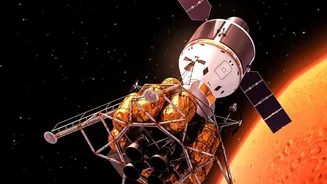
The plan to ensure safety revolves around a multi-layered system designed to 'break the chain of contact' with Mars. The process starts on the Martian surface. Sample tubes collected by Perseverance will be placed inside a container called the Orbiting Sample (OS). This container will be launched into Mars orbit by a small rocket, the Mars Ascent Vehicle. There, the ESA's Earth Return Orbiter will capture the OS using a Capture, Containment, and Return System (CCRS). The OS will be sealed inside another layer of containment, essentially creating a 'container within a container'. The outer layers will then be sterilized, likely with intense heat, to eliminate any clinging Martian dust. This robustly sealed capsule, called the Earth Entry System (EES), is designed to survive a fiery re_entry into Earth's atmosphere, landing without a parachute in a designated secure area like the Utah Test and Training Range.
Safety on the Ground
Once the capsule lands, the safety protocols will be just as stringent. The EES will be immediately secured and transported to a specially designed Mars Sample Receiving Facility. This high_containment lab, equivalent to a facility used for studying infectious diseases, will be where all initial analysis takes place. Inside this secure environment, a multi_disciplinary team of scientists will use a carefully designed protocol, developed with ESA, to test the samples for any signs of biological activity or other hazards. Only after rigorous testing determines the samples are safe will they be distributed to the wider scientific community for detailed study. Until then, the material from another world will remain completely isolated from our own.